The opinions start before you even mention a price.”Too expensive.” “EVs can’t tow.” “No CarPlay is a dealbreaker.” “It’s a tech bro toy, not a real truck.”
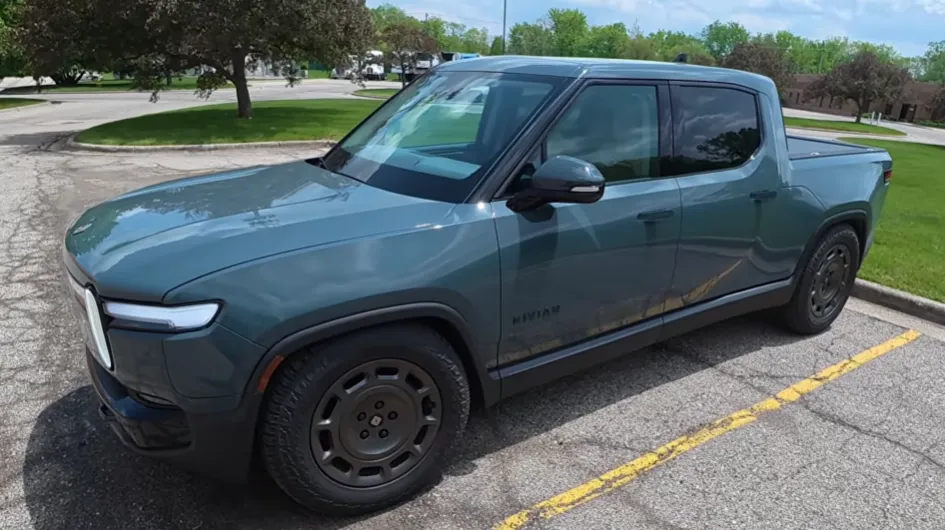
I’ve heard all of it. Said some of it myself, honestly, before I spent three weeks living with the R1T.
Three weeks changes your perspective on a vehicle you thought you already understood. Here are the five things most people get completely wrong before they’ve ever touched the door handle.
The basics first, because the configuration choices are genuinely confusing:
The R1T starts at $70,990 for the Dual Standard with the 92.5-kWh battery and 270 miles of range. Most buyers land on the Dual Standard it’s the most popular trim per Edmunds transaction data. The Dual with the Large battery goes to $77,990 and 329 miles. Add the Max battery for $7,000 more and you get 420 miles. The Tri and Quad configs go from $100,990 to $119,990 and deliver 371 to 374 miles with the Max pack. Towing tops out at 11,000 pounds. Payload at 2,317 pounds. Per Rivian’s published specs.
That’s a lot of numbers. The myth section will make them make more sense.
Myth One: The R1T Is a Rich Person’s Toy, Not a Real Truck
The people who say this have not loaded a truck bed professionally, towed anything seriously, or used the gear tunnel.
Let’s do payload first. The R1T’s maximum payload is 2,317 pounds. The Ford F-150 Lightning’s payload maxes around 2,235 pounds on the standard range version. The gas F-150 goes higher on specific work packages. But the R1T is not behind the class on payload. It’s competitive with the best-selling truck in America.
Towing. Up to 11,000 pounds when properly equipped. Per Rivian. That’s a fully loaded horse trailer. A serious boat. A camper that most full-size gas trucks would consider a real load. The myth that EVs can’t tow real weight hasn’t been true for a couple of years now and the R1T is one of the clearest examples of why.
The gear tunnel.
11.7 cubic feet of enclosed, lockable, weather-sealed storage running through the middle of the truck underneath the bed. I put tools in it. A portable compressor. Straps. The stuff that usually rattles around loose in a truck bed or disappears under a tonneau cover. The gear tunnel is one of those features you use twice and then immediately wonder how you managed without it.
The frunk. 9.9 cubic feet. Lockable. Deep enough for a full-size duffel bag, jumper cables, and a small cooler simultaneously. Not a gesture. Actual storage.
Real trucks haul things. The R1T hauls things.
Myth Two: EV Range Makes It Useless for Truck Owners
The Dual Standard’s 270 miles is the entry point.
That’s the version I want to address directly because it’s where the range criticism has the most weight.
270 miles for a truck owner doing real work. Is that enough?
For most daily and regional use, yes. Most truck owners don’t drive 270 miles in a single work day. They drive to job sites, haul materials locally, tow trailers on weekends. A truck that charges overnight and starts every morning with 270 miles covers that pattern completely without range anxiety.
Where it gets complicated is the road trip. Towing a trailer at highway speed drops EV range faster than anything. Towing a heavy trailer at 65 mph in the Dual Standard will cut real range to somewhere around 150 to 180 miles depending on load and conditions. You are planning charging stops if you’re towing long distances.
Step up to the Dual Max at $84,990 and the picture changes dramatically.
420 miles of range on a single charge. With a trailer behind it, real-world range drops but you still have a much wider buffer. US News called it “long driving range” and a standout feature in their 9.2/10 rating.
The NACS charging port is now standard on the 2026 R1T. Per Rivian’s updates for this model year. That means access to Tesla’s Supercharger network on top of Rivian’s own network and third-party chargers. The charging infrastructure argument against the R1T is significantly weaker in 2026 than it was two years ago.
Myth Three: No Apple CarPlay Is a Deal Breaker
It is not.
I say this as someone who has CarPlay running in every vehicle I test whenever it’s available. The reflex is real. Phone connects, CarPlay loads, I use my apps.
The R1T doesn’t offer CarPlay or Android Auto. No option to add it. Rivian’s own software runs everything.
Here’s what I found after three weeks.
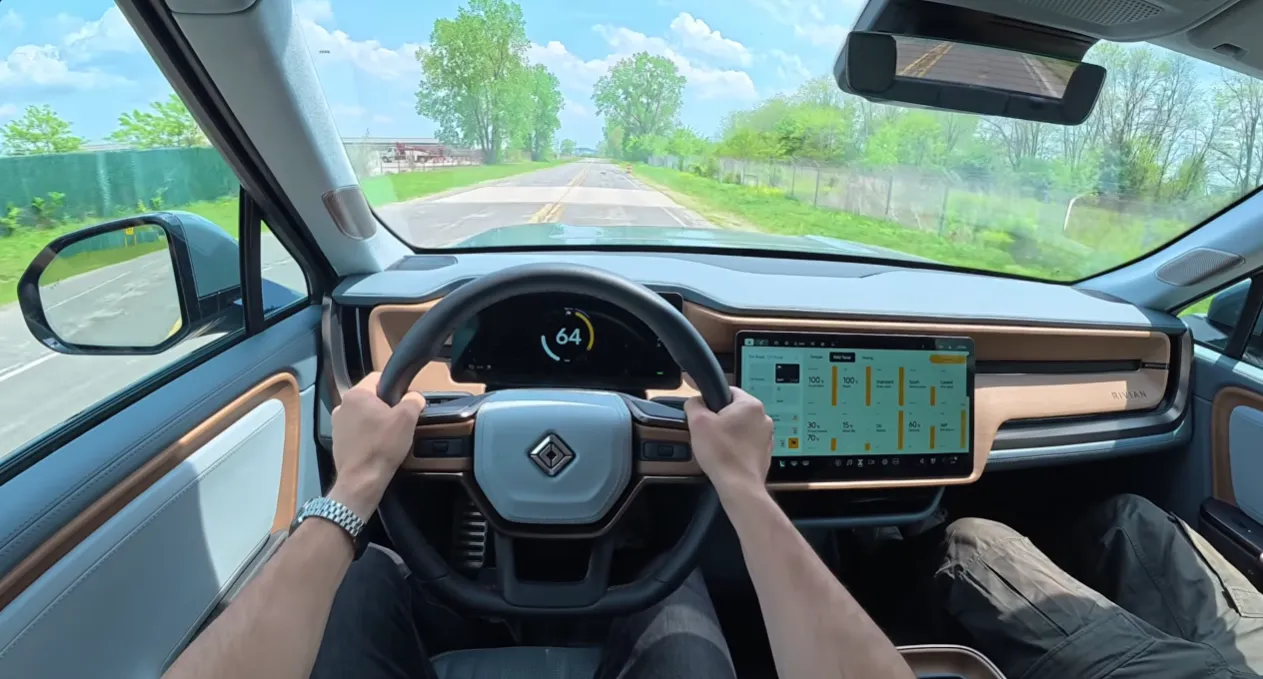
Rivian’s interface is good. Genuinely good. The main screen is responsive. Navigation works well and integrates with the trip planner to show charging stops automatically. Over-the-air updates have polished the software continuously since launch and the 2026 version is measurably better than what early R1T owners received.
Music streaming works natively. The interface for truck settings, off-road modes, suspension height, towing configuration is all more intuitive than digging through a gas truck’s menu system.
Is it as familiar as CarPlay? No. Does the absence actually hurt daily use after a few days of adjustment? Not much.
The one area where it shows up is third-party apps. If you have a specific app you use daily for navigation or music that isn’t integrated, you’re adapting. That’s real. But it stopped being a daily frustration around day four.
The bigger issue for some buyers is the touchscreen controls for basic functions. The R1T routes climate and certain drive settings through the screen in ways that other trucks handle with physical controls. Adjusting the fan speed while driving requires a tap on glass rather than a twist of a knob. Some people adapt immediately. Some find it distracting after 20,000 miles. Know which type you are before you commit.
Myth Four: The Price Makes the Total Cost Higher Than Gas
This one deserves an actual calculation rather than an assumption.
KBB’s 5-year cost to own for the 2026 R1T: $98,282. That includes depreciation, fuel, insurance, maintenance, and financing. Per KBB’s cost to own tool.
That sounds high until you compare it against a similarly capable gas truck.
A comparably optioned Ford F-150 with a comparable tow package and tech package lands around $65,000 to $70,000 to start. But over five years, fuel costs on a gas truck at 15,000 annual miles run around $12,000 to $15,000. The R1T’s electricity costs are around $3,500 to $5,000 over the same period depending on your rate. That’s $7,000 to $10,000 in fuel savings.
Maintenance. No oil changes. Fewer brake jobs from regenerative braking. No transmission service. KBB estimates R1T maintenance costs run low compared to gas trucks over a 5-year period.
The gap between a loaded gas truck and the R1T shrinks meaningfully when you run five years of actual operating costs rather than comparing sticker prices.
The depreciation line is real though. KBB projects $44,460 in depreciation over five years. Leaving a residual of $28,425. Per KBB’s cost to own data. That depreciation is steeper than established truck brands in the same window. Rivian is still building its resale track record and that uncertainty costs you.
Myth Five: Off-Road Is Marketing Language, Not Capability
I took it off-road on purpose.
Not rock crawling. A legitimate unpaved forest road with deep ruts, loose rock sections, and a creek crossing that was higher than it looked on the approach.
The adaptive air suspension raised itself before I touched anything. The system recognized the terrain and responded. I’ve driven trucks with lift kits that don’t handle terrain changes as smoothly.
The wading mode. Selected it before the creek. The suspension rose further, the electronics adjusted, and the R1T crossed water that came up well past the running boards without drama.
Individual wheel torque control on the Quad version which lets Rivian’s software apply power to each wheel independently is a capability gas trucks can’t replicate with traditional differentials. The result on loose surfaces is a confidence that feels earned rather than electronic.
US News ranked the R1T second among electric pickup trucks with a 9.2/10 score. The off-road capability was cited as a standout. That ranking holds up after three weeks of real use.
The Kick Turn feature, exclusive to the Quad via OTA update, spins the truck in place by rotating wheels in opposite directions. I tested it in a tight spot. Works exactly as described. Genuinely useful in tight trails where a 217-inch truck would otherwise require a multi-point turn.
What Three Weeks Actually Felt Like
The acceleration is the thing that resets your expectations.
Even the Dual Standard is fast. Not in a subtle way. Quick off a stop in a way that makes a fully loaded gas truck feel slow by comparison. The Quad version pushes toward sports car territory. My son rode along during a highway on-ramp test and said nothing for about four seconds, which is its own kind of review.
The interior. Premium without being showy. The seats are wide and supportive. After a long driving day I came home without the lower back conversation that some trucks force after 90 minutes. The materials are good. Not luxury-brand good. But intentional and well-assembled.
The gear tunnel became part of my routine by the second week. Stopped storing things in the cab that used to accumulate there. Tools, cords, smaller bags. All of it went in the tunnel. The cab stayed clean in a way that working trucks usually don’t manage.
The one sensory detail that stuck with me across three weeks. Starting the truck is silent. Total silence. No engine sounds, no vibration, nothing. Just the screen waking up and the truck ready to go. After a while this stops feeling strange and starts feeling correct. Going back to a gas truck that week felt like it was working harder than it needed to.
The Real Problems
No CarPlay is covered above but it belongs here too as a hard stop for some buyers who won’t adapt regardless of how good Rivian’s software gets.
The depreciation projection is real. Buying a Rivian at $70,000 to $85,000 and looking at a projected residual of $28,000 after five years is a significant loss of value compared to what an established truck brand holds. Rivian’s resale track record is still being written and early data doesn’t suggest it holds as well as Ford or Toyota.
And the Dual Standard’s 270-mile range is sufficient for daily use but creates real planning requirements for truck work that involves long-distance towing. Anyone who regularly tows a heavy trailer more than 150 miles in a day needs to budget for the Max battery pack or accept charging stops that gas truck drivers don’t deal with.
My Take
I went into this lease expecting to like the R1T as a technology showcase and respect it as a truck but not feel it as a truck.
Wrong on the last part.
It feels like a truck. A better-driving truck than most gas alternatives at the same price. The payload and towing capability are real numbers that do real work. The gear tunnel and frunk change how you think about truck storage. The off-road performance surprised me specifically because I was prepared to be underwhelmed.
The price is the honest barrier. $70,990 for the Dual Standard is real money. Buyers who need a work truck at $45,000 don’t have a Rivian option yet. That’s simply true.
But buyers who are already looking at loaded F-150s, Ram 1500s, or GMC Sierras in the $65,000 to $75,000 range and wondering whether an EV truck makes sense. The R1T is a serious answer to that question in 2026 in a way it wasn’t three years ago.
Frequently Asked Questions
Does the 2026 Rivian R1T qualify for the federal EV tax credit? The R1T does not currently qualify for the full $7,500 federal EV tax credit because its price exceeds the threshold for pickup trucks and its battery sourcing requirements affect eligibility. Check current IRS Clean Vehicle Credit guidelines and confirm with your dealer before purchasing. Rules change frequently.
How much can the 2026 Rivian R1T tow? Up to 11,000 pounds when properly equipped. One of the highest towing ratings among electric pickup trucks currently available. Per Rivian’s published specs. Always verify the tow rating on your specific configuration.
What is the range of the 2026 R1T? Depends on the battery. Standard battery: 270 miles. Large battery: 329 miles. Max battery: 420 miles on the Dual, 371 miles on the Tri, 374 miles on the Quad. Per EPA estimates. Towing significantly reduces real-world range.
Why doesn’t the Rivian R1T have Apple CarPlay? Rivian uses its own proprietary software and has not added CarPlay or Android Auto integration. The company’s position is that their native system offers a more integrated experience. After an adjustment period most owners adapt, but buyers who rely heavily on CarPlay-specific apps should test the native system thoroughly before committing.
Is the 2026 Rivian R1T reliable? KBB owners rate R1T reliability at 4.5 out of 5, which is above average. Overall quality rates 3.5 out of 5, which is average. Common issues reported by owners involve software glitches that Rivian addresses through over-the-air updates. Major mechanical failures are rare. The powertrain and battery are under warranty for 8 years or 175,000 miles. Per Rivian’s warranty terms.
What is the Rivian gear tunnel? A lockable, weather-sealed storage compartment running through the middle of the truck body beneath the bed floor. It holds up to 11.7 cubic feet and provides secure access from either side of the truck. One of the R1T’s most practical and unique features with no equivalent on any gas pickup truck.
How does the 2026 R1T compare to the Ford F-150 Lightning? The R1T tows more, has more storage versatility with the gear tunnel and frunk, and offers more powertrain configurations. The Lightning starts significantly cheaper and qualifies more cleanly for federal tax credits. The Lightning also has CarPlay and Android Auto. For buyers primarily focused on price and conventional connectivity, Lightning. For maximum capability and storage versatility, R1T.