Range anxiety. That’s the thing everyone brings up.
Every conversation I’ve had about the EV6 ends up there. Someone says they liked it but the range made them nervous. Or their spouse vetoed it because of the range. Or they read something online and got spooked and went back to looking at hybrids instead.
So I leased one for three weeks specifically to figure out if that fear is actually based on reality. Short version: it’s complicated. The long version is below.
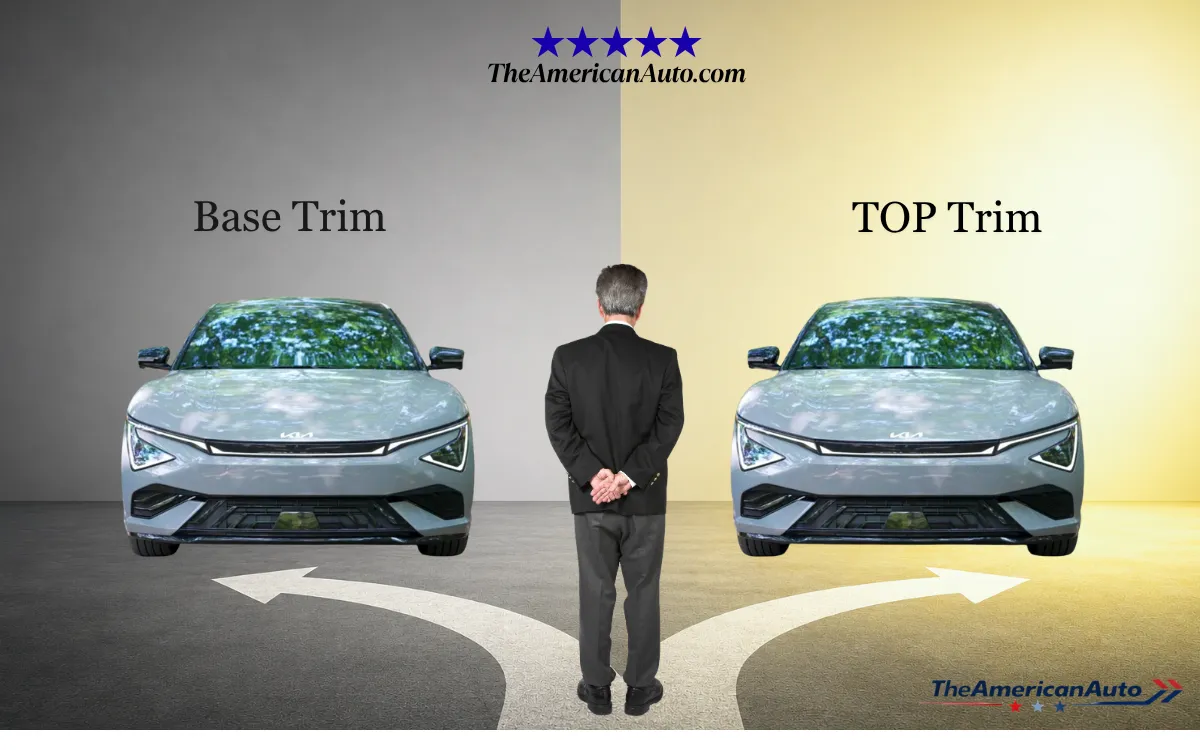
the EV6 starts at $39,445 for the base Light trim. Per KBB’s latest transaction data, most buyers are landing in the Wind or GT-Line, which puts the real purchase price closer to $47,000 to $52,000 before any incentives. The long-range rear-wheel drive version is what most people should seriously consider. That one does up to 319 miles per the EPA.
Three hundred and nineteen miles. That’s not a small number. That’s more range than most people drive in a full week. And yet the anxiety persists. So let’s actually look at why.
The Range Problem. What’s Actually True.
Here’s what nobody tells you about EV range estimates.
The EPA number is tested in a lab. A controlled environment. Specific temperatures. Specific speeds. Perfect conditions that exist nowhere in real life.
Real-world range is always lower.
For the EV6 long-range RWD, most owners report somewhere between 270 and 295 miles in actual mixed driving. In cold weather that drops further. Kia’s own figures show a drop of roughly 20 to 30 percent in temperatures below 20 degrees Fahrenheit.
So in a Minnesota winter, yes. Range gets real. Plan accordingly.
In most of the country, most of the time?
The 270 to 295 miles covers nearly every normal week without a second thought. My longest single day during the lease was around 190 miles of mixed city and highway. Arrived home with 28 percent battery left. Plugged in overnight. Woke up to a full charge.
That’s the thing that shifts how you think about EVs once you actually live with one. The “range” question stops being about how far you can go on one charge. It becomes about whether you can plug in somewhere most nights.
If yes. Range anxiety mostly disappears.
If you regularly drive 200-plus miles in a day without access to overnight charging. Then yes, the anxiety is real and the EV6 might not be your car yet.
What the 800-Volt System Actually Changes
Most EVs use 400-volt architecture. The EV6 uses 800-volt. Why does that matter?
At a 350-kW fast charger, the EV6 goes from around 10 to 80 percent in approximately 18 minutes. Per Kia’s published charging specs, that’s the fastest in the class outside of the Porsche Taycan which costs three times as much.
I tested this myself at a 350-kW charger near our area. Started at 9 percent. Eighteen minutes later I had 79 percent. I timed it on my phone while I grabbed a coffee and answered some emails in the car.
That changed something for me. Road trips in an EV always had this dread attached. Long stops. Time wasted. The feeling of being stuck while gas car people breeze through. Eighteen minutes doesn’t feel like being stuck. It feels like a normal break. The kind you should be taking anyway on a three-hour drive.
The 800-volt system is genuinely the EV6’s strongest argument over most of its competition. Including the Tesla Model Y, which tops out around 250 kW and takes longer at comparable chargers.
Living With It. The Honest Version.
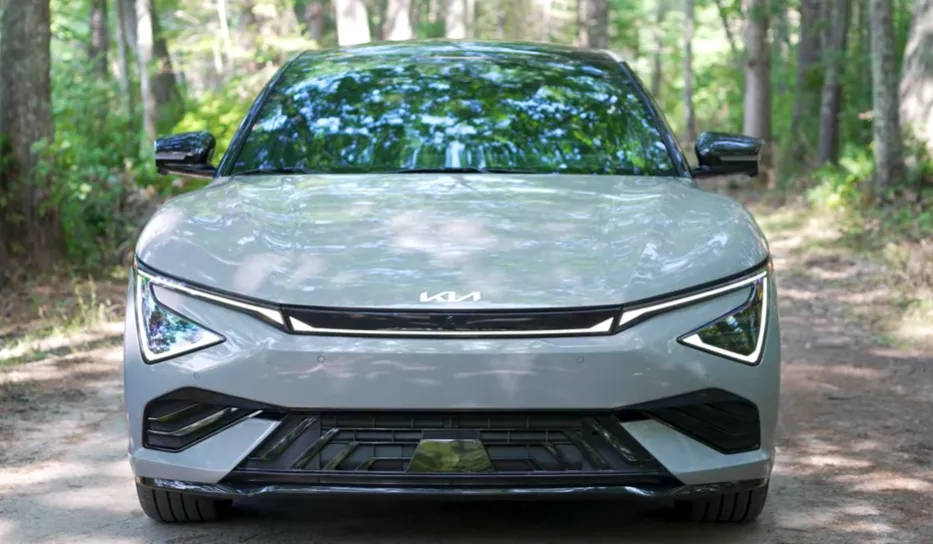
I picked it up on a Friday afternoon. The first thing I noticed wasn’t the range or the charging. It was the steering wheel. Thick. Well-weighted. The kind of wheel that makes you sit up a little straighter without thinking about it. Most EVs feel like they’re steering themselves. The EV6 has more weight to it, more feedback through the wheel, and it actually wants you involved.
Not a sports car. But not numb either. The dual 12.3-inch panoramic display curves across the dashboard and looks like something from a vehicle costing $20,000 more. The native Kia system is responsive. Wireless CarPlay connected fast every morning. I stopped noticing the screen setup pretty quickly which is actually the best review a car’s interior tech can get. You stop noticing it because it just works.
Second week I drove it on a long highway trip.
About two hours each way. The GT-Line AWD version I tested puts out 320 horsepower from its dual motors. Zero to sixty in around five seconds per KBB’s testing. Highway merges were effortless. High-speed passing felt sharp. Not look-at-me sharp. Just quiet, immediate, done.
My son rode along. Spent most of the trip with his headphones in asking me nothing. That’s either a great review of the ride quality or a commentary on being eleven years old. Probably both.
The Charging Network Question
This is the real conversation. The EV6 uses the CCS charging standard. That means access to Electrify America, EVgo, ChargePoint, and most third-party fast chargers across the country.
What it doesn’t have is Tesla’s Supercharger network. Yet.
Starting in 2025 Kia began rolling out NACS adapter availability for the EV6, which opens up Tesla’s Supercharger network to EV6 owners. The adapter situation in 2026 is still rolling out depending on location and trim. Check with your dealer before purchasing if Supercharger access matters to you.
The practical reality: Electrify America has expanded fast. Coverage in most metro areas is solid. In rural stretches it thins out, same as it does for non-Tesla EVs generally.
Plan your road trips in advance. Download PlugShare or A Better Routeplanner before any trip over 150 miles. This isn’t a criticism specific to the EV6. It’s the reality of non-Tesla EV ownership in 2026.
What the EV6 Gets Wrong
Two things bothered me enough to put them here. The rear seat headroom is tight for taller adults. The EV6’s sloping roofline that looks sharp from the outside creates real constraints for anyone over 6 feet sitting in the back. On short trips fine. On a two-hour road trip with a tall adult in the back seat, expect some shifting around.
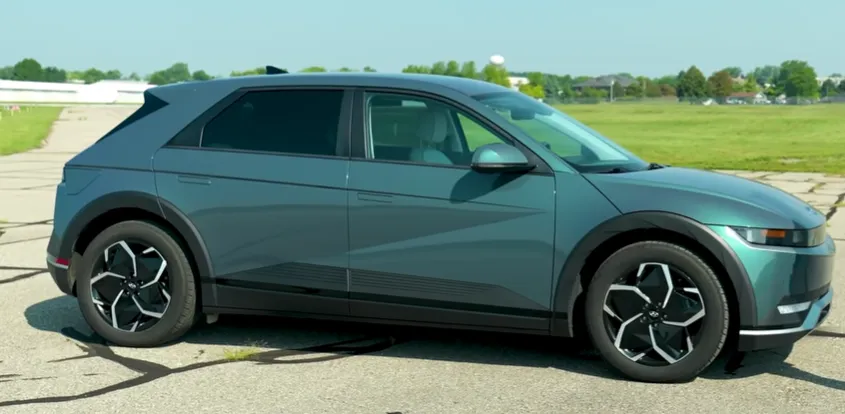
And the cargo space is smaller than it looks. The frunk is a useful 1.6 cubic feet, which beats some competitors. The rear cargo area is 24.4 cubic feet, per Kia’s specs. That’s less than the comparable Ioniq 5. For most people on most days it’s enough. But if you regularly haul large amounts of gear or do big grocery runs with a full family, you feel the constraint.
Neither is a dealbreaker. Both are real.
How the EV6 Fits Different Buyers
Should you buy the EV6? Depends entirely on one thing. How you charge.
You have home charging. This is the sweet spot. Plug in every night. Wake up with 200-plus miles every morning. The range question mostly disappears and the EV6’s fast charging, strong performance, and interior quality make it one of the best EVs under $55,000 on sale right now.
No home charging, rely on public chargers daily. Harder. Doable if there’s a fast charger near your workplace or on your routine route. But it requires more planning than a gas car.
Frequently drive 200-plus miles in a single day. The EV6 can handle it with a charging stop. The 800-volt system makes that stop short. But if this is your everyday reality, weigh whether that planning overhead is something you want.
Want maximum range with no compromise. The Tesla Model Y Long Range or the Ioniq 6 get you closer to 330 real-world miles. The EV6 trades some of that for better charging speed and a more engaging drive.
The EV6 starts at $39,445. The Wind Long Range RWD, which is where most buyers should land, is around $47,000 before any credits. The federal EV tax credit situation changes frequently so verify current eligibility with your dealer.
Kia’s warranty covers 10 years and 100,000 miles on the battery. That’s one of the strongest in the business and removes most of the financial risk from buying an EV in 2026. Per Kia’s warranty documentation.
The thing I kept coming back to at the end of three weeks was this.
The range anxiety I expected to feel never really showed up. And I wasn’t expecting that. I went in looking for the problem everyone talks about and mostly found that it had already been solved for most use cases. The 800-volt charging is the reason. Twenty minutes at a fast charger and you’re back in business. That changes everything about how the range question actually feels in practice.
It’s not a perfect car. The rear headroom is a real issue. The cargo space could be bigger. And the public charging network, while improving, still can’t match Tesla’s infrastructure in certain regions.
But as a daily driver for a family that can charge at home?
Hard to argue with.
A Few Things People Always Ask
Does the 2026 Kia EV6 qualify for the federal EV tax credit? It depends on your income and the specific trim. The EV6 has had fluctuating eligibility based on battery sourcing requirements under current federal guidelines. Check directly with the IRS clean vehicle credit page or ask your dealer before purchasing. Don’t assume.
How long does it take to charge the EV6 at home? On a standard 120-volt outlet, very slowly. Around 3 to 4 miles of range per hour. On a 240-volt Level 2 charger (the right setup for home charging), the long-range battery adds roughly 30 to 35 miles per hour. A full charge from near-empty overnight is realistic.
Is the Kia EV6 reliable? KBB consumer ratings put it at 3.9 out of 5 for reliability. Owner surveys show above-average satisfaction after 9-plus months of ownership. The main reliability concerns from real owners involve software glitches requiring reboots, not mechanical failures. Most units have been trouble-free per owner forum data.
EV6 or Hyundai Ioniq 5? Ioniq 5 has more cargo space and a roomier interior. EV6 has a sportier drive and a more exciting exterior design. Both share the same 800-volt platform and similar charging speeds. The Ioniq 5 is better for families focused on space. The EV6 is better for drivers who want the car to feel like a car.
What’s the EV6 GT-Line like? The GT-Line AWD puts out 320 horsepower. Zero to sixty in about five seconds. Strong without being irresponsible. The GT version (641 horsepower) is a different animal entirely and reviewed separately. Most buyers don’t need it.
Can the EV6 use Tesla Superchargers? With the NACS adapter that Kia started making available in 2025, yes. Availability of the adapter varies by region and trim as of May 2026. Confirm with your dealer before buying if Supercharger access is important to your decision.