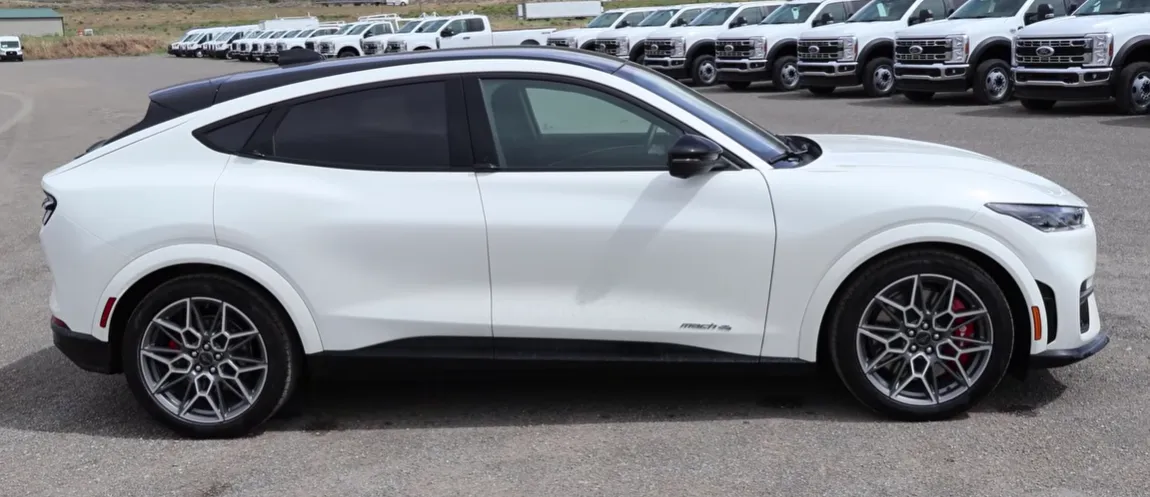
Before we get into anything else, I want to be honest with you about something. The Mach-E is a car that splits people right down the middle. Some people lease one, fall in love with it, and never want to go back to gas. Others spend three weeks with it, hand back the keys, and immediately go buy a Toyota. Both reactions are completely valid. The car is that specific.
So instead of telling you it’s great for everyone, I’m going to tell you exactly who it’s built for, and exactly who should look somewhere else. By the end of this you’ll know which group you’re in.
Key Takeaways
- The 2026 Mach-E starts around $42,000 and tops out near $63,000 for the GT Performance Edition.
- Real world range on the standard range battery is around 210 to 220 miles. The extended range gets you closer to 290 to 300 miles.
- Charging at home with a Level 2 charger adds around 22 miles of range per hour, which means a full charge overnight is easy if you start with a nearly empty battery.
- The interior is clean and simple but the giant vertical screen takes some getting used to and not everything about it works the way you’d expect.
- The Mach-E drives well for an electric SUV. It’s quick, smooth, and genuinely fun in the GT version.
- Cargo space is decent for a family but the frunk up front is more of a party trick than a real storage solution.
- This is the right car if you charge at home, drive mostly in the city or suburbs, and want something different. It’s the wrong car if you road trip often or live somewhere with unreliable charging.
Who Is the Mach-E Actually Built For?
Let me give you the honest answer right up front. The Mach-E works best for a specific kind of driver.
You drive mostly local. Work, school runs, groceries, weekend stuff. You have a garage or a driveway where you can plug in a Level 2 charger. You care about running costs and the idea of never stopping at a gas station sounds genuinely appealing to you. You want something that looks different from every other crossover in the school parking lot.
That person will love the Mach-E. I mean really love it.
If that’s not you, if you road trip a lot, if you rent an apartment with no dedicated charging, if you’re in an area where charging stations are still sparse, then the Mach-E will frustrate you. Not because it’s a bad car. But because EVs in general need your life to be set up in a specific way to work well. The Mach-E is no different.
I drove it for three weeks. Two of those weeks were exactly the kind of local driving I described above. Easy, relaxed, genuinely enjoyable. Week three involved a longer drive to visit family about 180 miles away. That trip required planning I don’t normally have to do with a gas car. Worth knowing before you commit.
How Much Does the 2026 Mach-E Actually Cost?
The starting price looks reasonable. Then you look at what the base trim actually includes and you start moving up.
| Trim | Starting Price | Range | Best For |
|---|---|---|---|
| Select | ~$42,000 | ~210 miles | Entry point, basic features |
| Premium | ~$47,000 | ~210-290 miles | Sweet spot for most buyers |
| California Route 1 | ~$55,000 | ~290 miles | Range focused buyers |
| GT | ~$60,000 | ~250 miles | Performance focused buyers |
| GT Performance Edition | ~$63,000 | ~250 miles | All out speed |
The Premium with the extended range battery is where most people should land. You get real range, the bigger screen with better software, wireless CarPlay, a panoramic roof, and the B&O sound system. The jump from Select to Premium is worth it. The jump from Premium to GT is only worth it if you actually care about going fast, and the GT is genuinely fast.
Something important about the federal tax credit. The Mach-E qualifies for up to $7,500 in federal tax credit depending on your income and how you buy it. If you finance or buy outright and your income is under the threshold, that credit can make the effective price much more competitive. Talk to your accountant before you sign anything. Source: IRS Clean Vehicle Credit guidelines, 2025.
Running costs after purchase are low. Electricity to charge at home costs roughly $40 to $60 per month at 15,000 miles per year depending on your local electricity rate. Compare that to $150 to $200 per month in gas for a similar sized crossover. That gap adds up fast over three years.
Insurance runs higher than average for EVs. Expect $1,800 to $2,400 per year. Battery repairs outside warranty are expensive. These are real costs that offset some of the fuel savings.
What Happened During My Three Weeks With It
First morning I walked out to it, plugged it in the night before, woke up to a full battery. That never gets old. Seriously. Starting every day with a full tank without ever going to a gas station is one of those things that sounds minor until you experience it and then you wonder why you didn’t do it sooner.
Getting in, the interior hits you immediately. It’s very clean. Very simple. The giant 15.5-inch vertical screen in the center handles almost everything. Climate, navigation, music, settings. First day I found myself looking for physical buttons that weren’t there. By day three I stopped looking. By day seven it felt completely normal.
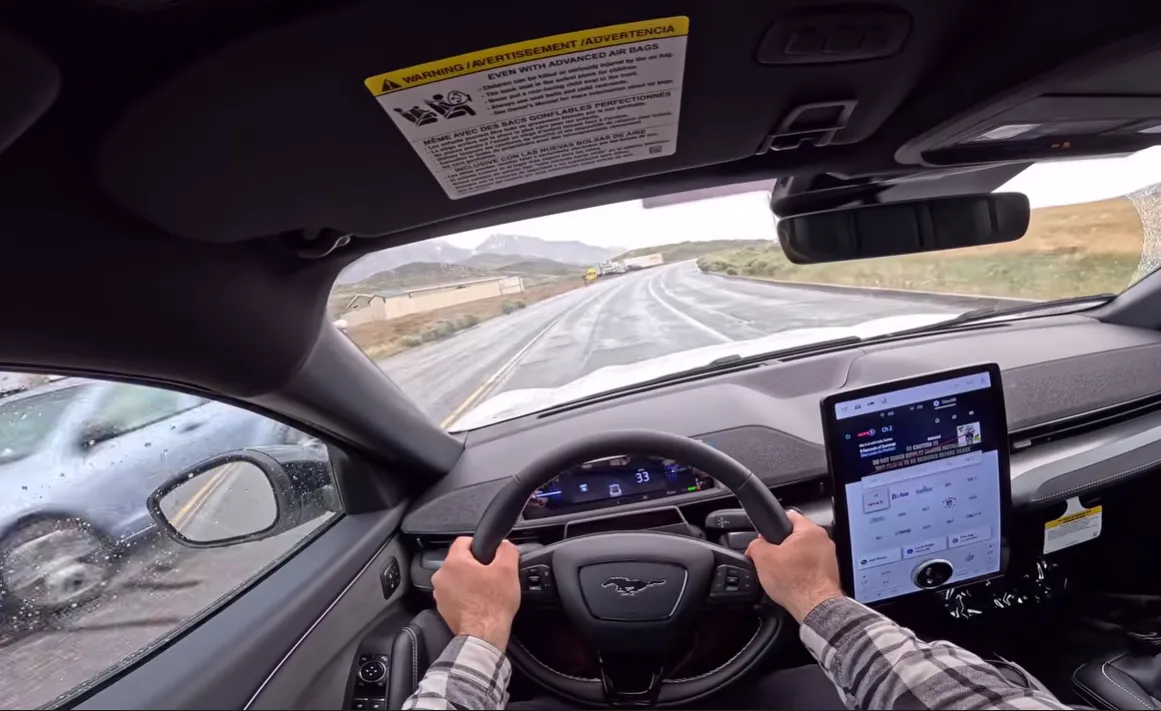
My daughter sat in the back on day two and immediately asked if she could control the temperature from back there. She couldn’t, not directly, but the rear vents have their own controls which she found within about forty seconds. Kids adapt to new things faster than adults. She approved.
The frunk. I opened it hoping for usable bonus storage. It fits a small bag, a laptop, jumper cables, that kind of thing. Fits about 4.8 cubic feet. My wife looked at it, looked at me, and said “that’s it?” It’s more useful than nothing but don’t plan your grocery run around it.
One afternoon I took the kids to soccer practice. About 14 miles each way. Came home and the battery dropped exactly what I expected. Plugged in before bed. Next morning, full again. That loop, drive, plug in, wake up full, is the core Mach-E ownership experience and it genuinely works.
The one moment that caught me off guard was at a public charger on week three. The charger I planned to use was broken. Had to reroute to find another one. Added about 25 minutes to my trip. That happens with EVs sometimes. Not often if you plan well. But it happens.
How Does It Feel to Drive?
Much better than you might expect if you’ve never driven an EV before.
The instant torque that all EVs have is real and it changes how the car feels. You press the accelerator and it goes. Right now. No pause, no buildup, just immediate movement. Around town this makes the Mach-E feel quick and confident in a way that its horsepower number doesn’t fully explain.
The standard Mach-E makes 266 horsepower in the all-wheel drive setup. Zero to 60 in about 5.8 seconds. Source: Ford, 2025. That’s plenty for normal driving. The GT version does zero to 60 in 3.5 seconds and that is a completely different experience. It pushed my kids back in their seats on a test pull and my son immediately asked me to do it again.
Handling is solid for an SUV. The Mach-E sits lower than most crossovers because the battery pack in the floor lowers the center of gravity. That makes it feel more planted in corners than you’d expect. It’s not a sports car. But it doesn’t feel like a heavy, lumbering thing either.
One-pedal driving is available and worth learning. When you lift off the accelerator in the strongest regenerative braking mode the car slows down significantly without touching the brake pedal. I used regular brakes for the first week and switched to one-pedal driving in week two. By week three I was using the brake pedal only for full stops.
Wind noise at 65 mph was very well controlled. The door seals on the Mach-E are good and highway cruising is quiet enough to have a normal conversation in the back seat. The motor makes almost no noise at low speeds which can be jarring if you’re used to a gas engine. It just rolls forward in near silence.
What About the Family Stuff?
Rear seat space is genuinely good. Legroom measures 39.6 inches in the back. Source: Ford, 2025. My kids had real space. An adult sitting behind my driving position had room without complaining. That’s better than a lot of crossovers at this price.
Car seat installation was easy. LATCH anchors were in a good position and accessible without digging around. Rear-facing infant seat fit fine behind my seat at 6’1″. The flat floor in the back is a nice bonus because there’s no transmission tunnel running through the middle. Three across in the back seat works better than it does in most competitors.
Step height getting in is comfortable. Not too high, not too low. My 4-year-old got in and out without drama which is the real test.
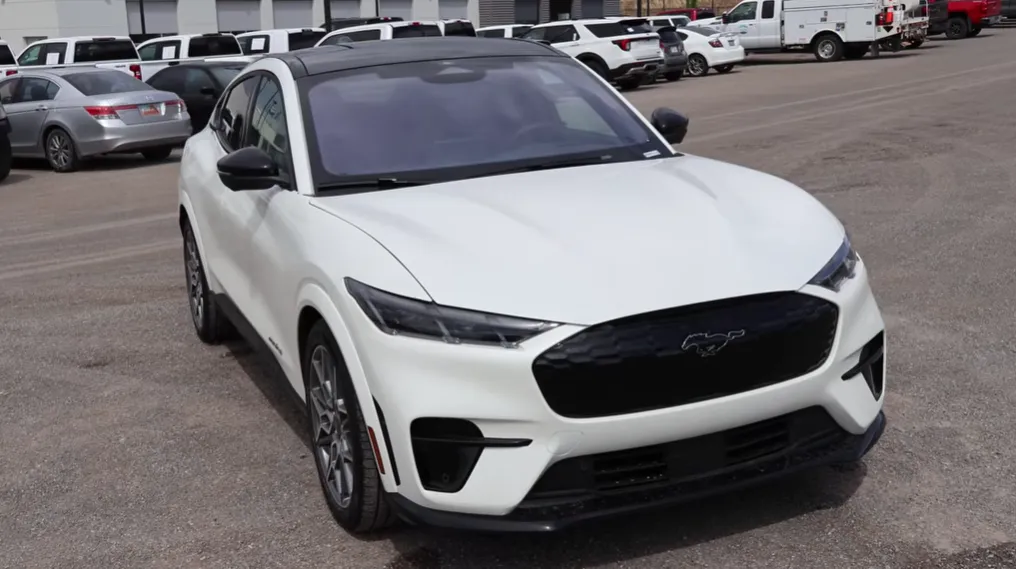
Cargo behind the rear seat is 59.7 cubic feet with the seats folded, 29.7 with them up. Source: Ford, 2025. That’s competitive for this class. A folded stroller fits easily. Four large bags of groceries went in without stacking. The cargo floor is flat and easy to load.
The charging cable lives in the cargo area when not in use. It takes up a small but noticeable chunk of the boot space. A little annoying. Worth knowing.
The Honest Problems With the Mach-E
Three things. No softening.
The software still has rough edges. Ford’s SYNC 4A system has gotten better but it still freezes occasionally. Once in three weeks my screen went dark for about 30 seconds while driving before rebooting itself. Climate and basic driving functions stayed on. But a blank main screen while driving is not a good feeling. This is a known issue that Ford has addressed through over the air updates but it still happens. Source: Mach-E owner forums, 2025.
Public charging is still not as easy as gas. Ford’s BlueOval charge network and third party networks like Electrify America are better than they were two years ago. But broken chargers, slow chargers labeled as fast, and apps that don’t work right are still real parts of the EV public charging experience. If you rely heavily on public charging you will have moments of frustration.
The range takes a hit in cold weather. If you live somewhere that gets cold winters, real world range can drop 20 to 30 percent when temperatures go below freezing. A 290-mile extended range battery becomes closer to 200 to 220 miles in serious cold. That’s still workable for daily driving but it shrinks your buffer on longer trips. Source: AAA electric vehicle range testing, 2024.
How Reliable Is the 2026 Mach-E?
Better than the early models. The 2021 and 2022 Mach-E had some well-documented issues including a recall on the high voltage battery contactors. Ford addressed those and the 2024, 2025, and 2026 versions have a much cleaner reliability record. Source: NHTSA recall database, 2025.
Consumer Reports reliability for the current generation Mach-E rates it as average for the EV segment, which is a step up from below average in earlier years. Source: Consumer Reports, 2025.
The powertrain warranty covers 8 years or 100,000 miles on the battery and electric motor. That’s standard for EVs and it covers the most expensive things that could go wrong. Routine maintenance is genuinely lower than a gas car. No oil changes, no transmission service, fewer brake jobs because regenerative braking does most of the work.
Mach-E vs The Main Rivals
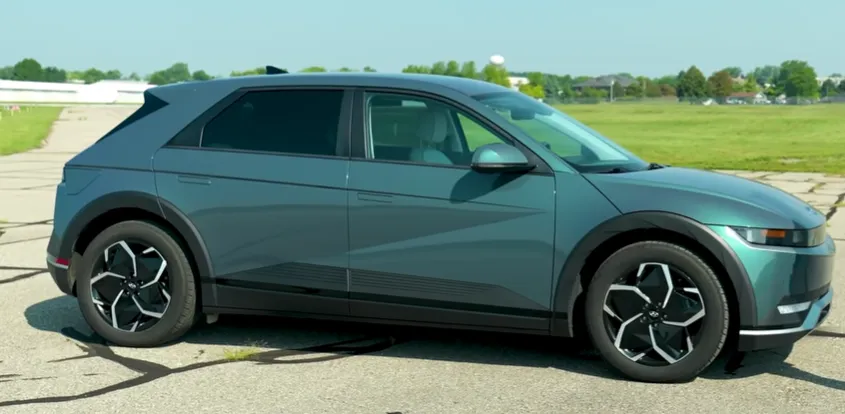
| Feature | Mach-E Premium AWD | Tesla Model Y | Hyundai Ioniq 5 |
|---|---|---|---|
| Starting Price | ~$47,000 | ~$45,000 | ~$44,000 |
| Real Range | ~250 miles | ~310 miles | ~266 miles |
| Cargo Space | 29.7 cu ft | 76 cu ft (total) | 27.2 cu ft |
| Charging Speed | 150 kW DC fast | 250 kW DC fast | 350 kW DC fast |
| Interior Feel | Clean, Ford familiar | Minimal, polarizing | Premium, spacious |
| Software | Good, occasional bugs | Best in class | Very good |
Tesla wins on range and charging speed. The Ioniq 5 wins on charging speed and interior feel. The Mach-E wins on familiarity for people coming from Ford, the driving experience, and the Mustang badge if that means something to you.
My Personal Opinion
Three weeks with the Mach-E left me with a clear opinion. This is a genuinely good car wrapped around a lifestyle requirement.
The lifestyle requirement is home charging. If you have it, the Mach-E works so well that going back to gas feels like a step backward. If you don’t have it, the Mach-E becomes a source of low level stress that builds over time.
The Mustang name bothered me at first. A Mustang is supposed to be a two-door muscle car, not a five-door family crossover. Then I drove the GT. And I kind of stopped caring about the name argument. It’s fast enough to make you smile and practical enough to carry your family. Ford can call it whatever they want.
Would I buy one? If I had a house with a garage and did mostly local driving, yes. Without hesitation. The running costs alone make the math work over three years. The driving experience is a genuine step up from most crossovers at this price. And starting every day with a full battery without visiting a gas station is something I genuinely missed when I handed the keys back.
If I lived in an apartment with no dedicated charging, I’d look at the Ioniq 5 or wait until public charging gets more reliable.
Frequently Asked Questions
Can you road trip in the 2026 Ford Mustang Mach-E? Yes but it takes planning. The extended range model gets around 290 real world miles. On longer trips you need to plan charging stops in advance. Ford’s FordPass app and third party apps like PlugShare help with this. It works but it’s more effort than a gas car.
Does the 2026 Mach-E qualify for the federal tax credit? It qualifies for up to $7,500 depending on your income level and purchase method. Check the current IRS clean vehicle credit rules before buying because the rules around income limits and vehicle pricing change. Your accountant can tell you if you qualify. Source: IRS, 2025.
How long does it take to charge the Mach-E at home? With a standard 120V outlet a full charge from empty takes around 24 hours, which is too slow for daily use. A Level 2 home charger, which you install in your garage, adds about 22 miles of range per hour. Most people charge overnight and wake up to a full battery.
Is the Mach-E good for families with young kids? Yes. Rear seat legroom is generous, car seat installation is easy, and the flat rear floor makes three-across seating more workable than most crossovers. The frunk gives you extra space for small items.
How does the Mach-E handle cold winters? Range drops 20 to 30 percent in very cold weather. The extended range battery at 290 miles becomes closer to 200 miles in freezing temperatures. For daily local driving that’s still fine. For long winter road trips it requires more careful planning.
What is the maintenance cost of the Mach-E? Lower than a gas car. No oil changes, no spark plugs, fewer brake replacements because regenerative braking does most of the work. Main costs are tire rotation, cabin air filter, and windshield wiper fluid. Annual maintenance typically runs $150 to $300. Source: RepairPal, 2025.
Is the Ford Mustang Mach-E reliable? The 2026 model is more reliable than early versions. Ford fixed the battery issues from 2021 and 2022. The current generation rates average for the EV segment from Consumer Reports. The 8-year battery warranty covers the most expensive potential repair.