The Bottom Line
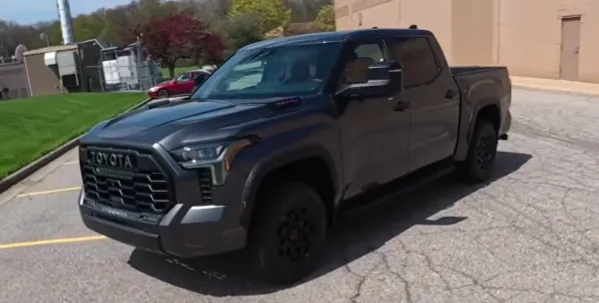
I had the 2026 Toyota Tundra SR5 Crew Max on a three week lease when my brother Ray called me and asking for a help. His landscaping business landed a contract bigger than his own truck could handle now. Two days hauling decomposed granite, large boulders, and irrigation equipment between job sites in Henderson and Boulder City. I was Real grades and Real payload. A loaded utility trailer on US-93. I already knew what the Gladiator could do. The Tundra showed me what a full-size truck feels like when the work actually gets serious. Read the full story below.
My bro Ray called on a Friday afternoon. His crew had a weekend contract that required moving more material than his Ram 1500 could handle in a reasonable number of trips. Decomposed granite for three backyard projects, large decorative boulders, irrigation pipe, and equipment. Henderson and Boulder City. About 25 miles from Las Vegas on one end, 35 miles on the other.
I had the Tundra SR5 CrewMax sitting in the driveway with less than 400 miles on it.
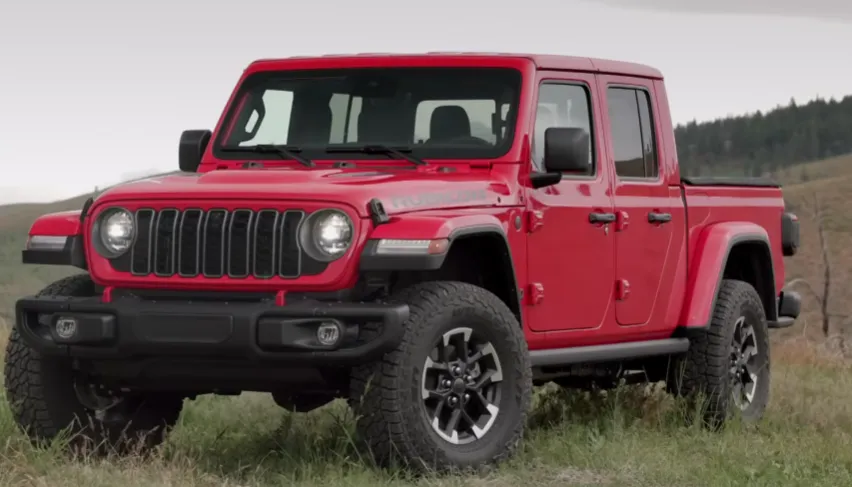
“I’ll be there at six,” I said. I want to put this in context before the details. A few months earlier I spent a day helping Ray with the Jeep Gladiator on a Henderson job. That truck handled light loads, got a workout on a steep unpaved driveway, and showed me exactly where a midsize truck hits its ceiling. The Gladiator’s payload cap was 1,200 pounds. Its bed was five feet. It worked. It had limits.
The Tundra’s payload caps at 1,940 pounds. The bed on the SR5 CrewMax I had is 6.5 feet. The twin-turbo V6 makes 389 horsepower and 479 pound-feet of torque.
Two different categories of truck. Two different conversations.
Saturday: Henderson. The First Load.
Ray’s supplier is off Warm Springs Road in Henderson. We loaded the first run at 6:45am before the heat got serious.
Decomposed granite comes in bulk by the ton. We loaded about 1,600 pounds into the Tundra’s bed across the first trip. Large decorative boulders on top, tarped down. Irrigation pipe loaded alongside.
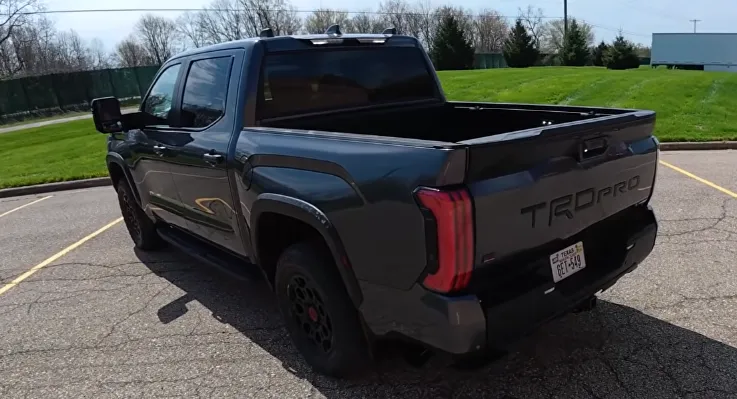
The composite bed on the 2026 Tundra is sheet-molded compound construction. Resistant to rust and dents. When you’re dropping heavy material in and out of a truck bed across a full weekend, the surface takes abuse. By Sunday evening the Tundra’s bed had scratches from the boulders and DG dust in every corner. The composite construction meant no rust concerns from the granite and no dents from the rock edges the way a steel bed would show.
The load sat low. Noticeably low. The rear of the truck visibly settled with 1,600 pounds in the bed. Ray watched it and nodded. His Ram settles the same way under heavy loads. We checked the tire pressure after loading, found two pounds low in the rears, corrected them, and left.
Pulling onto the surface streets of Henderson loaded, the Tundra felt planted. Not strained. Not searching for power. The twin-turbo V6 filled in from low revs with a torque delivery that felt effortless under the weight. No pause. No hunt from the 10-speed automatic. It just pulled.
The delivery driveway at the first job site was tight. The Tundra is 233.6 inches long. Turning diameter is 48.6 feet. In a cul-de-sac with parked cars on both sides I did a three-point turn that required actual attention. Ray directed from outside. It fit. It always fits. But full-size trucks in residential streets require respect and the Tundra is no different.
Saturday Afternoon: Boulder City. The Trailer.
After the second Henderson drop Ray hooked up his utility trailer. Loaded with a plate compactor, a mini-skid steer attachment, irrigation coils, and hand tools. Trailer loaded weight around 5,800 pounds.
US-93 from Henderson to Boulder City climbs. Not dramatically. But the grades between the valley and Boulder City are real and sustained and they separate trucks that tow from trucks that manage towing.
The Tundra managed it like it wasn’t happening.
At 65 mph on the uphill grades with 5,800 pounds behind it, the engine note barely changed. The 10-speed automatic held gears with logic instead of hunting. The integrated trailer brake controller kicked in smoothly on the downhill sections back toward Henderson. No sway. No correction needed from me. The truck tracked straight and confident in a way that made the whole afternoon feel routine instead of tense.
I have towed with the Gladiator. At 4,500 pounds it felt composed but aware of the load. At 5,800 pounds with the Tundra I stopped thinking about the trailer about 20 minutes into the drive. That is the difference between a midsize truck towing near its ceiling and a full-size truck towing well within its range.
Ray rode passenger most of Saturday. At one point on the return from Boulder City he said nothing for about ten minutes. I asked him what he was thinking.
“I need a bigger truck,” he said.
He owns a Ram 1500 and has for six years.
Sunday: The Full Day.
Sunday was longer. Three job sites. Two runs to the supplier. One more trailer trip with a different load, this time about 4,200 pounds of flagstone stacked on Ray’s flatbed trailer.
The Tundra’s 32.2-gallon fuel tank is now standard across all 2026 trims. That larger tank matters on a work weekend. We fueled once on Saturday evening and did not stop for fuel on Sunday until late afternoon. At 18 to 19 mpg in real loaded mixed driving that tank gives you serious range between stops.
Fuel economy across two days of hauling and towing averaged about 17.8 mpg. Unloaded highway legs pushed it closer to 21. Fully loaded city driving on surface streets dropped it to around 15. The EPA combined estimate is 18 mpg for the 4WD SR5. In heavy use we came close to that average across the full weekend.
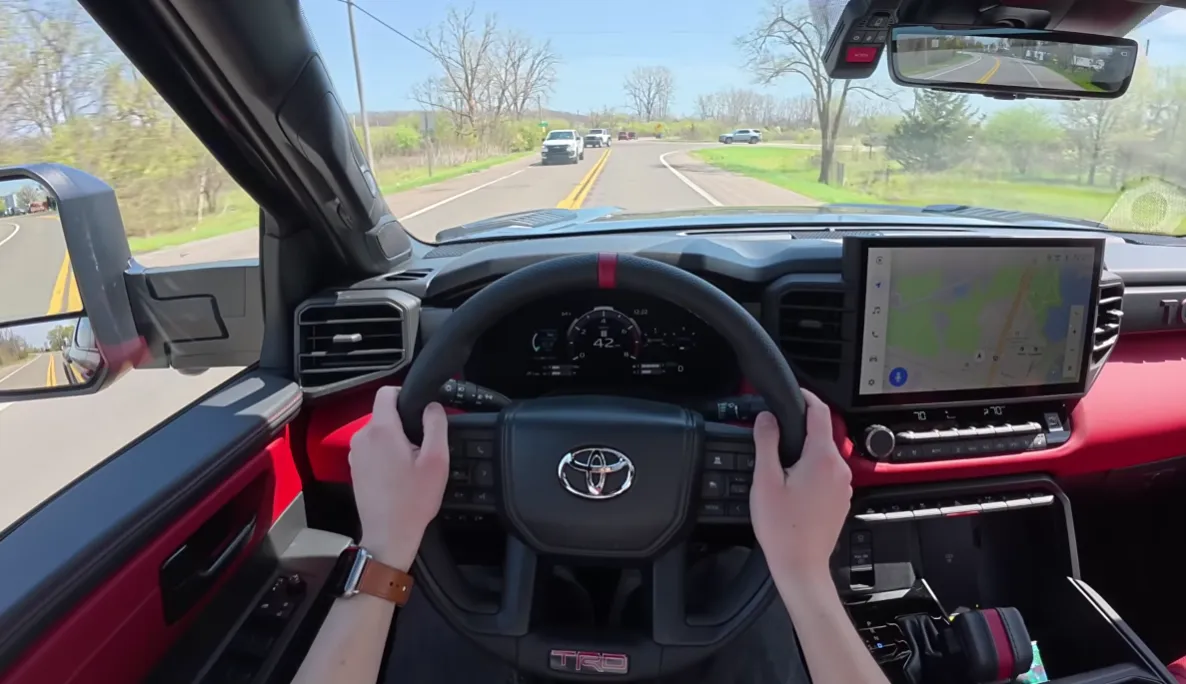
By Sunday afternoon both of us had been in and out of the truck dozens of times. Loading, unloading, checking loads, checking the trailer hitch, repositioning between job sites. The seat held up through all of it. At the end of the second day my lower back had zero complaints. That is the kind of review that a seat earns across a real work weekend rather than a 20-minute test drive.
How the Tundra Compares to What I’ve Driven
The Gladiator comparison is natural because I’ve used it in similar conditions.
The Tundra carries significantly more. 1,940 pounds payload versus the Gladiator’s 1,200. That difference eliminated an entire trip on Saturday. Fewer trips means less time, less fuel, less driver fatigue.
The Tundra tows more confidently at higher weights. The Gladiator at 4,500 pounds was composed. The Tundra at 5,800 pounds was relaxed. Two different experiences.
The Tundra’s bed is 6.5 feet versus the Gladiator’s 5 feet. On Sunday’s flagstone load that extra 18 inches meant the trailer wasn’t needed for the flattest pieces. They went in the truck bed instead.
Against the class competition the Tundra is not the towing leader. The Ram 1500 and F-150 offer higher maximum tow ratings on specific configurations. What the Tundra trades for that is a reliability track record that neither competitor fully matches. Edmunds put it plainly: the Tundra isn’t best-in-class for towing or payload but it pairs competence with comfort in a way that makes long ownership easier than the numbers suggest.
Ray’s comment by Sunday evening: “Your truck is better than mine.” He has owned his Ram for six years. He knows what his truck feels like under load.
The Honest Problems
One owner review on Edmunds caught my attention during research and belongs here. A 2026 Tundra owner described a turbo failure that required removing the cab to replace the turbo, a manufacturing debris issue that required an engine replacement, transmission lag entering traffic, and multiple recalls. That is a severe ownership experience and it is real data that belongs in an honest review.
Is it representative? Probably not. The Tundra’s reliability reputation across hundreds of thousands of owners is strong. But the twin-turbo V6 introduced with the current generation is more complex than the V8 it replaced, and early-generation reliability data on complex new powertrains always carries more uncertainty than a proven older engine. Anyone buying the current Tundra generation should know the powertrain is newer than Toyota’s reputation and should verify any active recalls on their specific VIN before taking delivery.
The turning radius in residential streets is something you adapt to but never fully stop noticing. At 48.6 feet it requires multi-point turns in situations where smaller trucks make it in one. Not a dealbreaker. A daily reality.
And the pricing on upper trims is serious money. The Limited CrewMax 4WD starts around $54,860. The Platinum and Capstone push well past $70,000. At those prices the Tundra is competing with luxury truck territory and the interior, while good, doesn’t always justify the gap against the Ram Limited or the F-150 King Ranch at similar money.
Reliability
NHTSA gave the 2026 Tundra a five-star overall safety rating. Toyota Safety Sense comes standard across all trims. The composite bed resists rust and minor dents better than steel alternatives.
Tow hitch and 7/4-pin trailer wiring is now standard on every 2026 Tundra trim including the base SR. That change removes a common upfit cost that previous Tundra buyers had to pay separately.
The twin-turbo V6 powertrain warranty runs 5 years or 60,000 miles on the powertrain, 3 years or 36,000 bumper-to-bumper. Standard for the class. Toyota’s long-term reliability reputation provides real confidence beyond the warranty coverage period for most owners, but the current generation’s complexity warrants a careful VIN check before purchase.
Who Should Buy the 2026 Tundra
Buyers who do real work regularly and want Toyota’s reliability history behind a full-size truck. The payload and towing numbers are not class-leading but they cover everything most working owners actually need. The fuel tank range changes how often you stop on a work day. The composite bed handles the abuse a working truck takes better than competitors.
Buyers who want the highest towing numbers in the full-size class should compare the F-150 and Ram 1500 carefully on specific configurations. The Tundra won’t win every spec comparison. What it offers instead is a package that holds together over 150,000 hard miles in a way that the comparison leaders don’t always match.
For Ray specifically. He’s shopping. The Tundra is the front runner.
Frequently Asked Questions
How much can the 2026 Toyota Tundra tow?
Up to 12,000 pounds on gas trims properly equipped. The i-FORCE MAX hybrid tops at 11,450 pounds. These are configuration-dependent numbers. Always verify the specific tow rating on your vehicle’s door jamb sticker before connecting any trailer. Per Toyota’s published specifications.
What engine does the 2026 Tundra have?
Two options. The i-FORCE 3.4-liter twin-turbo V6 making 389 horsepower and 479 pound-feet of torque across most trims, or the i-FORCE MAX hybrid version making 437 horsepower and 583 pound-feet. The hybrid doesn’t improve fuel economy significantly over the gas engine but adds meaningful low-speed torque for towing.
Is the 2026 Toyota Tundra reliable?
Toyota’s overall reliability reputation is strong and the Tundra benefits from it. The twin-turbo V6 is newer than the V8 it replaced and some early owners have experienced powertrain issues as noted in owner reviews. Long-term data across high mileage is still building on this generation. Verify active recalls on your specific VIN through NHTSA before taking delivery.
How does the 2026 Tundra compare to the Ford F-150?
The F-150 has higher maximum tow ratings on specific configurations and a wider engine selection including a hybrid option with better fuel economy. The Tundra has a stronger long-term reliability track record and a composite bed that handles work abuse better than steel. At comparable prices both are strong trucks. The choice often comes down to brand loyalty, payload requirements, and whether fuel economy or reliability history is the priority.
What is the fuel economy on the 2026 Tundra?
EPA estimates 18 city and 23 highway for 4WD gas models. The 32.2-gallon fuel tank is standard on all 2026 trims and provides meaningful range between fuel stops on work days. Real-world mixed loaded driving in our two-day test averaged 17.8 mpg. Per EPA and real-world testing.
Which Tundra trim is the best value?
Autoblog recommends the Limited CrewMax 4WD as the best balance of comfort, technology, and capability. The SR5 is the practical entry to the meaningful capability range. The Platinum and Capstone at $70,000-plus push into pricing where the interior needs to justify the cost, and reviews suggest it doesn’t always.