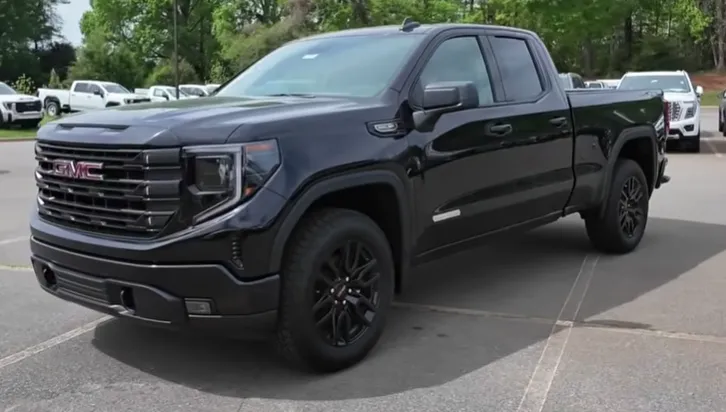
Most truck buyers already know which truck they want before they walk into the dealership. Ford guys buy F-150s. Ram guys buy Ram 1500s. Chevy guys buy Silverados. The Sierra exists in this interesting space where it’s basically a Silverado underneath but with a nicer interior, a fancier badge, and a slightly higher price.
So the real question isn’t whether the Sierra is a good truck.
It clearly is.
The real question is whether it’s good enough compared to what else you could buy at the same price. And that’s what three weeks of real family driving, highway miles, and a few actual work days helped me figure out.
Key Takeaways
- The 2026 Sierra 1500 starts at $41,640 for the base Pro trim and climbs to $88,890 for the Denali Ultimate. Source: GMC, 2026.
- Engine choices are genuinely impressive. A 2.7-liter TurboMax four-cylinder, a 5.3-liter V8, a 6.2-liter V8, and a 3.0-liter diesel. Something for every kind of buyer.
- The MultiPro tailgate is one of those features that sounds gimmicky until you use it every day and then you can’t imagine not having it.
- Interior quality on the Denali trims is the strongest argument for the Sierra over the Silverado. Real difference. Not subtle.
- Towing goes up to 13,300 pounds properly equipped. Source: GMC, 2026.
- Fuel economy on the 5.3-liter V8 averages around 16 to 17 mpg in real mixed driving. Plan for it.
- The Sierra’s biggest weakness is value against the Ram 1500 and F-150 at comparable price points. You pay a premium for the badge.
Round One: GMC Sierra 1500 vs Ford F-150
Start with the obvious comparison.
The F-150 is the best-selling vehicle in America. Not just the best-selling truck. The best-selling vehicle full stop. So how does the Sierra actually stack up against it?
Engines. F-150 wins on variety.
Ford offers a hybrid PowerBoost option that returns around 24 mpg combined. Source: EPA, 2026. The Sierra has no hybrid option in the 1500. If fuel economy matters seriously to you, the F-150 hybrid changes the math in a meaningful way over five years of ownership.
The Sierra’s 2.7-liter TurboMax makes 310 horsepower and 430 pound-feet of torque. Source: GMC, 2026. That torque number is strong. Pulling a loaded trailer up a long grade on day six of my lease, the TurboMax felt muscular and confident in a way that surprised me given it’s a four-cylinder.
Towing. About equal on comparable engines.
Interior. Sierra wins on the Denali versus F-150 Platinum comparison.
This surprised me. I expected Ford to win on interior quality because the F-150 has been refined for so long. But the Denali interior has genuine premium materials, a thoughtful layout, and a level of fit and finish that matches or slightly beats the F-150 Platinum at the same price point. The stitching on the seats. The weight of the controls. The feeling that things were assembled carefully rather than quickly.
My wife sat in both within the same week. She picked the Sierra interior without hesitation. I didn’t tell her which one cost more.
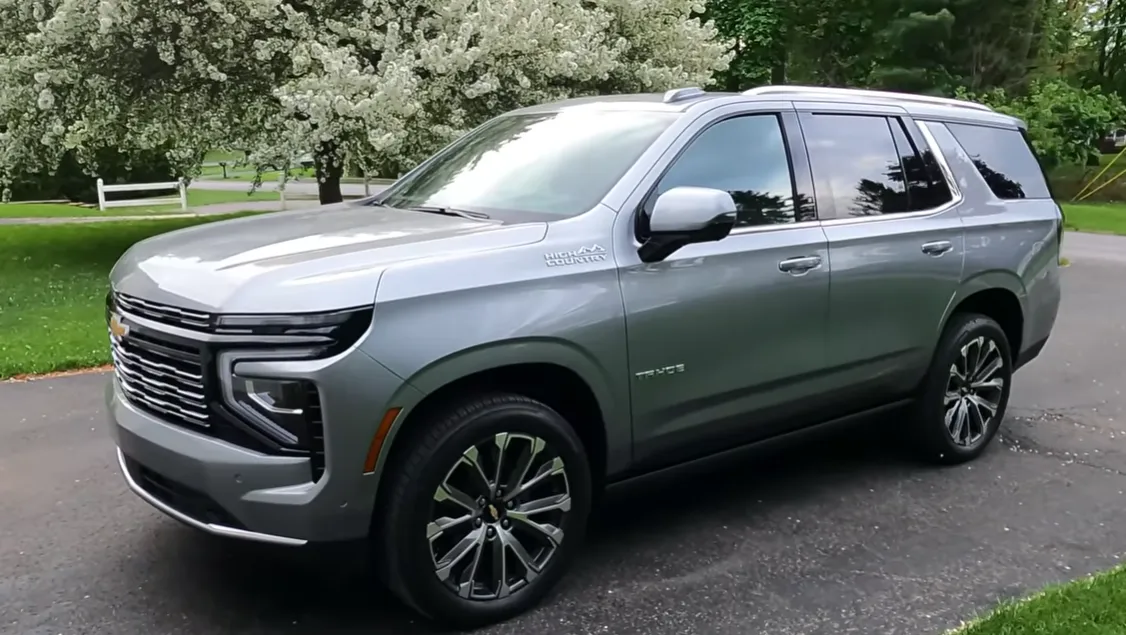

The MultiPro tailgate. F-150 has nothing like it.
Six different configurations. Step for loading. Work surface. Inner gate for short cargo. Load stop. I used the step function every single day loading and unloading the truck bed. After three weeks I cannot explain why every truck doesn’t have this.
My son tried every configuration on day one. Took him about 12 minutes. He declared the step function his favorite because “it makes the truck feel like a jungle gym.” He’s not wrong.
| Feature | GMC Sierra SLT 4WD | Ford F-150 XLT 4WD |
|---|---|---|
| Starting Price | ~$55,000 | ~$52,000 |
| Base Engine | 2.7L TurboMax 310hp | 2.7L EcoBoost 325hp |
| Max Towing | 13,300 lbs | 13,500 lbs |
| Hybrid Available | No | Yes |
| Interior Quality | Excellent | Very Good |
| MultiPro/Pro tailgate | Yes | No |
| Fuel Economy (V8) | ~16 mpg combined | ~17 mpg combined |
Source: EPA, manufacturer specs, Edmunds, 2026.
Verdict. F-150 wins on engine variety, hybrid availability, and slight edge on base pricing. Sierra wins on interior quality at comparable trims and the MultiPro tailgate. If you tow heavily and care about the interior, Sierra. If fuel economy matters, F-150 hybrid.
Round Two: GMC Sierra 1500 vs Ram 1500
This one is closer than people think.
The Ram 1500 has the best ride quality in the full-size truck segment. Not by a small amount. By a meaningful amount. The coil-spring rear suspension soaks up road imperfections in a way the Sierra’s leaf-spring setup simply can’t match.
Day two of my Sierra lease I drove it back-to-back with a friend’s Ram 1500 on the same stretch of road. Same bumps. Same potholes. Same expansion joints.
The difference was real.
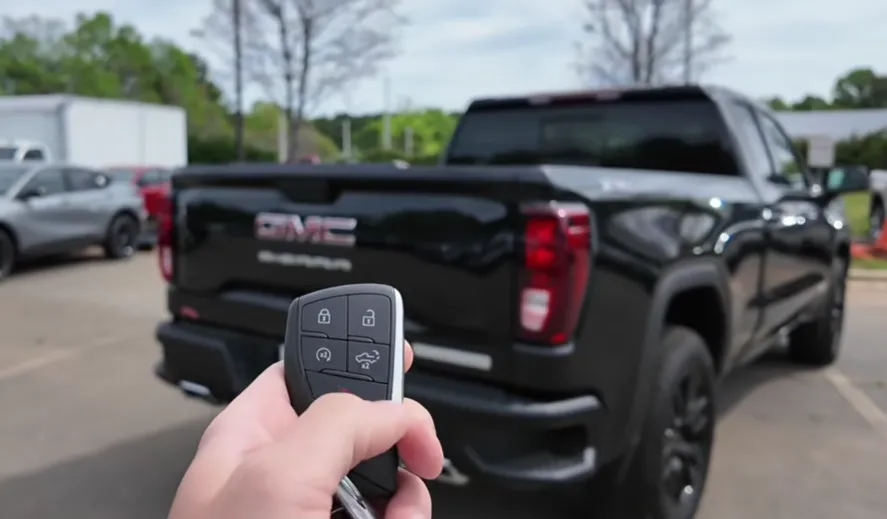
The Ram floated over things. The Sierra absorbed them. Both are acceptable. The Ram is noticeably better for daily commuting comfort.
Interior. Ram wins on the lower trims. Sierra wins on Denali vs Ram Limited.
The Ram 1500’s interior design is more dramatic. More styled. The big vertical screen. The wide dashboard. It feels premium from the moment you sit down. The Sierra SLT interior is nice but it doesn’t have that same wow factor at first glance.
But the Denali versus Ram Limited comparison flips that. The Denali’s materials and fit quality edge ahead of the Ram Limited in ways you notice after living with both for a week.
Ride comfort. Ram wins clearly.
Towing. Sierra and Ram are comparable depending on engine and package.
Technology. Ram wins on the big vertical screen and the overall tech experience on mid-range trims.
| Feature | GMC Sierra SLT 4WD | Ram 1500 Big Horn 4WD |
|---|---|---|
| Starting Price | ~$55,000 | ~$52,000 |
| Ride Quality | Good | Excellent |
| Rear Suspension | Leaf spring | Coil spring |
| Interior Drama | Understated | Bold |
| Max Towing | 13,300 lbs | 12,750 lbs |
| Fuel Economy | ~16 mpg combined | ~17 mpg combined |
| Reliability | Good | Average |
Source: Consumer Reports, EPA, manufacturer specs, 2026.
Verdict. Ram wins on ride comfort and lower-trim interior drama. Sierra wins on towing capacity and Denali-level interior quality. If daily commuting comfort matters most, Ram. If towing is your priority and you want a premium feel, Sierra Denali.
Round Three: GMC Sierra 1500 vs Chevy Silverado 1500
Okay. The awkward one.
Same parent company. Same platform. Same engines. Same basic architecture underneath.
So what exactly are you paying extra for with the Sierra?
Three things. Genuinely.
The MultiPro tailgate is standard on the Sierra SLT and above. The Silverado’s standard tailgate is fine. The Sierra’s is better. Period.
The interior on comparable trims is nicer in the Sierra. The materials step up. The design is more refined. Sitting in a Sierra SLT and a Silverado LTZ at the same price point, the Sierra feels more intentional inside. Less truck-basic. More premium daily driver.
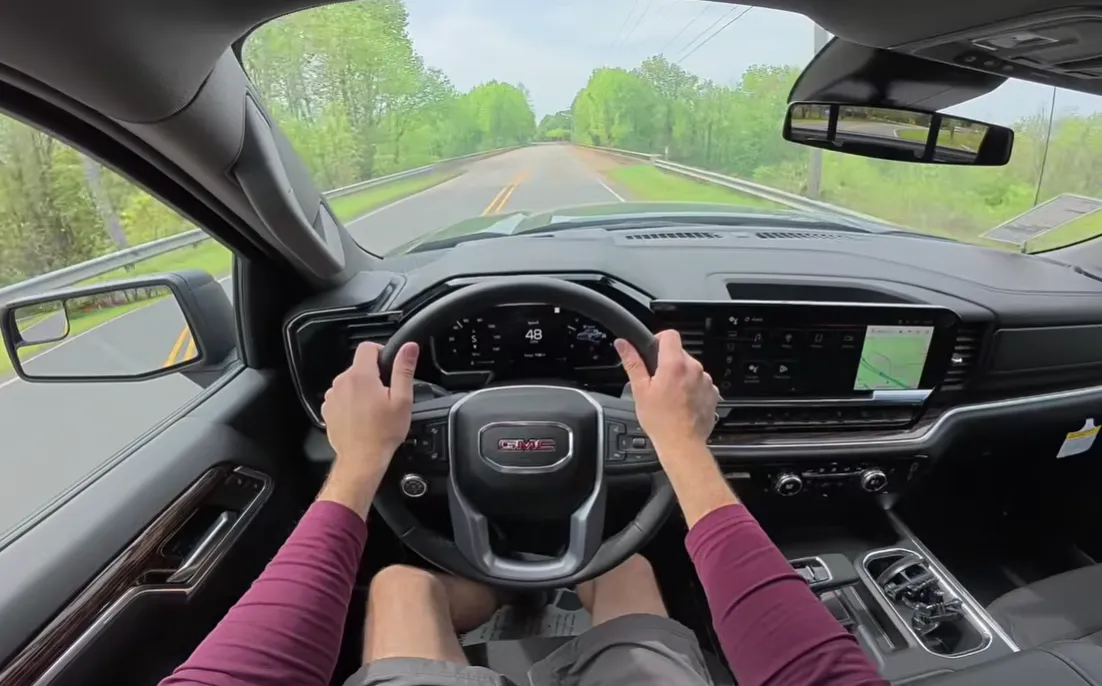
The Denali badge carries weight. If you want the top-tier GM truck experience without going to a Cadillac, the Sierra Denali Ultimate is genuinely impressive. The Silverado High Country is its equivalent and it’s close. But the Denali has a slight edge in perceived quality.
What does all that cost you?
Usually $2,000 to $4,000 more on comparable trims. Source: Edmunds transaction data, 2026.
Is that worth it? Depends entirely on how much the interior and tailgate matter to you versus your budget.
| Feature | GMC Sierra SLT 4WD | Chevy Silverado LTZ 4WD |
|---|---|---|
| Starting Price | ~$55,000 | ~$52,000 |
| Platform | Same | Same |
| Engines | Same | Same |
| Interior Quality | Slightly Higher | Very Good |
| MultiPro Tailgate | Standard | Not available |
| Reliability | Same | Same |
Source: Edmunds, manufacturer specs, 2026.
Verdict. The Sierra is the Silverado with a better interior and a better tailgate for a few thousand more. If those two things matter to you the premium is justified. If not, the Silverado saves you money for identical capability.
What Three Weeks Actually Felt Like
Day one. The truck is big. Obviously big. But it doesn’t feel as wide inside as you’d expect from outside. The cab is roomy without feeling like you’re piloting a building.
Seat adjustment took about 45 seconds to find my position. At 6’1″ I had real headroom. Real leg room. Real everything. Full-size trucks exist partly for people who feel cramped in cars and I felt it immediately in a good way.
The door closed with a sound that belongs in a different price class. Heavy. Solid. The kind of close that makes you nod slightly without meaning to.
Day three. Grocery run. The truck bed got tested before the family got involved. Four large bags, a case of water, sporting equipment, and a heavy bag of soil for the garden. Opened the MultiPro tailgate into step mode. Loaded without lifting anything higher than my waist. Closed it up. Clean, easy, fast.
That’s the tailgate in one real use.
Day five. I took both kids to their soccer practice. Step height into the rear seat is significant. My 4-year-old needed help every single time. No exceptions. Running boards are not optional if you have small kids. They should honestly just come standard.
My 6-year-old managed independently by day four after figuring out a system involving the door handle and the seat edge as a step. He was proud of this. I let him be proud of it.
The rear seat in the crew cab is genuinely roomy. Adults back there for an hour had zero complaints. Legroom is not an afterthought the way it is in some trucks. Headroom is strong even for taller passengers.
Wind noise at 70 mph was well controlled. Better than I expected. Highway driving at 80 mph brought a faint whistle near the driver mirror but nothing conversation-stopping. The cabin is quiet enough to feel refined without feeling sealed off from the world.
Day nine I hooked up a trailer. Nothing massive. A 4,500-pound enclosed trailer. The 5.3-liter V8 version I tested felt completely unbothered. Pulled it onto the highway, cruised at 65, and the truck behaved exactly as if the trailer wasn’t there. The integrated trailer brake controller on the SLT trim made setup straightforward.
The Honest Problems
Three. No softening.
The Sierra costs more than the Silverado for the same capability and most buyers won’t feel the difference daily. The premium for the badge and the interior is real but subtle. If you’re buying this truck for work rather than lifestyle, the Silverado does the same job for less. The Sierra premium makes more sense for buyers who spend a lot of time in the cab and care about the interior experience.
No hybrid option is a real gap against the F-150 in 2026. The F-150 PowerBoost hybrid delivers around 24 mpg combined and gets you significant fuel savings over a five-year ownership period. The Sierra has no equivalent. If you drive high mileage annually that gap costs you real money. Source: EPA, 2026.
Fuel economy on the V8 is genuinely poor. The 5.3-liter V8 averaged around 15.8 mpg in real mixed driving over my lease period. At 15,000 miles a year that’s a significant annual fuel bill. The 2.7-liter TurboMax does better but the V8 is what most buyers in the SLT and above end up with. Plan your fuel budget carefully before you commit.
How Reliable Is the 2026 GMC Sierra 1500?
Decent. Not exceptional.
RepairPal rates the Sierra 1500 at 3.5 out of 5 for reliability, ranking it fourth out of 19 full-size trucks. Source: RepairPal, 2026. Consumer Reports rates it average for the class. That’s fine. But it trails the Ram 1500 and F-150 in some reliability categories.
There is one active recall on 2026 Sierra 1500 models as of publication. Source: NHTSA recall database, 2026. Check the NHTSA website with your specific VIN before taking delivery. Dealers are required to fix recalls at no cost.
Common owner complaints include some transmission hesitation at low speeds in the first few months of ownership, occasional infotainment glitches requiring a reboot, and a few reports of wind noise developing from door seals over time.
The powertrain warranty covers 5 years or 60,000 miles. The bumper-to-bumper is 3 years or 36,000 miles. Source: GMC, 2026. Both are shorter than what Kia and Hyundai offer on their vehicles. Worth knowing.
Routine maintenance runs $500 to $800 per year depending on engine choice. The diesel requires specialized oil and longer service intervals that change the annual cost calculation.
Most Sierra 1500s with regular maintenance run well past 200,000 miles. Source: iSeeCars longevity data, 2025.
My Personal Opinion
Here it is. Straight.
The Sierra is a very good truck that costs a bit more than it probably should at comparable trim levels. That’s the honest summary.
The MultiPro tailgate genuinely changed how I thought about truck practicality. I used it every single day in ways I didn’t anticipate and I missed it the moment I handed back the keys. If GMC sold nothing else and just charged a premium for that tailgate alone it would almost be worth it.
The Denali interior is the other strong argument. If you’re spending $70,000 on a truck and you want to feel like you spent $70,000 on a truck, the Denali delivers that. The Silverado at the same money doesn’t quite get there.
But the no-hybrid situation bothers me. In 2026 with fuel prices where they are, offering zero electrification on a full-size truck that gets 16 mpg feels like a gap that needs closing.
Would I buy one? The SLT with the 5.3-liter V8 and the MultiPro tailgate. That trim hits the balance between price and content better than anything above or below it. Skip the Denali unless you genuinely spend a lot of time in the cab and will appreciate the interior daily.
If towing is your main use and the interior doesn’t matter much to you, save money and buy the Silverado. Same truck, lower price, same capability.
If the interior matters and you want the best tailgate in the business, pay the Sierra premium and don’t look back.
Frequently Asked Questions
Is the GMC Sierra better than the Chevy Silverado? They share the same platform, engines, and capability. The Sierra has a better interior on comparable trims and the MultiPro tailgate which the Silverado doesn’t offer. You pay roughly $2,000 to $4,000 more for those differences. If interior quality and the tailgate matter to you, yes. If not, the Silverado saves you money.
What engine should I get in the 2026 GMC Sierra 1500? The 2.7-liter TurboMax is the best balance of power and fuel economy for most buyers. The 5.3-liter V8 makes sense if you tow regularly and want a proven engine with decades of real-world data. The diesel is for high-mileage buyers who tow often and can justify the higher purchase price through fuel savings.
How much can the 2026 GMC Sierra 1500 tow? Up to 13,300 pounds with the right engine and tow package. Source: GMC, 2026. The specific tow rating varies by engine, cab configuration, and bed length. Always check the door jamb sticker on your exact vehicle.
Is the GMC Sierra 1500 reliable? Average to decent for the class. RepairPal ranks it fourth out of 19 full-size trucks. Source: RepairPal, 2026. It trails some competitors on reliability ratings but most examples run well past 200,000 miles with regular maintenance.
What is the MultiPro tailgate and is it worth it? Six different configurations including a fold-out step, inner gate for short cargo, and a work surface. It comes standard on SLT and above. After three weeks using it daily, yes. It’s worth it. The step function alone changes how you load and unload the bed every single day.
Does the 2026 GMC Sierra 1500 have a hybrid option? No. The Sierra 1500 does not offer a hybrid powertrain in 2026. The Ford F-150 PowerBoost hybrid is the main competitor that does. If fuel economy is a top priority, the F-150 hybrid deserves serious consideration.
How does the 2026 Sierra 1500 compare to the Ram 1500? The Ram 1500 has a better ride quality thanks to coil-spring rear suspension and a more dramatic interior on lower trims. The Sierra has stronger towing numbers and better Denali-level interior quality at the top. For daily commuting comfort, Ram. For towing and premium interior, Sierra.