The Bottom Line
I passed on the Nissan Ariya twice when my lease coordinator offered it. The specs on paper didn’t excited me and I had driven underwhelming EVs before that looked better in brochures than they felt in real life. On the third call I said yes to her, more out of obligation than interest to be honest. Two weeks later one specific night drive on a Las Vegas highway coming back from dinner changed how I thought about this car and about what I had been measuring EVs against. Read the whole post to find out what happened.
My lease coordinator called me about the Nissan Ariya on a Tuesday in February.
I said no.
She called again three weeks later. I said I’d think about it. Third call I said fine. Put it on the schedule. I want to be honest about why I kept passing. The Ariya’s specs read like a vehicle that couldn’t quite decide what it wanted to be. Range that trails the Ioniq 5. Charging speed that trails the EV6. Starting price that competes with both. And Nissan, as a brand, hasn’t built the EV reputation that Hyundai has over the past few years. I went into the lease expecting to spend two weeks confirming a lukewarm opinion I’d already formed without driving it.
That is not how two weeks played out.
What the Ariya Actually Is
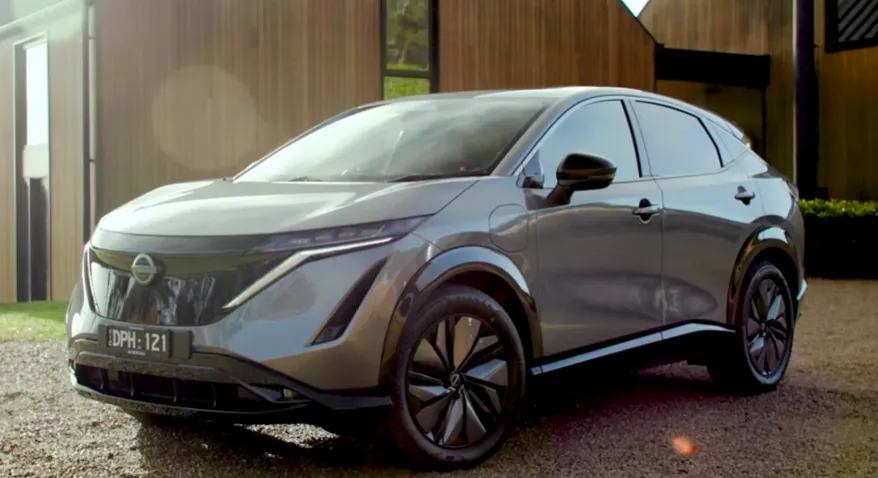
The 2025 Ariya comes in four main configurations once you sort through the trim names.
Engage FWD with the 66kWh battery: starts at $39,770. Single motor, 215 horsepower, around 205 miles of range. The entry point.
Evolve+ FWD with the 91kWh battery: the one I had. Single motor, 215 horsepower, up to 289 miles of EPA-estimated range. Real-world highway driving at 70 to 75 mph brings that to around 220 to 250 miles depending on conditions. Per Recharged’s long-term testing.
Engage e-4ORCE AWD: dual motor, 389 horsepower, 66kWh battery, around 205 miles.
Platinum+ e-4ORCE AWD: 389 horsepower, 91kWh battery, around 272 miles.
I had the Evolve+ FWD. The version with the most range and a single motor. Not the exciting AWD performance trim. The practical one.
KBB owners rate the Ariya 4.6 out of 5 for reliability across the first generation. Wireless Apple CarPlay and Android Auto are standard across all trims. Blind spot monitoring, adaptive cruise control, traffic sign recognition, and automatic emergency braking come standard. The rear seats have two full LATCH anchor sets for child seat installation.
One more thing worth knowing upfront: Nissan has discontinued the Ariya for the US market after 2025. No 2026 model is coming here. What’s on dealer lots is what exists. Dealers are discounting heavily as a result. Per Recharged’s April 2026 reporting.
The First Week
I picked it up on a Thursday afternoon.
First impression getting in: the cabin does not look like what I expected from a Nissan.
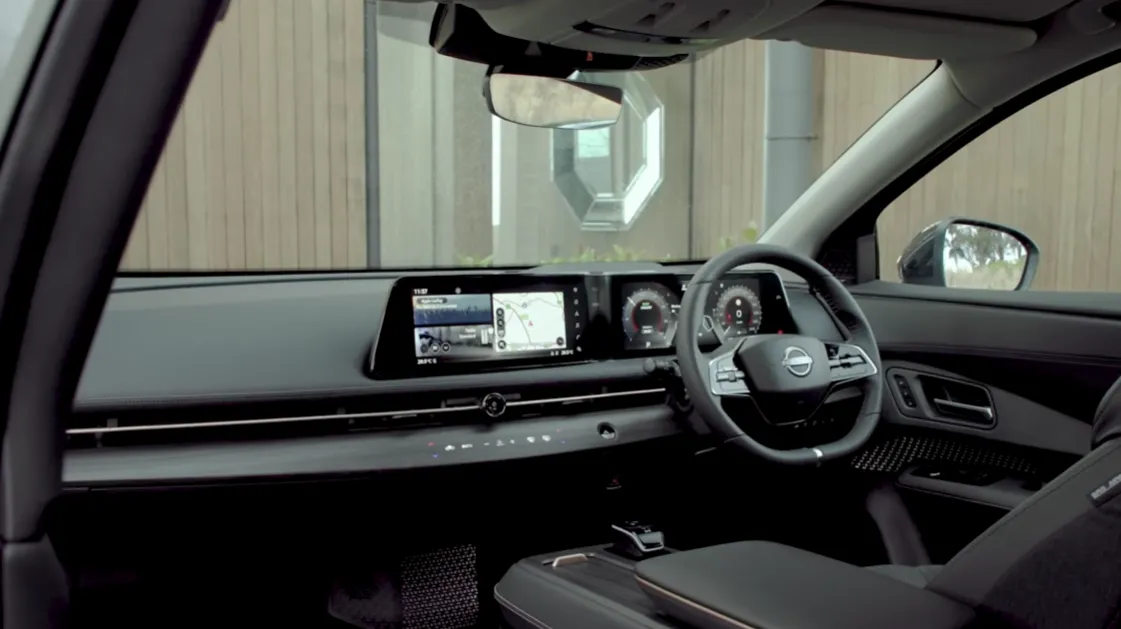
The center console slides forward and backward on a track. Pull it toward you, the front of the cabin opens into this flat open floor between the seats. Push it back, it operates as a traditional console with storage and wireless charging. It sounds like a party trick. After a week it became the thing I used instinctively every time I parked and got out. Slide it back, create space, get out cleanly without stepping around anything.
The dashboard is low. Lower than almost any EV I’ve driven. This creates a sense of openness in the front that is hard to explain without sitting in it. Visibility forward is wide. The horizon feels close in a way that changes how the car reads space around it.
The seats on the Evolve+ are well padded with what Edmunds describes as supportive cushioning that makes long drives comfortable. After the first day I agreed. The seat holds you without squeezing. On a 45 minute commute loop I ran on Friday to test the car in real Las Vegas traffic, I arrived without any of the seat awareness that some EVs create when the bolsters are too aggressive.
Cabin noise at highway speed. Very low. Recharged described it as one of the stronger points for long-term daily use. They’re right. At 70 mph on I-15 there was almost no wind intrusion. Road noise was present but quiet, sitting below the level where you raise your voice in conversation.
I drove the first week without forming a strong opinion in either direction. It was good. More refined than I expected. But not yet the thing that changed my mind.
The Thing That Changed My Mind
Friday of the second week. I had dinner by myself near downtown Las Vegas. Drove back around 10pm.
Light traffic on the highway. City glow on the horizon. I had music playing at low volume, something quiet and instrumental. The Ariya was running in one-pedal mode, which means lifting the accelerator slows the car through regenerative braking without touching the brake pedal.
For about 20 minutes between the restaurant and my house, the car just worked.
Not dramatically. Not impressively. It just worked. The cabin was dark except for the ambient lighting along the door panels, which the Ariya does well without overdoing it. The road noise was low enough that the music filled the space without competing with anything. The one-pedal driving made the highway run feel smooth and uninterrupted, no brake tap hesitations, just pressure adjustments through my right foot.
I realized at some point that I had stopped thinking about the car.
That sounds like a small thing. It isn’t. When you review vehicles for a living, you are always aware of the vehicle. Always noting something. Always comparing something to something else. The moment you stop doing that is the moment a car has done something right without asking for credit.
The Ariya earned that moment and I wasn’t expecting it.
Range: The Honest Picture
The Evolve+ is EPA-rated at 289 miles. Real-world highway driving at sustained speed brings that to 220 to 250 miles. Per Recharged’s testing.
In two weeks of Las Vegas daily use, mostly city and suburban driving with two highway runs, I averaged around 4.1 miles per kilowatt hour. That tracking put my real range closer to 260 miles in the mixed conditions I was driving.
Las Vegas works in the Ariya’s favor. Flat roads. Mostly moderate speeds on surface streets. Good conditions for EV efficiency. A buyer in mountain terrain or extreme cold would see lower numbers.
DC fast charging on the Ariya is the honest limitation. The maximum charging rate is around 130kW. The Ioniq 5 does 250kW. At a capable charger the Ariya takes meaningfully longer. 10 to 80 percent runs 35 to 50 minutes depending on conditions. For daily home charging that number is invisible. For road trip planning it requires more thought than the faster-charging competition.
Level 2 home charging on the Evolve+ with the 91kWh battery takes about 14 hours from near empty. Plug in at night, leave it. Full battery by morning. For daily use this is the only charging pattern that matters.
What the Ariya Does Better Than People Expect
The cabin quality. Edmunds said it, Recharged said it, I felt it across two weeks. The materials and design feel like a more expensive vehicle than the starting price suggests. Not Tesla premium. Not Lucid lounge. But intentional in a way that the Chevy Equinox EV and the base Ioniq 5 interiors are not.
The sliding console is genuinely useful in daily life. Not marketing.
The one-pedal driving calibration is smooth and predictable. Some EVs tune one-pedal driving too aggressively, creating a lurching sensation when you lift. The Ariya’s calibration is progressive. You can use it consistently without passengers noticing.
The rear seat space is better than the exterior dimensions suggest. The wheelbase is long for the segment and most of that length went into rear legroom. Adults back there on longer drives have real room.
And the quietness at highway speed. After two weeks I started noticing how loud other vehicles sound when I got back in them. The Ariya’s road noise management is one of the least discussed and most practically impactful things about this car.
The Real Problems
Resale value is poor. KBB and Recharged both confirm the Ariya depreciates faster than the Ioniq 5, EV6, and Model Y. The discontinuation for the US market doesn’t help. Buyers purchasing rather than leasing should factor this into their five-year total cost of ownership calculation. The lease math works strongly in your favor with a vehicle discounting this aggressively. The purchase math is harder.
Charging speed is behind the class leaders. Already covered but worth naming plainly. If you cross-shop the Ariya against the Ioniq 5 or EV6 and road trip matters to you, the charging speed gap is real and will accumulate across every long stop you make.
Some controls are through the touchscreen that should be physical buttons. Seat heaters and coolers specifically. Edmunds flagged this and I agree. Adjusting seat temperature while driving requires a screen interaction that a button would solve in one touch. It is a consistent minor frustration across two weeks of use.
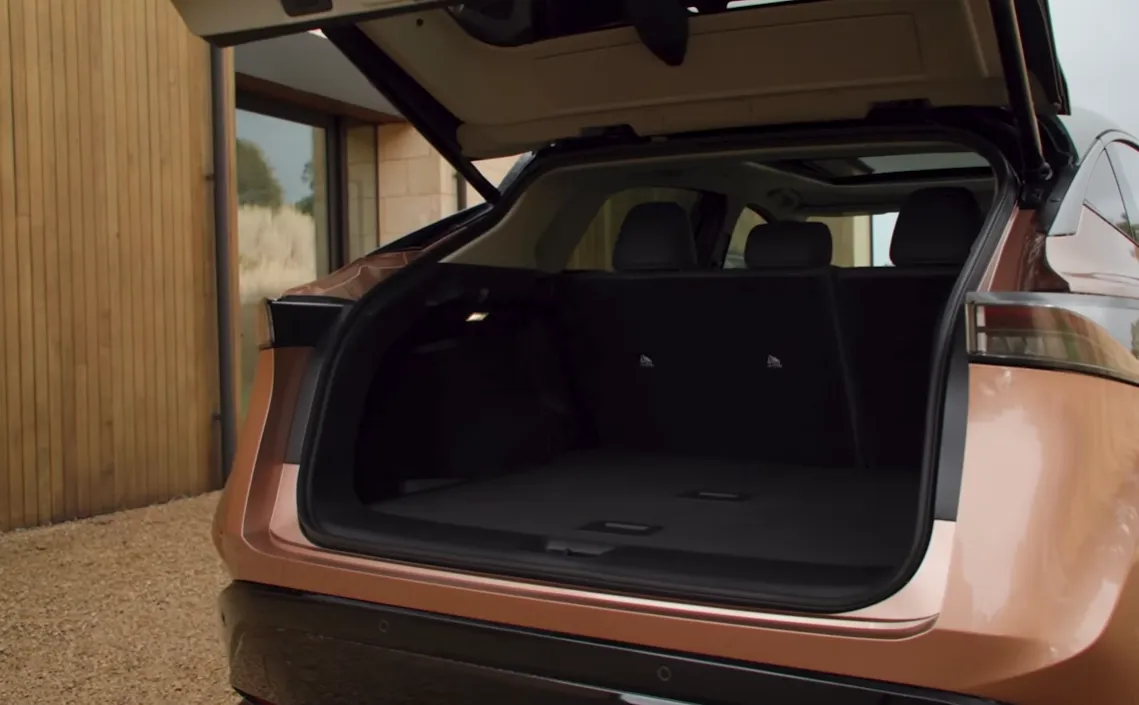
No frunk. All storage is in the rear cargo area and cabin. For a vehicle at this price that is a real omission compared to the Ioniq 5 and Model Y.
Reliability
KBB owner ratings of 4.6 out of 5 across the first generation. NHTSA and IIHS both gave the Ariya strong safety ratings. No significant mechanical pattern has emerged from real owner data.
Nissan covers the battery with an 8-year, 100,000-mile warranty. The bumper-to-bumper is 3 years or 36,000 miles. Shorter than what Hyundai and Kia offer on comparable vehicles.
The discontinuation for the US market does not affect parts availability or service. The platform and battery technology continue in other global markets and service parts are shared with international production. Per Recharged’s long-term review. Buying a discontinued US model does not mean you are buying an orphan vehicle without support.
Who Should Actually Consider the Ariya
Buyers who prioritize daily driving comfort and cabin quality over charging speed and resale value. The Ariya does the quiet, refined, pleasant-daily-driver thing better than most people who haven’t driven it would expect.
Buyers looking for EV value right now. With dealers discounting by $10,000 to $14,000 off MSRP on remaining 2025 inventory, the Ariya’s price-to-feature ratio at the point of purchase is stronger than it has ever been. Per real listing data on KBB.
Not the right vehicle for buyers who road trip heavily and need fast charging stops. Not the right vehicle for buyers who need strong resale in three to five years.
For everyone else, especially lease buyers in cities with flat roads and home charging, the Ariya deserves a test drive before you eliminate it from the list based on specs alone.
I turned it down twice.
The night drive on Friday of week two is the reason I’m telling you not to make the same mistake.
Frequently Asked Questions
Is the 2025 Nissan Ariya being discontinued?
Yes. Nissan has discontinued the Ariya for the US market after the 2025 model year. Remaining dealer inventory is the last of it for American buyers. The platform and battery technology continue in other global markets and parts availability for existing US vehicles is not affected. Per Recharged’s April 2026 reporting.
What is the real-world range of the 2025 Nissan Ariya?
The Evolve+ with the 91kWh battery is EPA-rated at 289 miles. Real-world highway driving at 70 to 75 mph produces approximately 220 to 250 miles. In mixed city and suburban driving with favorable conditions, owners consistently track 250 to 270 miles. Cold weather and high sustained speeds reduce that range.
How fast does the Ariya charge?
The maximum DC fast charging rate is around 130kW. From 10 to 80 percent takes approximately 35 to 50 minutes depending on charger output and conditions. This is slower than the Ioniq 5 at 250kW and the EV6 at the same speed. Home Level 2 charging on the large battery takes approximately 14 hours from near empty.
Is the 2025 Nissan Ariya reliable?
KBB owner ratings average 4.6 out of 5 across the first generation. Strong NHTSA and IIHS safety ratings. No significant mechanical pattern has emerged from owner data. The battery is covered by an 8-year, 100,000-mile warranty.
How does the Ariya compare to the Hyundai Ioniq 5?
The Ioniq 5 charges faster with 250kW peak charging versus the Ariya’s 130kW. The Ioniq 5 has better resale value and a more distinctive interior design. The Ariya has a quieter highway cabin, a more practical sliding center console, and is currently available at steep discounts that close the price gap significantly. For daily commuting comfort, the Ariya is competitive. For road tripping and long-term value retention, the Ioniq 5 is stronger.
What is the sliding center console on the Nissan Ariya?
A center console that slides forward and backward on a track between the front seats. Slid forward, it creates an open flat floor between the driver and passenger. Slid back, it functions as a traditional console with storage and wireless charging. More useful in daily life than it sounds as a feature description.
Should I lease or buy the 2025 Ariya?
Lease if possible. The Ariya’s resale value is below average for the segment and the discontinuation for the US market adds further uncertainty. Current dealer discounts of $10,000 to $14,000 off MSRP on remaining inventory make lease payments favorable. Buying makes sense if you plan to drive it past 150,000 miles and don’t intend to sell.