The Bottom Line
I have leased 40 cars over two years. Most professional reviews are written after one afternoon with a vehicle. That gap matters. The things that make a car great or frustrating to live with take days to discover and not minutes right?. This is my list. Small things, big things, and a few things that changed which cars I would actually recommend to someone. Keep reading.
Sunday night. Kids asleep. I sat down to write out something I have been meaning to write for a long time.
Not a review of a specific car. Just the stuff I know now that I did not know before I started doing this. The things that only show up after you have lived with 40 different vehicles across two Las Vegas summers.
Professional car reviews are mostly written after a day with a vehicle. Sometimes less. The writer drives a pre-production or press model on a specific route chosen by the manufacturer to show the car at its best. Then they write about it.
I am not saying those reviews are wrong. They are useful. They tell you a lot.
But there is a whole category of observations that only surface after you have driven the same car to school pickup 14 times, loaded it in a parking lot in 105 degrees, and sat in it for a 90-minute highway drive with your back starting to ask questions.
Here is that category.
The Infotainment Problem Nobody Talks About
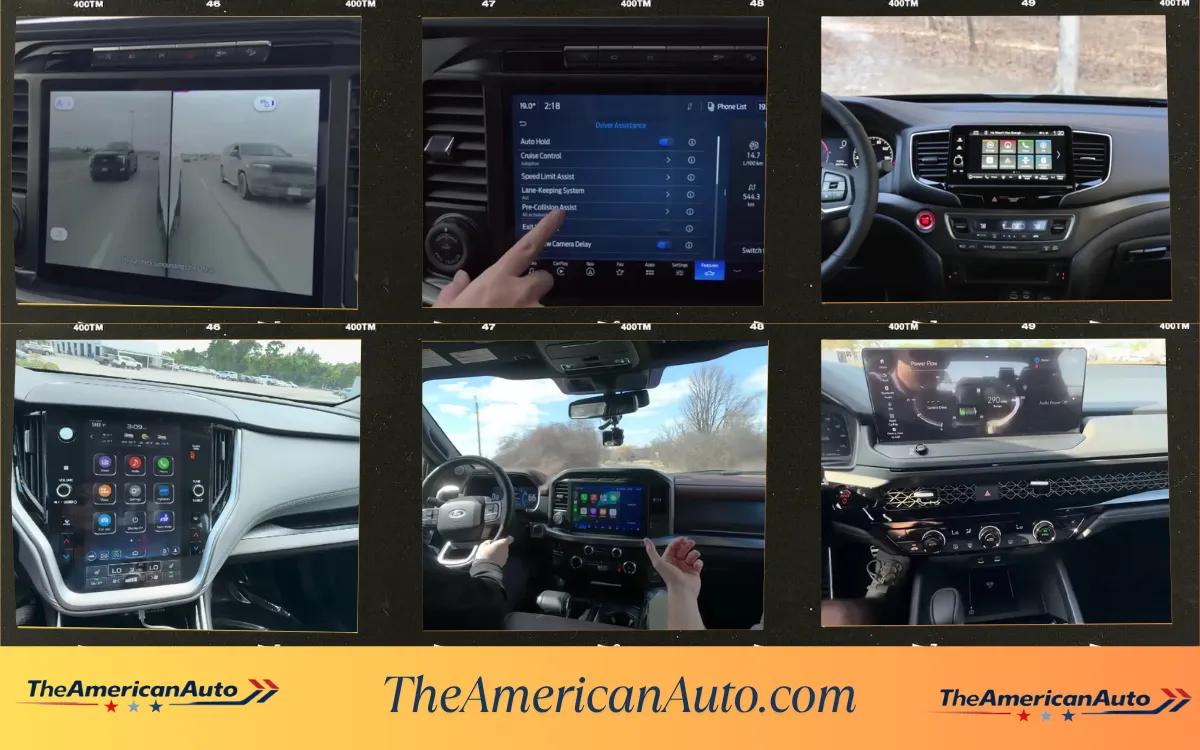
The biggest car quality issue in 2026 is not engines or transmissions. It is screens.
JD Power’s 2026 Vehicle Dependability Study found that infotainment problems are now the most common complaint from car owners after three years of use. More common than anything mechanical.
I felt this across multiple leases.
The issue is not that screens are bad in new cars. Most of them are fine when you first drive the car. The issue is what happens over weeks of real use.
Some systems slow down when the car has been parked in heat for hours. You start the car and the screen shows a loading animation while the cabin is still at 130 degrees and you are waiting for the AC to catch up. The system that seemed fast in a cool showroom takes 20 or 30 seconds to fully respond when it has been baking in a Las Vegas parking lot.
I noticed this in more than one vehicle I reviewed. The Subaru Legacy infotainment came up slowly on cold starts. The Volkswagen ID.4 screen froze completely once and needed a full reboot. These things do not happen on a 20-minute press drive.
Before you buy any car in 2026, do one specific test. Start the car after it has been sitting in direct sun for at least two hours. See how long the screen takes to respond. That is the version of the infotainment you will use every single afternoon for the life of the vehicle.


The Seat Problem
Every car seat is comfortable for 20 minutes.
Almost none of them tell you their secrets in 20 minutes.
The seat that felt neutral on a test drive will either earn your trust or start sending your lower back quiet complaints somewhere around the 45-minute mark. I have sat in seats that felt unremarkable at first and became the most comfortable thing I drove that month. I have also sat in seats that felt supportive on a test drive and left me shifting around before the first hour was up on a real road trip.
You cannot test this in a dealership. The only test that works is a real drive, at least 45 minutes on the kind of road you actually drive. Not a dealer loop. Your actual commute.
The Subaru Outback Wilderness seat held me through a two-hour canyon drive without comment. The Kia Telluride SX seat was good for the first 30 minutes and started asking questions after that. Neither of those observations would have appeared in a 20-minute review.
Cup Holders
This sounds too small to mention. I am mentioning it anyway because after two years and 40 cars it is one of the things I notice within the first two days of every lease.
Cup holders that are too shallow let a tall bottle tip and roll at every turn. Cup holders with rubber lining hold things still. Cup holders positioned at a bad angle toward the gear selector mean you knock your drink every time you shift. Cup holders that sit too far back from the driver mean you take your eyes off the road every time you reach for something.
I reviewed the Kia K5 on this site and specifically noted the cup holders were deep, well-positioned, and rubber-lined. My 30-ounce bottle fit without rattling. That sentence might look like a throwaway detail. It represents something I noticed every single morning commute for four weeks.
On three separate vehicles I reviewed, the cup holder situation was bad enough that I started putting my drink in the back cup holder and reaching backward for it. That is not something any professional review mentioned.
The Trunk Lip
You see a trunk in a photo and you think about cubic feet. You load a trunk in real life and you think about the height of the lip you are lifting over.
I noticed this most clearly when I was helping Ray with the landscaping jobs. Loading and unloading heavy materials over a high truck bed made me aware of lift height in a way I had not been before.
After that I started noticing trunk lips on every car I reviewed. Some cars have a low, flat opening you can slide things into easily. Others have a lip that requires a real overhead lift for anything heavy or bulky. Doing that 15 times a week with groceries or a stroller adds up in your back over months.
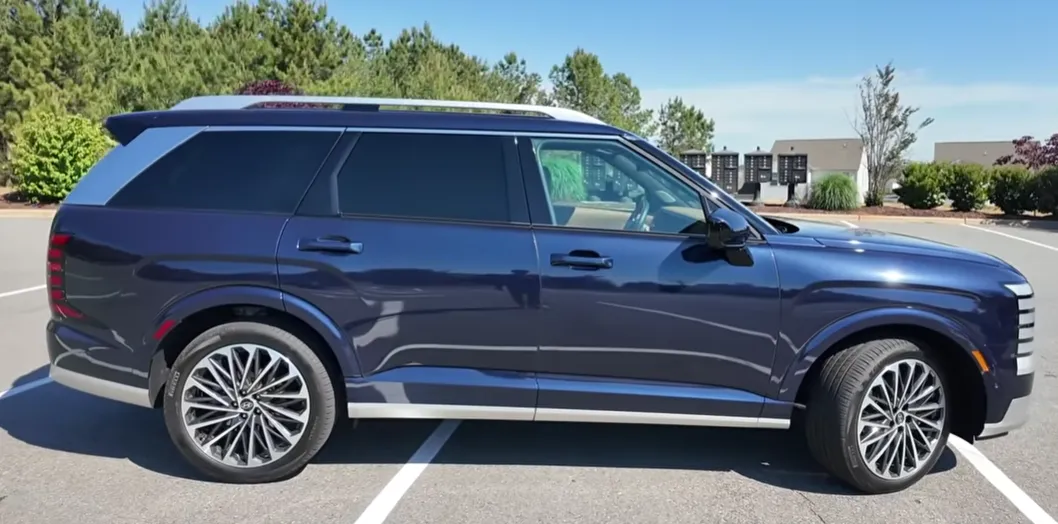
The Hyundai Palisade has a low, practical trunk opening. The Nissan Rogue loads easily. Several others I reviewed required more effort than the photos suggested.
Go to the dealership with something real to load. Your grocery bags, your stroller, your tool bag, whatever you actually put in a car. Load it and unload it twice. The second time tells you more than the first.
The Turn Signal on the Wrong Side
I mentioned this in my Chevrolet Equinox EV review. The Equinox and many GM vehicles put the turn signal stalk on the right side of the steering column instead of the left.
I activated the wipers instead of signaling probably six times in the first three days.
By day eight it was muscle memory and I stopped thinking about it.
But if you have driven non-GM vehicles your whole life, this is a real adjustment that takes real time. Nobody mentions it in reviews because reviewers are aware of it and compensate immediately. Regular buyers are not aware of it and activate the wipers in traffic until their hands figure it out.
It is not a reason to avoid a vehicle. It is exactly the kind of thing that is useful to know before you drive off the lot on your first day.
Wind Noise at a Specific Speed
Almost every car review mentions highway wind noise in general terms. Quiet, or acceptable, or present.
What reviews almost never mention is that many cars have a specific speed where wind noise increases noticeably. Not gradually across all speeds. At a specific point, usually somewhere between 72 and 80 miles per hour, the sound level changes.
I have driven multiple vehicles that were quiet at 65 miles per hour and louder at 75. On a Las Vegas highway where most traffic runs at 70 to 75, this matters for the kind of driving I actually do.
You find this on an extended highway drive, not a test loop. Drive at your real highway speed, the one you use every day. That is the wind noise the car will have in your life.
The Parking Sensor That Cries Wolf
Several vehicles I reviewed had parking sensors that triggered in my own driveway.
Not because anything was wrong. Because the sensors are calibrated to detect obstacles that are within a certain range, and my driveway walls or landscaping rocks were at exactly that range. Every time I pulled in, the car beeped at me.
Once you learn the rhythm of it you tune it out. But for the first two weeks of a lease it is a daily micro-annoyance that adds up.
No review mentions this because it depends entirely on your specific driveway. But if you have a tight driveway or garage, test the parking sensor behavior in your actual space before you make a decision.
Wireless Charging That Requires Perfect Placement
Wireless charging pads in cars are often positioned at a slight angle. Your phone charges if it lands perfectly. If it slides even slightly because you accelerated hard or hit a bump, the charging stops.
I noticed this on several vehicles. The ones that worked consistently had a lip or a textured surface that kept the phone in position. The ones that did not work consistently had a flat pad that let the phone drift.
In a professional review you place your phone carefully and it charges. In real daily use you toss your phone onto the pad while watching traffic. Those are different experiences.
Look at the wireless charging pad before you buy. If it is flat with no lip and no texture, your phone will stop charging regularly until you train yourself to place it carefully every single time.
The Cold AC Smell
Almost every car with a cabin air filter and an evaporator coil will develop a slightly musty smell from the AC system when it first kicks on after the car has been sitting.
It usually lasts 10 to 15 seconds and then goes away.
In hot climates like Las Vegas where you run AC immediately every single time you start the car, you notice this constantly. Some vehicles have it worse than others. A few I drove had almost no smell at all. Several had a smell that stuck around long enough to be noticed by passengers.
Nobody reviews this. It is not a safety issue. It is a quality-of-life thing that you deal with multiple times a day every day from May through October in the desert.
The fix is replacing the cabin air filter regularly and running the fan on fresh air without AC for the last minute of your drive occasionally. But knowing it exists before you buy helps you understand why your car smells like something died in it for 12 seconds every afternoon.
The Rear Camera in Bright Sun
Rear backup cameras in 2026 are standard on every vehicle. They are also almost universally harder to read in direct bright sunlight than any review will tell you.
The screen washes out. The camera image becomes difficult to see clearly. Parking in a bright lot with the sun hitting the rear of the car becomes a guesswork situation where you are relying more on the sensors beeping than on actually seeing the screen.
Some vehicles handle this better than others. The Hyundai Palisade’s camera stayed readable better than most in direct afternoon sun. Others were almost useless at high noon in a white parking lot.
If you park outside in a sunny climate, test the backup camera at midday before you buy. The version you see at a shaded dealership is not the version you will use every afternoon.
What This List Is Actually About
None of these things will make or break a vehicle.
The car that has a slightly annoying cup holder or a turn signal stalk in an unexpected spot is still a good car in every other way. I would still recommend the Equinox EV. I would still tell you the Kia Telluride is one of the best three-row SUVs you can buy.
But two years and 40 cars have taught me that the daily experience of owning a vehicle is mostly made up of these small things. Not horsepower. Not 0-60 times. Not how the car looks in a parking lot.
The way the seat feels at the 50-minute mark. The way the screen responds when you are already running late. The way the trunk opens on a Thursday evening when your arms are full and your back is already tired.
Those are the things that determine whether you like your car or just live with it
People ask me things like this a lot, so here are some quick answers:
Why do car reviews miss all of this? Most reviews happen in one day with a car that was prepared for the press. The reviewer is focused on performance, comfort, and features. They are not doing school pickups or loading groceries or commuting at highway speed for 90 minutes. The things on this list take days to find.
Which car had the best infotainment in real daily use? The ones that got out of the way fastest. The Mazda3 with its rotary dial meant I was rarely touching a screen while driving. The Kia Telluride’s system was responsive without drama. The ones that frustrated me most were the ones that loaded slowly after sitting in heat or required too many taps to do something simple.
Is there a way to test these things before buying? Yes. Do your test drive at the time of day you actually drive. Bring the items you normally put in the trunk. Sit in the driver seat for at least 40 minutes on real roads. Test the backup camera at noon in a bright lot. Park using the sensors near your own driveway layout if you can. The more your test drive resembles your actual life, the more useful the information you get.
Which of these surprised you the most across 40 cars? The infotainment heat lag. I did not notice it until about my fifth or sixth lease. Once I started paying attention I found some version of it in more vehicles than I expected. It is the kind of thing that affects your experience of a car every single afternoon for years of ownership and almost nobody talks about it