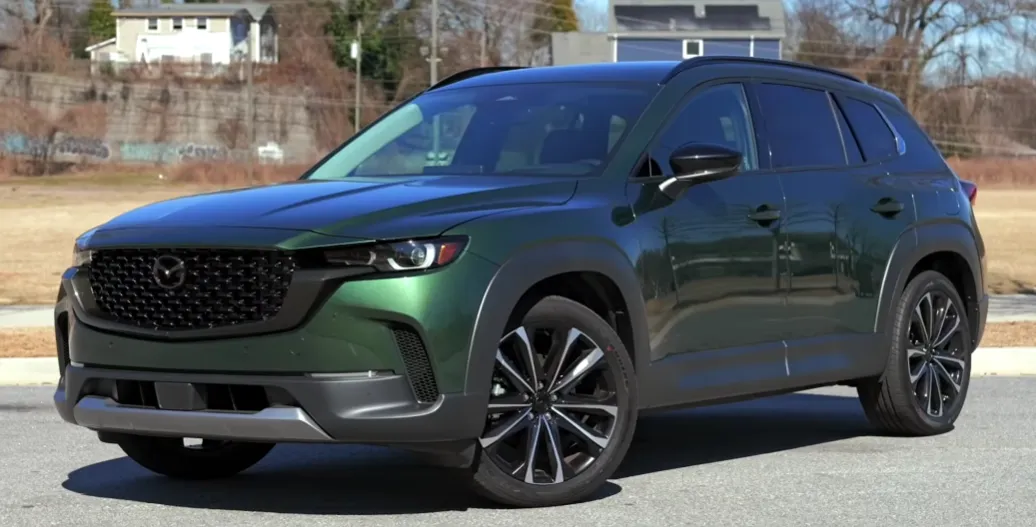
I almost didn’t lease it. I had the RAV4 Hybrid on the shortlist. The CR-V was the other option. Both are the kind of vehicles you can close your eyes and recommend to any buyer without thinking too hard. Safe choices. Proven choices.
A friend who knows cars told me not to bother with the CX-50. “It’s just a Mazda,” he said. “Good for commuting, not much else.”
That comment stuck with me in a specific way. Not because I believed him. Because I wasn’t sure whether I was considering the CX-50 seriously enough or just giving it a token look before defaulting to something safe.
So I leased it. Drove it for 16 days in Las Vegas. School runs, commutes, a weekend grocery trip that turned into three stops, one longer drive down to Henderson on a Saturday.
Here’s what I found.
The First Thing That Changes Your Mind
The steering. I know that sounds like something a car reviewer would say to sound smart. Stay with me.
The RAV4 and the CR-V are excellent SUVs. They’re also built to be easy. The steering is light. The suspension absorbs everything. They cocoon you from the road in a way that makes daily driving effortless and slightly disconnected.
The CX-50 doesn’t do that.
The steering has actual weight to it. Not heavy. Precise. When you turn the wheel you feel what the front tires are doing. On a curve, on a Las Vegas on-ramp at 6:45am with no traffic, the CX-50 goes where you point it with a directness that nothing else in the compact SUV class comes close to matching.
JD Power said it plainly in their review: “I have driven every compact SUV extensively, and nothing even comes close to the CX-50‘s driver engagement and fun.”
That’s a strong statement. After 16 days I don’t think it’s an exaggeration.
What the Turbo Actually Changes
I had the 2.5 Turbo Premium Plus. $44,395 before destination.
The turbo engine makes 227 horsepower. The base 2.5 S makes 187. Both numbers look fine on paper. The difference between them is real and daily.
The turbo pulls from low speeds with a confidence the base engine doesn’t have. Merging onto I-15 southbound from the Summerlin area at 7am with cars doing 70, the turbo closed the gap without drama. The base engine in the same situation would have required more planning.
If you’re buying the CX-50 for daily Las Vegas driving that includes regular highway use, the turbo is worth the price jump. The base engine is fine. The turbo changes what fine feels like.
The turbo also returns decent fuel economy. Real mixed driving across 16 days, lots of stop-and-go, some highway stretches, one longer run: I averaged about 26 mpg. The EPA combined estimate for the turbo AWD is 25 mpg. I beat it slightly, which doesn’t always happen.
The Interior Situation
This is where the friend who dismissed the CX-50 was most wrong.
The interior doesn’t feel like a $35,000 compact SUV. It feels like something more expensive. Premium leather on the upper trims. Real stitching you can feel. A dashboard layout that prioritizes the driver without feeling claustrophobic. The materials are chosen with intention in a way that the RAV4 and CR-V, with their harder plastics on the door panels and center console, simply don’t match.
The seats. On day one I adjusted the driver seat and didn’t touch it again for 16 days. Supportive without being firm. On a 90-minute drive on day nine I arrived without my back asking any questions.
My kids noticed the interior before I pointed anything out. My oldest said on the first school run that it smelled good. That is a real thing that cars either do or don’t and it’s hard to manufacture.
The Trim Situation Is Confusing, Let Me Simplify It.
Seven gas trims plus three hybrid trims is too many. Here’s what matters:
- 2.5 S Select at $31,395 gets you AWD, the base engine, and the fundamentals. Functional. Not special.
- 2.5 S Meridian Edition at $34,645 is new for 2026 — gets you the adventure-focused Meridian package on the base engine for the first time. Best value if you want the Meridian look without the turbo price.
- 2.5 Turbo at $39,395 is where the driving experience changes. This is the one that makes the CX-50 feel like a different category of vehicle.
- 2.5 Turbo Premium Plus at $44,395 adds the premium interior, the full tech suite, the surround-view camera. This is what I drove. This is the version that converted me.
- Hybrid trims at 38 mpg combined. Separate decision for buyers who prioritize efficiency above everything else.
Edmunds recommends the Meridian Edition as the best value in the lineup. I’d agree for budget-conscious buyers. For anyone who drives highways regularly, spend the extra money and get the turbo.
AWD is standard on every single trim. That’s not true of the RAV4, the CR-V, or most of the competition. You don’t pay extra for it. It just comes with the car.
What School Runs in Las Vegas Heat Actually Reveal
106 degrees in Las Vegas in late spring is not a metaphor. It’s a real temperature that a car has to manage.
The CX-50’s climate system cooled the cabin from 106 degrees to comfortable in about four minutes with the vents open. That’s an unscientific test but it’s the one that matters when you’re loading a sweaty kid into a hot car and they’re already unhappy about it.
The rear door opening is wide enough to get a child into their seat without the awkward yoga pose that some narrower vehicles require. LATCH anchors for car seats are accessible without a fight. My kid’s forward-facing seat went in on the first try.
The rear seat has enough legroom for adult passengers. Not generous. Enough. Las Vegas school runs don’t require luxury rear seating. They require a car that does the job without making the morning worse.
The Two Things That Kept It From Being a Clean Win
I promised honest and here it is.
Cargo space is the real gap against the competition. 31.4 cubic feet behind the rear seats. The Honda CR-V has 39.3. The Toyota RAV4 has 37.6. The Nissan Rogue has 36.5. US News flagged this specifically: “The CX-50 has a lower cargo capacity than many of its top competitors.”
That gap showed up on a Saturday grocery run. Full week of food for four, a big bag of dog food, and a case of water. Everything fit but the arrangement required thought. In a CR-V it would have just fit. The CX-50 makes you work for it a little.
For families doing regular large cargo loads, this matters. For buyers who mostly commute and do occasional errands, it’s a non-issue.
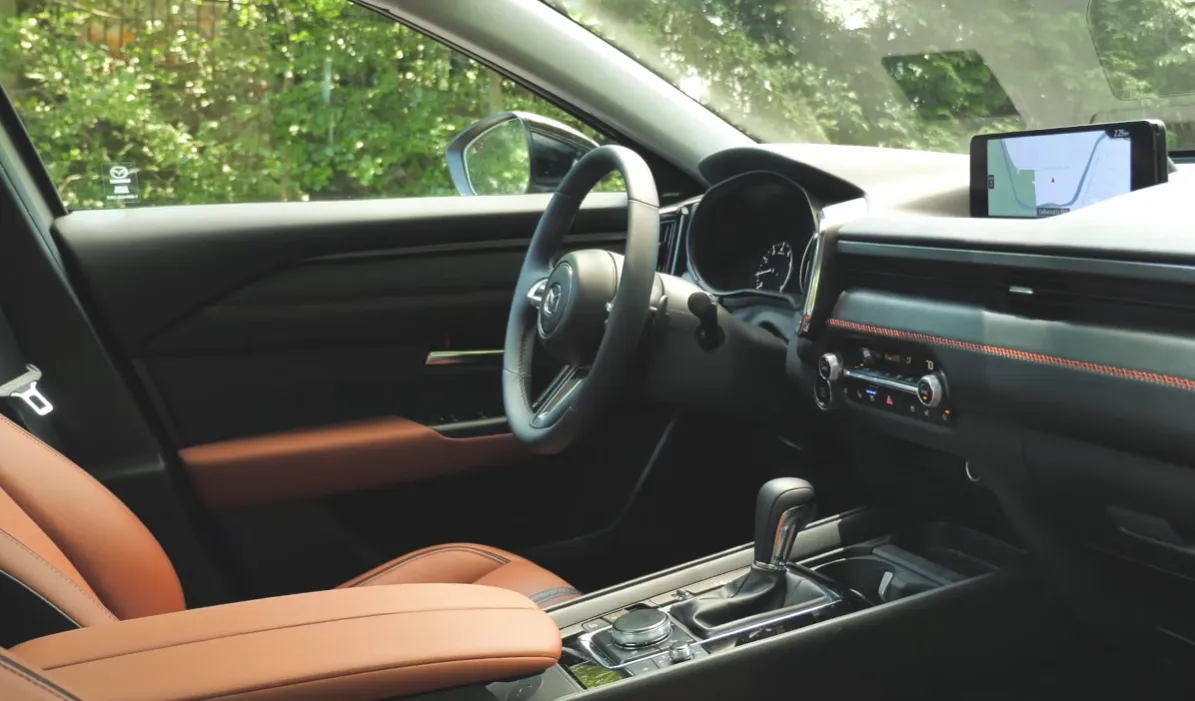
The infotainment rotary dial takes adjustment. The CX-50 uses a center console dial to control the infotainment rather than direct touchscreen interaction at highway speeds. Mazda’s argument is that it keeps your eyes on the road. The argument is valid. The learning curve is real. For the first week I kept reaching for the screen before remembering I needed the dial. By day ten it was second nature.
Wireless CarPlay also requires the upper trims. Lower trims get wired only. In 2026 that’s behind where most buyers expect the class to be.
What the Numbers Say
NHTSA gave the 2026 CX-50 five stars for overall crash protection. IIHS awarded the 2025 model Top Safety Pick Plus, its highest designation. CarBuzz rates the reliability 8 out of 10.
KBB consumer ratings tell an interesting story. Styling scores 4.9 out of 5. Value scores 3.6. That gap tells you exactly what buyers think: they love how it looks and drives, and some feel they’re paying a Mazda premium for a non-Mazda price.
That’s a fair criticism. The CX-50 costs more than most people expect Mazdas to cost. The 2.5 Turbo at $39,395 is RAV4 XLE territory. You’re choosing between the CX-50’s driving experience and the RAV4’s cargo space and reliability history. Neither answer is wrong.
What 16 Days Actually Changed
I went in expecting to confirm the RAV4 as the smart choice and the CX-50 as the stylish but compromised alternative.
I came out thinking the CX-50 is the better daily driver for anyone who spends significant time behind the wheel. The steering, the turbo engine, the interior quality — none of those things show up in a 20-minute test drive. They show up across 16 days of real life.
The cargo space is real. I’m not going to dismiss it. If your family regularly loads the car to its limits, the CR-V or RAV4 is the practical answer.
But if you drive more than you load cargo — and most people do — the CX-50 makes every mile feel different from everything else in the class.
My friend who called it “just a Mazda” has not driven one. I know this because he texted me on day fourteen asking if he could borrow it for the weekend.
I said no. I still had two days left on the lease.
Questions People Ask About the CX-50
Is the 2026 Mazda CX-50 worth buying over the Toyota RAV4?
For buyers who prioritize driving feel and interior quality, yes. The CX-50 handles better, feels more premium inside, and comes with AWD standard without extra cost. The RAV4 wins on cargo space, the hybrid powertrain lineup, and Toyota’s longer reliability track record. Right answer depends entirely on what you value most in daily driving.
Which CX-50 trim is the best value?
Edmunds recommends the Meridian Edition as the best value pick. For buyers who drive highways regularly, the 2.5 Turbo at $39,395 is the one where the driving experience fully delivers. The Turbo Premium Plus adds the premium interior and surround-view camera but pushes the price toward $44,000.
Does the 2026 CX-50 have wireless Apple CarPlay?
Wireless CarPlay is available on upper trims only. Lower trims use wired CarPlay. Check the specific trim’s feature list before purchasing if wireless connectivity matters to your daily routine.
How reliable is the Mazda CX-50?
CarBuzz rates reliability 8 out of 10. NHTSA gives it five stars. IIHS named the 2025 model Top Safety Pick Plus. No significant reliability concerns have emerged from real-world ownership data on this generation. Mazda’s overall reliability reputation has improved steadily over the past decade.
Is the CX-50 good for families with young kids?
Workable with caveats. Rear seat space is adequate for adults on shorter trips. Car seat installation is straightforward with accessible LATCH anchors. The cargo space at 31.4 cubic feet is the honest limitation for families who load the car heavily. If large cargo loads are a regular occurrence, the Honda CR-V or Toyota RAV4 give you more room.
How does the CX-50 Hybrid compare to the gas versions?
The Hybrid returns 38 mpg combined (39 city, 37 highway) per Mazda’s EPA estimates. For high-mileage commuters the fuel savings over the turbo gas version are meaningful over a five-year ownership period. The Hybrid trims have a separate pricing structure. Worth cross-shopping seriously if fuel economy is a priority.
What is the cargo space in the 2026 Mazda CX-50?
31.4 cubic feet behind the rear seats. Below the class average. The Honda CR-V offers 39.3 cubic feet, the Toyota RAV4 offers 37.6. This is the CX-50’s most consistent real-world limitation and worth experiencing in person before committing.