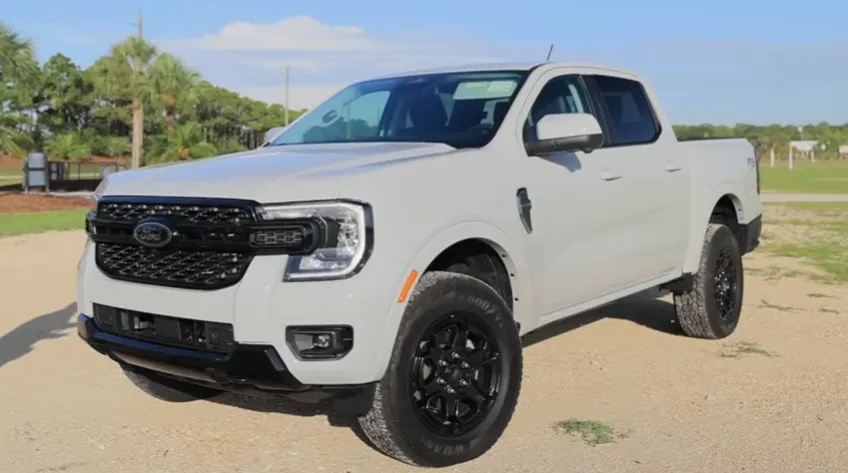
Every truck buyer I talked to before this lease mentioned the same thing.
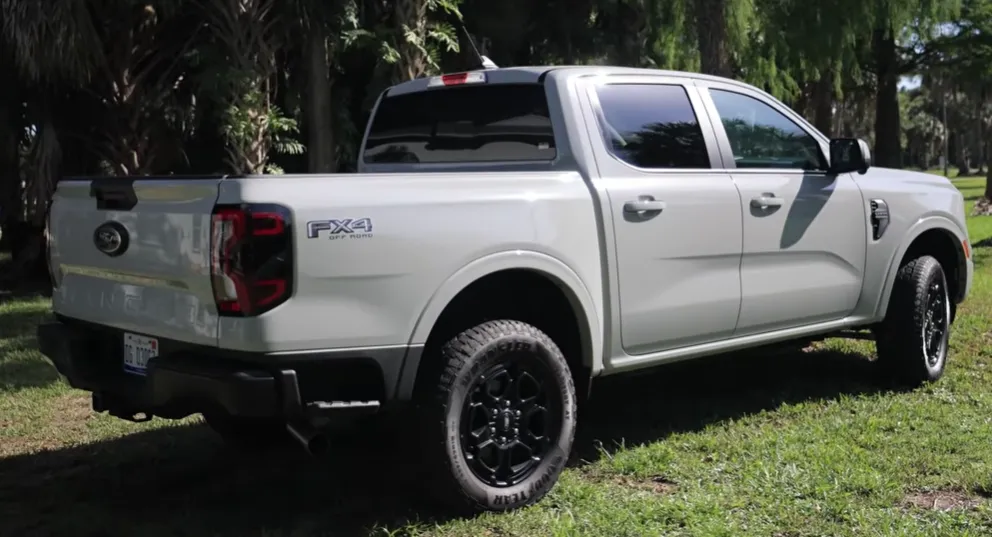
The Ranger only comes as a crew cab now. No extended cab. No regular cab. You want a Ranger in 2026, you get four doors and a five-foot bed. That’s it. Take it or leave it.
Some people left it. Bought a Tacoma. Bought a Colorado. Moved on.
Those people might have made a mistake. Because once you actually get inside the 2026 Ranger and drive it for a week, the “only one configuration” problem starts to feel a lot smaller than it did on the spec sheet. Let me explain why.
What matters about this truck:
Starting at $33,350 for the XL, topping out around $57,000 for the Raptor. Most buyers land in the XLT or Lariat, somewhere between $40,000 and $49,000.
Three engine choices — the base 2.3-liter turbo four-cylinder, a 2.7-liter twin-turbo V6, and the 3.0-liter V6 in the Raptor. All three pair with a 10-speed automatic.
Towing caps at 7,500 pounds properly equipped on XL, XLT, and Lariat. The Raptor drops to 5,510 because it’s tuned for desert runs, not boat ramps.
Payload up to 1,788 pounds. Best in class for midsize trucks.
KBB ranks it number two in the midsize truck segment. Edmunds tested it at 6.7 seconds to 60 in the four-cylinder. A full second faster than the Tacoma in the same test.
The Configuration Problem. Actually Examined.
So. One cab. One bed length. Is that really a problem? Depends on how you use a truck.
If you need an 8-foot bed for long lumber runs or sheet goods, the Ranger isn’t your vehicle. Full stop. Get a full-size truck.
If you haul plywood? The Ranger’s five-foot bed measures four feet between the wheelwells. A standard 4×8 sheet of plywood slides in flat. Per Edmunds’ actual measurement. So that argument disappears quickly.
If you wanted a smaller cab to fit in tighter spaces, or a cheaper regular cab work truck, you’re out of luck. Those options don’t exist in 2026. The crew cab adds length and price whether you want it or not.
But here’s what the crew cab gives you that nobody advertises enough.
Rear seat space that adults can actually use. My brother sat in the back on a 45-minute drive to help with a furniture move. No complaints. Enough legroom to sit normally, enough headroom to not hunch. In a midsize truck. That used to be impossible.
The question isn’t whether one configuration is limiting. It is, for some buyers. The question is whether the crew cab works for your specific life. For most people buying a midsize truck as a daily driver that occasionally hauls things, it absolutely does.
Which Engine Makes Sense
Three choices. Let me make this fast. 2.3-liter EcoBoost four-cylinder. 270 horsepower. 310 pound-feet of torque.
Tows 7,500 pounds with the package. Payload over 1,700 pounds. Zero to sixty in 6.7 seconds per Edmunds’ track testing. Fuel economy around 22 mpg combined per the EPA, with real-world drivers hitting similar numbers in mixed driving.
For anyone who doesn’t tow near the limit constantly, this is the engine. It does everything the V6 does on paper for less money and better fuel economy.
2.7-liter EcoBoost V6.
315 horsepower, 400 pound-feet of torque. Zero to sixty around 6.2 seconds.
Same 7,500-pound tow rating. Less payload than the four-cylinder because the V6 adds weight. Fuel economy drops to about 20 mpg combined.
Worth it if you tow regularly near the max rating. The extra torque means less straining on grades, less transmission hunting under load. It just feels more relaxed when working hard.
Not worth it for buyers who tow occasionally.
3.0-liter Raptor V6.
405 horsepower. 430 pound-feet of torque. FOX Live Valve shocks. 10.7 inches of ground clearance. Baja mode.
Towing drops to 5,510 pounds. Fuel economy falls into the mid-teens.
This engine exists for people who want to drive fast on dirt roads. If that’s you, the Raptor is a whole separate conversation and you probably already know you want it.
What Three Weeks Felt Like
The first time I climbed into the bed I noticed the floor texture.
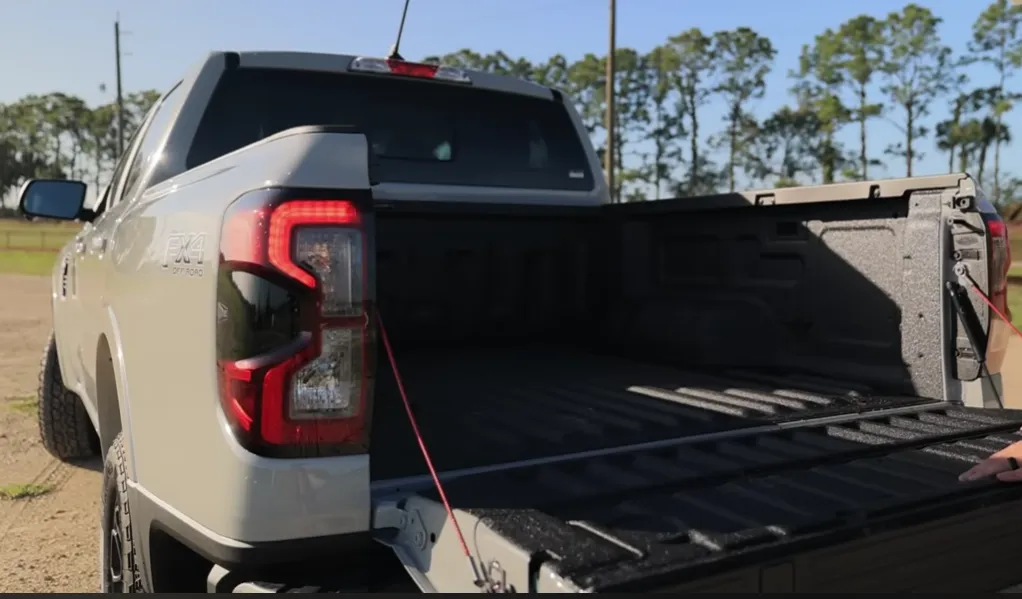
Textured rubber coating. Standard on the Lariat trim I tested. You step onto it and it grips your boots without any slippage. Three weeks of loading and unloading gear, one particularly muddy trip to a landscape supplier, and the bed floor never felt sketchy underfoot. Small thing but you notice it on the third or fourth load when you’re tired and moving fast.
The tailgate. It opens damped. No slamming. Lowers slowly and stops flat. And there are built-in clamp pockets along the edges and an integrated ruler down the side. I used the clamp pockets twice to hold lumber steady while I cut. Right there in the driveway. No workbench needed.
That’s the kind of detail that sounds silly until you need it.
The Pro Trailer Backup Assist took about 15 minutes to figure out. There’s a knob in the center console. You turn it the direction you want the trailer to go. The truck does the steering math. First time I backed a trailer into my garage with it I turned to my son and said nothing because I didn’t want to make a big deal out of something that worked perfectly.
He said “did it just do that by itself?” Pretty much, yeah.
On the highway the four-cylinder Ranger feels confident and settled. Wind noise at 70 mph was present but quiet. Steering is lighter than I’d like. A few reviews mention this and it’s accurate. You get feedback from the road through the wheel but not as much as you’d want on winding roads. On straight highway drives it doesn’t matter. On tighter back roads it’s the one thing I kept noticing.
What the Interior Actually Is
Better than it has any right to be for a midsize truck.
The Lariat trim gets soft-touch materials on the dash surfaces you actually touch. A 12-inch touchscreen running Sync 4A. Wireless CarPlay connected fast every morning without fiddling. Climate controls that mix physical buttons for temperature with touch controls for modes. Gets this right where a lot of new interiors get it wrong.
The rear seat folds up to reveal a storage area underneath. Deep enough for a toolbox, a set of jumper cables, a tow strap. My kid used it to hide snacks on a long drive. I didn’t find out until day four.
Front seat comfort on longer drives is good. Not luxury good. Truck good. Which means supportive through the lower back, enough adjustability to find your position in under a minute, and no pressure points showing up after 90 minutes of highway.
The smell of the interior on day one. Clean. No off-gassing plastic smell that some trucks carry for weeks. Sat in the cab for 20 minutes before the first drive and didn’t think about it once. That’s the right result.
Ranger vs. The Competition. Honestly.
Against the Toyota Tacoma:
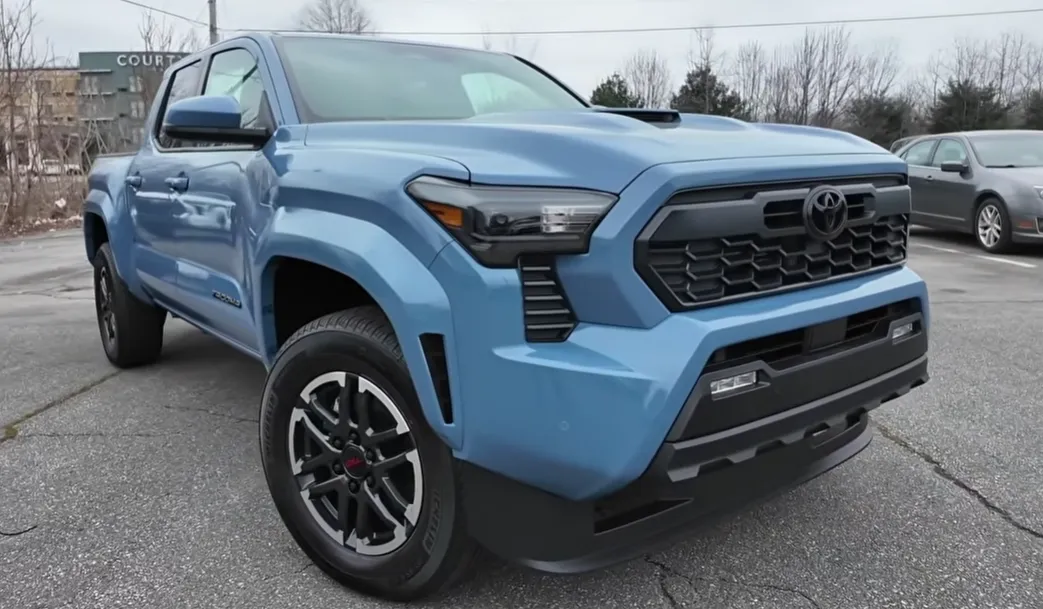
The Ranger goes to 60 mph about a full second faster per Edmunds’ testing of both trucks. The Tacoma has a longer-term reliability reputation but the Ranger’s RepairPal score of 4 out of 5 is strong, ranking it fourth among eight midsize trucks. The Tacoma offers more cab and bed configurations. The Ranger has a better base interior and more standard tech at comparable prices.
For buyers who prioritize reliability history above everything: Tacoma.
For buyers who want the better daily driver experience right now: Ranger.
Against the Chevrolet Colorado:
The Colorado has a slightly higher max towing rating of 7,700 pounds. Beats the Ranger by 200 pounds. In practice no one feels that 200 pounds. The Ranger’s payload capacity is stronger. The Colorado offers a diesel engine option the Ranger doesn’t. If diesel matters to you, Colorado wins on that specific point.
Interior quality goes to the Ranger on most comparable trims.
Against the GMC Canyon:
Same platform as the Colorado. Same story. Different badge, slightly different interior design, same capability. The Ranger beats both on interior refinement at similar prices.
The Problems Worth Saying Out Loud
One active recall on the 2026 Ranger at time of writing per the NHTSA database. Check your VIN before taking delivery. Dealers fix recalls at no charge.
The steering is genuinely light and vague. Multiple reviews say it, Danny says it. On the highway this is invisible. On winding secondary roads you notice you’re working harder to place the truck confidently than you should be at this price.
And the five-foot bed. It’s not a flaw in isolation. But buyers who need bed length for regular work use should know they’re giving something up. The lumber fits. The long steel doesn’t.
The Honest Take
The Ranger surprised me.
Not because it was spectacular. Because it was so consistently good at everything a midsize truck actually needs to be that by week two I stopped thinking of it as a test vehicle and started using it like a truck I owned.
That’s the version of a review that matters. The one where the vehicle stops being something you evaluate and starts being something you just use.
The four-cylinder engine is the one to buy for most people. The crew cab is fine. The interior is better than the class expects. The tailgate is more useful than any tailgate I’ve used. The Pro Trailer Backup Assist is the kind of technology that makes you feel slightly smarter than you are and I mean that as a compliment.
Would I buy it over a Tacoma? Probably, if I’m being honest. The driving experience is better right now. The tech is ahead. The interior is more refined. Long-term reliability data on this generation is still building but the early numbers look solid.
KBB puts it at number two in the midsize segment. That ranking is earned.
Questions People Ask About the Ranger
Does the 2026 Ranger come in extended cab or regular cab? No. Only one configuration: crew cab with a five-foot bed. Some buyers find this limiting, particularly those who need more bed length or want a simpler work truck setup. For daily drivers who occasionally haul things, the crew cab works well.
How much can the 2026 Ford Ranger tow? Up to 7,500 pounds with the Trailer Tow Package on XL, XLT, and Lariat trims. The Raptor drops to 5,510 pounds. Max payload reaches 1,788 pounds. Per Ford’s published specs.
Four-cylinder or V6 — which should I get? Four-cylinder for most buyers. Same tow rating, better fuel economy, lower price, enough power for daily use and occasional towing. The V6 earns its premium if you regularly tow near the 7,000-pound range and want more relaxed pulling on grades.
How is the 2026 Ranger for fuel economy? The 2.3-liter four-cylinder averages around 22 mpg combined per the EPA. Real-world driving typically lands similar or slightly better on the highway. The 2.7-liter V6 drops to about 20 mpg combined.
Is the Ford Ranger reliable? RepairPal gives it a 4 out of 5 reliability rating, ranking it fourth out of eight midsize trucks. There is one active recall on 2026 models — verify your VIN with the dealer before taking delivery.
Ranger or Toyota Tacoma? Ranger accelerates faster, has a more refined interior, and more standard tech at comparable prices. Tacoma has a stronger long-term reliability track record and more cab and bed options. Both are strong choices. The right answer depends on whether you prioritize the driving experience now or the long-term reputation.