Let me ask you something before we even start.
Do you actually need a truck?
Not “do you want one.” Not “does it look cool in your driveway.” Do you need one. Because the Tacoma is a great vehicle for certain people and a mildly annoying one for others. And the difference comes down to what your real life looks like, not what you think it looks like.
So that’s how we’re doing this.
I’m going to describe four types of buyers. You’ll know which one you are. And by the end, you’ll know if the Tacoma is your truck or not.
Key Takeaways
- The 2026 Tacoma starts around $31,000 and the sweet spot trim lands closer to $40,000 once you add what most people actually want.
- Toyota ditched the old V6 and now the Tacoma runs a 2.4-liter turbocharged four-cylinder. It makes more torque than before. Danny noticed.
- The ride is rougher than a crossover. Significantly rougher. That’s not a flaw. It’s a truck thing. But buyers coming from SUVs get surprised by it.
- Off-road ability is genuinely strong across most trims without spending extra on the TRD Pro.
- Back seat space in the double cab is tight for adults. The crew cab fixes this almost completely.
- Resale value on Tacomas is legendary. It’s one of the best in any vehicle class, not just trucks.
- Fuel economy with the new turbo four-cylinder is better than the old V6 but still not impressive by modern standards.
Buyer Type One: The Weekend Adventure Person
You know who you are.
You camp. Or you want to camp. You own gear. A lot of gear. Maybe a kayak or two on the roof. You’ve watched off-road videos at midnight thinking “I want to do that.”
For you?
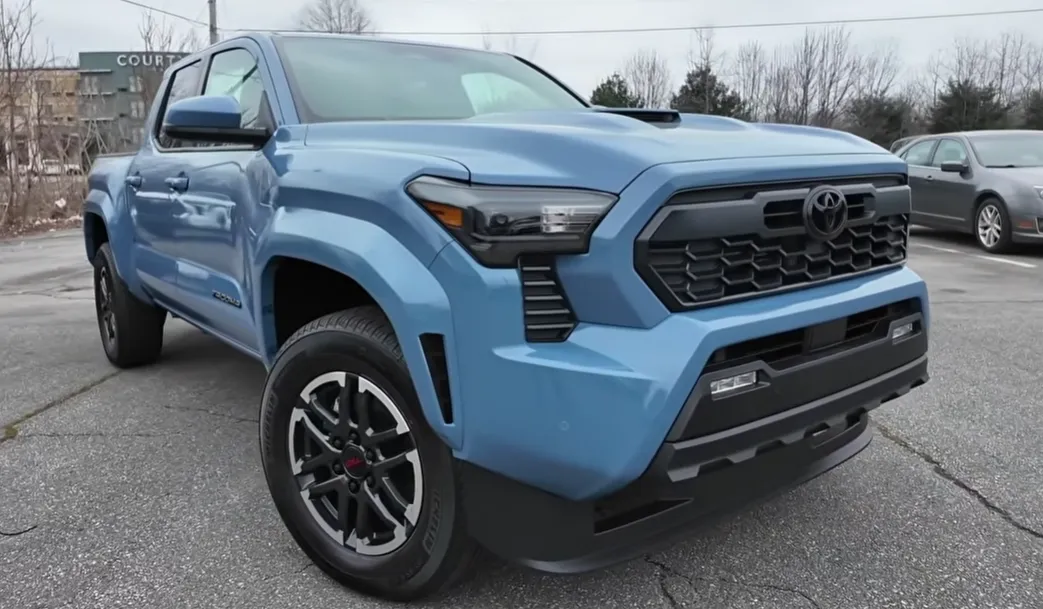
The Tacoma was basically designed in a room with your photo on the wall.
The new 2.4-liter turbocharged engine makes 278 horsepower and 317 pound-feet of torque. That torque number. It pulls from low revs in a way the old naturally aspirated V6 never quite did. Source: Toyota, 2025. Loading a kayak on Saturday morning and then driving two hours to a trail head feels exactly the way it should in this truck.
The TRD Off-Road trim is where most adventure buyers land. Multi-terrain select. Crawl control. Locking rear differential. These are not marketing words. They work. I took it down a rutted fire road one afternoon, loose gravel, uneven surface, the kind of path that makes a crossover nervous, and the Tacoma just walked through it. Calmly. Like it was mildly bored.
My son was in the passenger seat. He looked at me and said “why isn’t it struggling?”
Good question, kid. That’s the Tacoma’s whole identity. Capable without drama.
The TRD Pro pushes further. Fox shocks, a larger front skid plate, and more ground clearance. If you’re doing serious off-road stuff regularly, worth the price. If you’re doing trails and forest roads on weekends, the TRD Off-Road does everything you actually need and saves you around $8,000.
Buyer Type Two: The Work Truck Person
You use a truck for actual work.
Hauling stuff. Towing a trailer. Getting into tight job sites. Needing something that won’t embarrass you in front of people who know trucks.
Here’s the thing about the Tacoma for you specifically.
It’s a midsize truck. Not a half-ton. That matters.
Payload sits around 1,440 pounds on most trims. Towing goes up to 6,500 pounds properly equipped. Source: Toyota, 2025. That covers small to medium trailers, a boat up to around 18 feet, equipment trailers for landscaping work, that kind of thing.
What it doesn’t cover. Heavy equipment. Large camper trailers. Anything that regularly pushes past 5,000 pounds on a weekend.
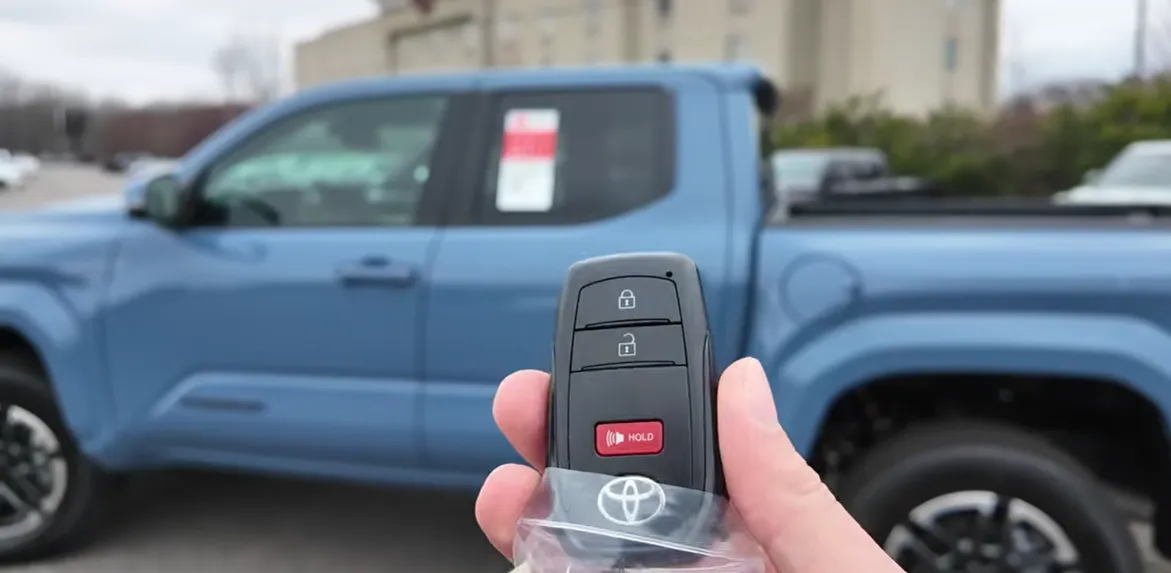
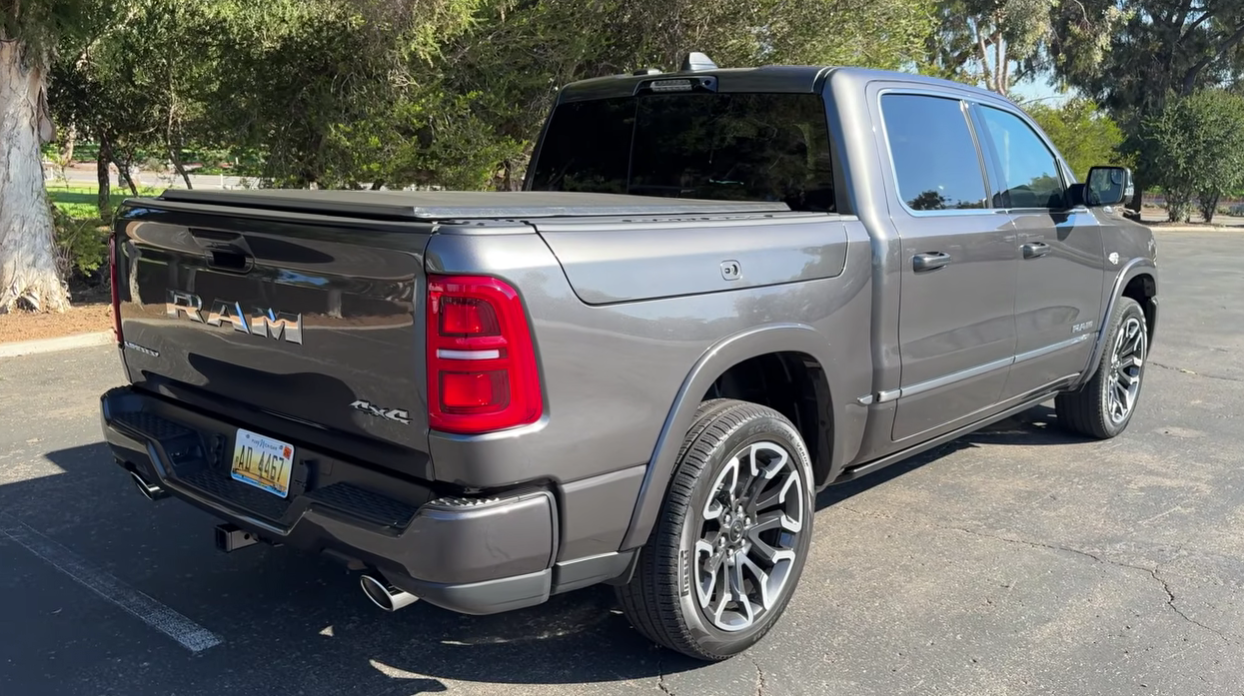
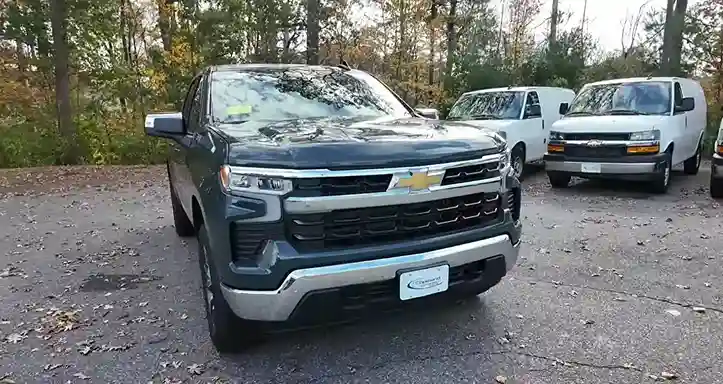
If your work needs more than that, honestly, look at the Chevy Silverado or the Ram 1500 instead. The Tacoma won’t embarrass itself but it’ll work harder than it should on heavy regular towing.
For everything else though? Solid.
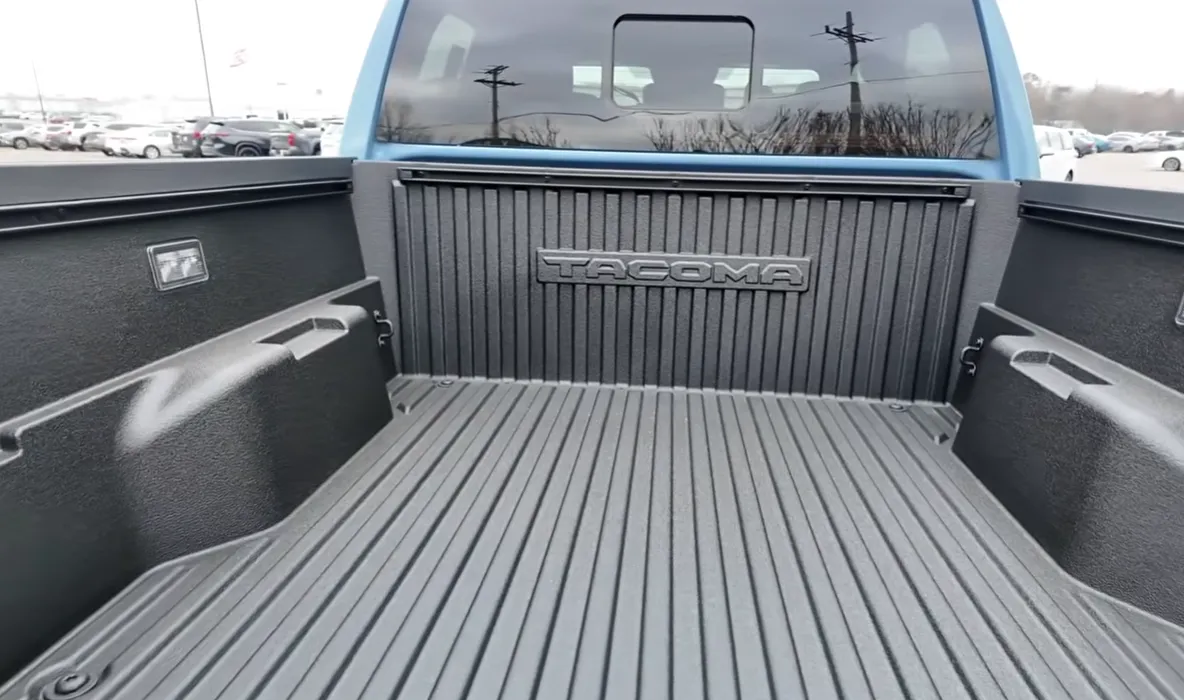
The truck bed on the crew cab with the 5-foot box is genuinely useful. I loaded it with lumber one afternoon. Eight-foot boards hanging over the tailgate, nothing fancy, but it worked exactly as it should. The bed is not the longest in the class. But it’s well built and the tie-down cleats are positioned in useful spots.
One thing I noticed. The tailgate. It swings down smoothly and the latch is easy to operate with one hand even when your other hand is full. Small thing. Real thing.
Buyer Type Three: The Daily Driver Who Wants a Truck
Okay.
This is where we need to have an honest conversation.
The Tacoma is not a comfortable daily driver in the same way a crossover is. Nope. Not even close.
The ride is stiff. Noticeably stiff. On smooth highways it’s fine. On city roads with cracks and potholes and the kind of surfaces most of us actually drive on every day, you feel it. Your passengers feel it. Your lower back starts a conversation with you around hour two.
I drove it to pick up both kids from school one afternoon. Normal suburban roads. A speed bump at the school entrance that I take in our other car at regular speed without thinking. In the Tacoma I slowed down. You learn quickly.
My wife rode in the passenger seat for about 20 minutes on day three. She didn’t say anything negative. But she didn’t say anything positive either. That silence was its own kind of feedback.
Here’s the other thing. Fuel economy in real mixed driving came out to about 20 to 21 mpg in my week of suburban and highway use. The EPA combined rating is 23 mpg for the 4WD version. Source: EPA FuelEconomy.gov, 2025. Not bad for a truck. Not good by crossover standards. If you’re coming from something like a RAV4 or a CR-V, the fuel bill will go up.
If your daily commute is highway heavy and you’re okay with a firm ride, the Tacoma works as a daily driver. It really does. But go in with both eyes open.
Buyer Type Four: The Family Hauler Person
This one I have strong feelings about.
The double cab Tacoma has a back seat. Technically. My kids fit in it fine. They’re 4 and 6. But I wouldn’t put adults back there for anything more than a short trip and I wouldn’t put teenagers back there and expect them to be happy about it.
The crew cab is different.
With the crew cab you get a proper rear seat. Legroom is around 32.6 inches. Source: Toyota, 2025. Still not generous. Still noticeably smaller than a full-size truck or a three-row SUV. But my brother-in-law rode back there for 40 minutes on a Sunday and didn’t file a formal complaint, which I take as a passing grade.
Car seat installation in the crew cab is manageable. LATCH anchors are there and accessible without contorting yourself. A rear-facing infant seat fit behind my driving position. A forward-facing seat worked fine. Two seats across the rear is the limit before it gets genuinely cramped.
Step height getting in the back is real. My 4-year-old needed help every single time. My 6-year-old managed independently by day three but it required actual effort. Running boards are worth adding if kids are regular passengers.
The back door on the crew cab opens wide. Wide enough that loading a car seat without straining your back is actually possible. That surprised me. I expected it to be awkward. It wasn’t.
Is the Tacoma a family vehicle? Sort of. It works for a small family who doesn’t need to carry adult passengers in the back regularly. For bigger families or anyone who regularly has four or five adults in the car, it’s too small back there and you’d be better served by a full-size truck or a three-row SUV.
What the 2026 Tacoma Costs to Actually Own
Starting price around $31,000 gets you the SR trim. Basic. No frills. Gets the job done.
Most buyers land between $38,000 and $45,000 once they step into the TRD Sport, TRD Off-Road, or Limited. That’s where the features people actually want live.
| Trim | Starting Price | Best For |
|---|---|---|
| SR | ~$31,000 | Basic work use |
| SR5 | ~$35,000 | Entry features |
| TRD Sport | ~$38,000 | Street style, good daily |
| TRD Off-Road | ~$41,000 | Weekend adventure sweet spot |
| Limited | ~$43,000 | Comfort and features |
| TRD Pro | ~$49,000 | Serious off-road |
| Trailhunter | ~$51,000 | Overland focused |
Insurance runs $1,400 to $1,800 per year for most drivers. Routine maintenance at a Toyota dealer costs $400 to $600 per year. Source: RepairPal, 2025.
Resale value though. This is the Tacoma’s secret weapon.
After three years the Tacoma holds around 65 to 70 percent of its original value. Source: Kelley Blue Book, 2025. That’s extraordinary. Most midsize trucks lose more. Most crossovers lose more. The Tacoma keeps its value better than almost anything else on sale right now. If you plan to sell or trade in after five or six years, that number changes the entire cost calculation dramatically.
The Stuff Toyota Still Hasn’t Fixed
Three things. No dressing them up.
The infotainment is behind the competition. The 8-inch screen on lower trims and even the 14-inch available screen feel slower and less intuitive than what Ford and Chevy offer in their midsize trucks. Wireless CarPlay is available but the native system underneath it is clunky. I went to change a setting one afternoon and ended up four menus deep for something that should have taken two taps. Source: Car and Driver, 2025.
The ride quality will surprise buyers coming from crossovers. This is not a small thing to mention and move on from. The Tacoma rides stiff. Daily driving on imperfect roads is noticeably less comfortable than any crossover in this price range. Toyota tuned it for capability not comfort and that choice has a real daily cost for buyers who prioritize smooth riding.
The back seat in the double cab is genuinely too small for regular adult use. If you’re buying the double cab thinking adults will ride back there regularly, reconsider. Either step up to the crew cab or look at a different vehicle. The double cab back seat is for kids and short trips only.
How Reliable Is the 2026 Tacoma?
Very.
Actually, very is underselling it.
The Tacoma’s reliability record is one of the main reasons people buy it. Consumer Reports gives it top reliability scores consistently. Source: Consumer Reports, 2025. Owner forums for the Tacoma are quiet compared to most trucks. Real owners report very few major mechanical issues across high mileage examples.
The new 2.4-liter turbocharged engine is newer to the Tacoma than the old V6 was. That means the long-term data is still building. But Toyota’s track record with new powertrains is strong and early owner reports on the new engine are positive.
Common small complaints from real owners include some turbo lag at very low speeds when pulling away from a stop, occasional roughness from the new engine at idle that goes away once warm, and the same infotainment frustrations mentioned above.
No significant recalls active on 2026 models as of publication. Source: NHTSA recall database, 2025.
Most well-maintained Tacomas run past 250,000 miles. Some significantly past that. The longevity data on this truck is some of the best in any vehicle class. Source: iSeeCars, 2025.
Tacoma vs The Main Competition
| Feature | Toyota Tacoma TRD Off-Road | Ford Ranger Raptor | Chevy Colorado Z71 |
|---|---|---|---|
| Starting Price | ~$41,000 | ~$44,000 | ~$38,000 |
| Engine | 2.4L Turbo 4-cyl | 3.0L Turbo 6-cyl | 2.7L Turbo 4-cyl |
| Towing | 6,500 lbs | 7,700 lbs | 7,700 lbs |
| Off-Road | Excellent | Outstanding | Very Good |
| Rear Seat (Crew) | 32.6 inches | 33.5 inches | 35.4 inches |
| Reliability | Excellent | Good | Good |
| Resale Value | Best in class | Average | Below average |
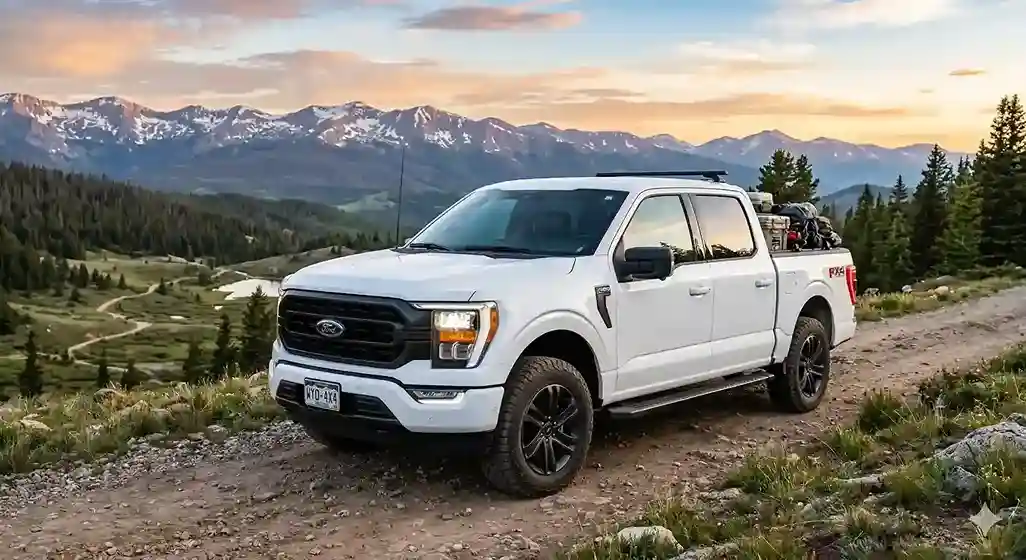
The Ranger Raptor is more capable off-road and tows more. The Colorado has a bigger back seat. But neither of them comes close to the Tacoma on resale value and neither has its reliability track record.
If resale and long-term ownership cost matter to you, the Tacoma wins this comparison without much debate.
My Personal Opinion
Okay here it is.
I like the Tacoma more than I expected to. The new turbo engine is a real improvement. Torque that shows up early, pulls confidently, and doesn’t make you work for it. The off-road capability feels honest rather than just marketed. And the build quality has that Toyota solidity that makes you feel like you’re in something that will outlast your mortgage.
But.
The ride. Man. After a week of daily driving I was genuinely missing a smoother vehicle. Not dramatically. Not enough to hate the Tacoma. But enough to notice every single day on my commute.
And the infotainment is a step behind where it should be in 2026 at this price point. That’s a fair criticism and Toyota needs to close that gap.
Would I buy one? If I were a weekend adventure person or used a truck for work regularly, yes. Without much hesitation. The reliability, the resale value, and the off-road ability make a strong case that’s hard to argue against over a five or six year ownership period.
If I mostly needed something for daily driving and occasional family trips with no real off-road use? I’d probably look at the Colorado or save money with a RAV4 and skip the truck altogether.
The Tacoma knows what it is. That confidence is either its best quality or its most annoying one depending entirely on what you need.
Frequently Asked Questions
Is the new 2026 Tacoma engine reliable? Early owner data and Toyota’s track record suggest yes. The new 2.4-liter turbocharged engine is newer than the old V6 but Toyota’s reputation for powertrain reliability is strong and initial reports from real owners are positive. Long-term data will build over the next few years.
Can I use the 2026 Tacoma as a daily driver? Yes but the ride is stiffer than a crossover and fuel economy is lower. It works as a daily driver, especially on highway-heavy commutes. Buyers coming from smooth-riding crossovers will notice the difference and need a few days to adjust.
Which Tacoma trim is the best value? The TRD Off-Road for buyers who want weekend capability. The TRD Sport for buyers who mostly daily drive. Both hit the sweet spot between features and price without jumping to the more expensive TRD Pro.
How does the 2026 Tacoma hold its value? Exceptionally well. Around 65 to 70 percent of original value after three years, which is among the best of any vehicle on sale right now. If you plan to sell or trade after five or six years this matters a lot to the real total cost of ownership.
Does the 2026 Tacoma have Apple CarPlay? Yes. Wireless Apple CarPlay and Android Auto are available. The native infotainment system underneath is not as smooth as competitors but CarPlay covers most of what people use daily.
What is the towing capacity of the 2026 Toyota Tacoma? Up to 6,500 pounds when properly equipped. That covers most boats, small camper trailers, and equipment trailers. For heavier towing needs a full-size truck is a better fit.
Is the back seat usable for families? In the crew cab yes, especially for kids. In the double cab it’s tight for adults on anything longer than a short trip. Families with regular adult rear passengers should choose the crew cab configuration.