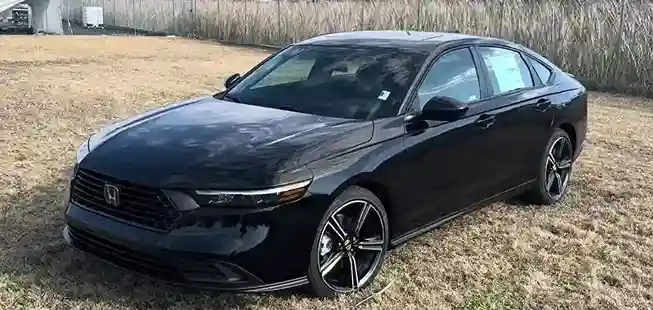
The Honda Accord has been around forever, and for good reason. It’s one of those cars that just does everything right. But here’s the thing the 2026 model got some nice little updates that actually matter for real people like you and me. Not huge changes, but the kind of stuff you notice every single time you get behind the wheel.
what’s new in the 2026 model?
Honda didn’t reinvent the wheel this year. And honestly? They didn’t need to. The 11th-gen Accord that came out a couple years back is already pretty great. But they tweaked a few things that are worth knowing about .
- A 9-inch touchscreen is now standard on EVERY model. That’s up from 7 inches last year.
- Wireless Apple CarPlay and Android Auto come standard across the board. No more hunting for cords.
- Wireless phone charging is also standard now. Just drop your phone and go.
- The SE trim got bigger 19-inch wheels. Looks way sportier.
- Sport and Sport-L hybrids now have black window trim and black badges. Little touch, but it looks sharp.
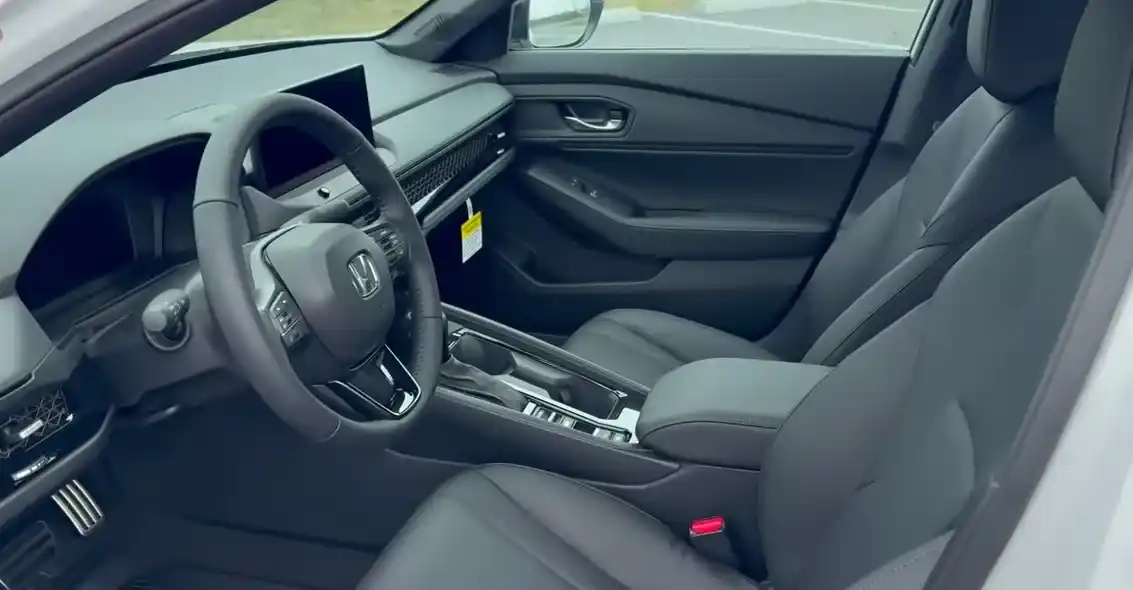
So yeah, nothing massive. But the tech upgrades? Those are legit. You don’t have to climb up to a higher trim just to get a decent screen anymore.
How much is this thing gonna cost You?
Here’s the full price breakdown for the 2026 Honda Accord. All these prices include the $1,195 destination charge that’s the fee Honda charges to get the car from the factory to the dealer. You can’t avoid it.
| Trim Level | Engine | MSRP + Destination | EPA MPG (City/Hwy/Comb) |
|---|---|---|---|
| LX | 1.5L Turbo | $29,590 | 29 / 37 / 32 |
| SE | 1.5L Turbo | $31,890 | 28 / 36 / 31 |
| Sport | Hybrid | $34,990 | 46 / 41 / 44 |
| EX-L | Hybrid | $36,290 | 51 / 44 / 48 |
| Sport-L | Hybrid | $36,680 | 46 / 41 / 44 |
| Touring | Hybrid | $40,645 | 46 / 41 / 44 |
A couple things to notice here.
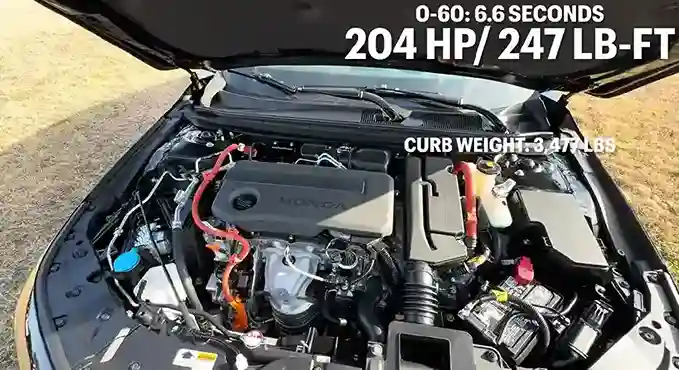
The LX is the only one under 30 grand. If you’re on a budget, that’s your starting point. The SE is basically the same car mechanically, but you get those bigger wheels and a few more goodies.
Here’s what jumps out at me, the Sport hybrid is only about $3,000 more than the SE, but you get way better gas mileage and more power. That $3,000 pays for itself over a few years if you drive a lot. Something to think about.
Current deals worth knowing (as of March 2026):
- $500 bonus for recent college grads
- $500 military appreciation offer (active duty and veterans)
- Both expire March 31, so don’t wait forever
Industry data shows the average buyer is paying about $590 below MSRP right now on LX and SE models. Not huge savings, but hey money’s money.
Which trim should you actually buy?
This is the question I get from friends all the time. And my answer depends on what you care about.
If you just need A-to-B transportation and want to spend the least: Get the LX. It’s $29,590, gets 32 mpg combined, and now comes with that bigger screen and wireless phone stuff. You’re not getting leather or heated seats, but you’re also not spending forty grand.
If you want the best value for your money: Get the Sport hybrid. Here’s why it’s the cheapest way to get the hybrid engine, which gives you 204 horsepower instead of 192, and way better gas mileage. You don’t get leather seats (that’s EX-L and up), but you do get heated front seats, a sunroof, and the bigger screen. It’s the sweet spot.
If you’re keeping this car for 10 years: Get the EX-L hybrid. The “L” stands for leather. You also get a power passenger seat (more on why that matters later), and the best gas mileage in the lineup 8 mpg combined. That’s insane for a car this size.
If money’s no object: Get the Touring. You get a 12.3-inch screen (the only one with the big screen), a head-up display, a 12-speaker Bose stereo, ventilated front seats, and rear heated seats. It’s nice. Real nice. But it’s also $40,645.

How much space are we talking?
The Accord is a big sedan. Not “my first car” big. Actually big.
- Length: 195.7 inches
- Width: 73.3 inches (without mirrors)
- Height: 57.1 inches
- Wheelbase: 111.4 inches
- Trunk space: 16.7 cubic feet
- Passenger volume: 105.7 cubic feet total
- Ground clearance: 5.3 inches
- Turning circle: 38.4 feet
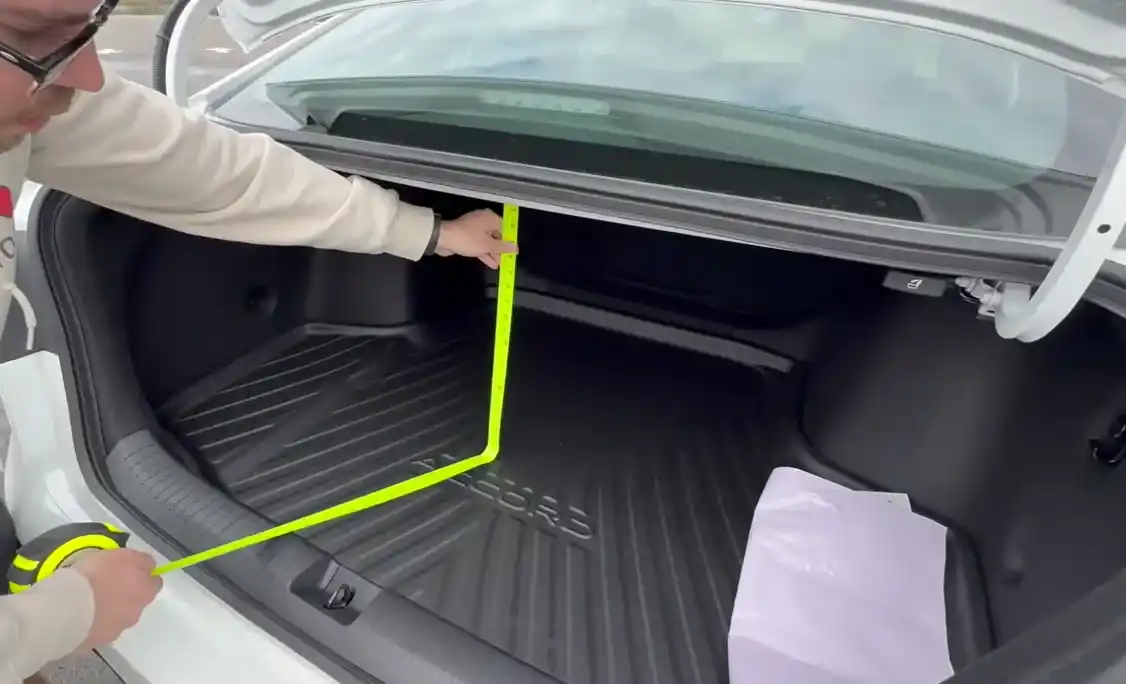
What do these numbers mean in real life?
Parking: It’s a long car. Not full-size truck long, but longer than a Civic by about a foot. You’ll fit in most parking spots, but they need to be decent-sized. Compact spots? Might be tight.
Garage fit: Standard 20-foot-deep garage? You’re fine. Older homes with shorter garages? Measure first. Length is the thing to check.
Turning around: 38.4 feet to make a U-turn. That’s about average for this class. You won’t be doing three-point turns in normal neighborhoods, but tight city streets might take two tries.
The trunk: 16.7 cubic feet is legit. Automotive reviewers fit seven carry-on suitcases back there with no seats folded. Fold the rear seats (60/40 split on most trims) and you can fit 20 suitcases. Grocery runs? Easy. Airport trips? No sweat.
But will it fit YOU?
Here’s where it gets personal. Because a car that fits your neighbor might not fit you.
For shorter drivers (5’2″ and under)
Good news and bad news.
The good: You can see over the hood just fine. The driver’s seat adjusts pretty high if you need it. Visibility is excellent overall thin pillars, big windows.
The bad: The front passenger seat is a problem. Multiple owners complain about this. On most trims below EX-L, the passenger seat doesn’t adjust up and down. It sits low. Really low. One reviewer said their wife complains every single time she rides. Another said passengers under 5’5″ struggle to see out.
If your spouse or whoever rides shotgun is short, either get an EX-L or higher (power passenger seat) or have them sit in back. I’m not kidding.
For average height folks (5’8″ to 5’10”)
You’re golden. Plenty of headroom up front (39.5 inches). Legroom is massive (42.3 inches). You can stretch out. The seats are comfortable for most people, though some reviewers wish they had more cushioning on long trips.
For tall drivers (6’2″ and above)

Up front? You’re fine. Headroom is adequate. Legroom is plentiful. The steering wheel telescopes, so you can find a good position.
Back seat? This is where it gets tricky. The sloping roofline looks great, but tall adults in the back will notice. Headroom back there is tight. According to road tests, passengers will need to duck when getting in. Legroom is fantastic actually better than some SUVs but if you’re tall, your hair might brush the ceiling.
The family test: Can this thing handle real life?
This matters. Because “family friendly” means different things to different people.
Car seats
The Accord handles car seats pretty well.
Rear-facing infant seats: You’ll need to move the front seats forward a bit. A tall driver might have their seat too far back to fit a rear-facing seat behind them. Put it behind the passenger side and you’re probably okay.
Forward-facing toddler seats: No problem. Plenty of room. The LATCH anchors are easy to find and use not buried in the seat cracks like some cars.
Booster seats: Easy. The seat belts fit kids well once they’re out of harnesses.

Three across? Three car seats is a squeeze. Three adults across the back is tight but doable for short trips. Shoulder room is 56.5 inches in back enough for three normal-sized people, but nobody’s going to be comfortable on a road trip.
The doors open wide. That matters when you’re wrestling a wiggly toddler into a car seat. You’re not banging their head on the door frame.
The rear seats have USB-C ports (two of them) to charge tablets on road trips. That’s standard.
Kids can see out the windows pretty well. The beltline isn’t too high.
Stroller test
A full-size stroller fits in the trunk easily. So does a week’s worth of groceries. The trunk opening is wide, so loading bulky stuff isn’t a wrestling match.
Spills and messes
Cloth seats on lower trims? They clean up okay, but you’ll want to treat stains fast. Leather in the higher trims? Wipe and go. Much easier with kids.
One mom on a forum said her Accord survived a full juice box spill in the back with no permanent damage. High praise.
What’s it like to actually drive?
Most of us aren’t racing. We’re commuting, running errands, maybe taking a road trip twice a year. So how’s the Accord for that?
The non-hybrid (LX and SE)
192 horsepower. 192 pound-feet of torque. CVT transmission.
It’s fine. Really. It’s not exciting, but it gets the job done. Merging onto highways? No problem. Passing on two-lane roads? You’ll have to plan a bit, but it’s adequate.
Testing shows 0-60 in 7.3 seconds. That’s not fast, but it’s not dangerous either. The CVT simulates gear shifts when you floor it, so it doesn’t have that rubber-band feeling some CVTs have.
Real-world MPG? Owners report around 34-38 mpg if you’re easy on the gas. The EPA says 32 combined, so that tracks.
The hybrid (everything else)
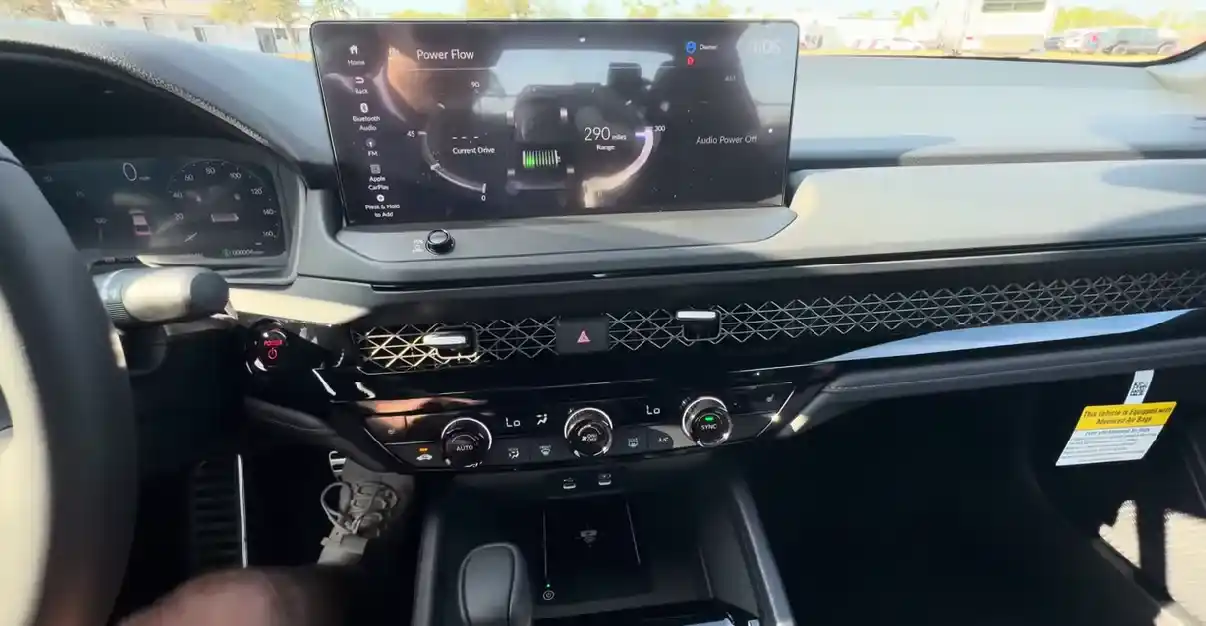
204 horsepower combined. 247 pound-feet of torque. No traditional transmission.
This is the one to get if you can swing it. It’s quicker 0-60 in 6.7 seconds. That’s genuinely quick for a family sedan. The electric motors give you instant torque off the line, so it feels peppy around town.
The hybrid system is smooth. Really smooth. It switches between electric, gas, and combined modes without you noticing. On the highway, the gas engine cruises at low RPMs, so it’s quiet.
Real-world MPG? Owners report 44-48 mpg combined depending on how they drive. One guy said he gets 45 mpg average and he doesn’t even try.
The bad news
No all-wheel drive. At all. If you live in the snow belt, you’re buying snow tires or looking at a Camry (which does offer AWD).
The ride is firm but compliant. It handles well reviewers consistently praise its “virtuoso ride and handling.” But if you’re used to a floaty sofa on wheels, this might feel too stiff.
Highway trips: 10 hours in this thing?
I asked around. Here’s the consensus.
The good: It’s stable at high speeds. Quiet inside Honda added acoustic glass on the windshield and front doors. The seats are supportive enough for long days. Adaptive cruise control works great, even in stop-and-go traffic. Lane-keeping assist keeps you centered without bouncing you between the lines.
The bad: The passenger seat comfort complaint comes up again. If your spouse is stuck riding shotgun for 10 hours and can’t adjust the seat height, they might be miserable. Also, road noise is acceptable but not luxury-car quiet. You’ll hear wind around the mirrors at 75+.
The surprising: Trunk space for a family of four with luggage for a week? No problem. The folding rear seats (standard on all but maybe LX? Check your trim) let you haul longer stuff too.
Tech stuff : the screens and buttons
This is where the 2026 model really improved.
The screens
- Base models (LX, SE): 9-inch touchscreen. 10.2-inch digital gauge cluster. Both standard.
- Touring only: 12.3-inch touchscreen. Same digital gauges. Plus a 6-inch head-up display.
The 9-inch screen is responsive. No lag. It has a physical volume knob (thank you, Honda). The menus are simple you won’t need a PhD to find the heated seats.
Phone stuff
- Wireless Apple CarPlay and Android Auto are standard on EVERY trim
- Wireless charging pad is standard on EVERY trim
- Two USB-C ports up front, two in back
This is huge. You don’t have to plug in. Just get in, your phone connects, toss it on the charger, and go.
Audio
- LX: 4 speakers. It’s… adequate.
- SE and Sport: 8 speakers. Much better.
- Touring: 12-speaker Bose. Actually good. Worth the upgrade if you love music.
Google built-in
Some trims have Google built-in (maps, assistant, Play store). Requires a data plan after the initial trial. Honestly? Most people will just use CarPlay anyway. Not a big selling point.
Is it safe?
Yeah. Really safe.
Standard safety stuff (Honda Sensing)
Every single Accord comes with:
- Automatic emergency braking (with pedestrian detection)
- Lane departure warning
- Lane keeping assist
- Adaptive cruise control (with low-speed follow works in stop-and-go traffic)
- Traffic sign recognition
- Traffic jam assist
The only thing missing on the base LX? Blind spot monitoring and rear cross-traffic alert. You get those starting on the SE.
Crash test ratings
The 11th-generation Accord (2023 and newer) has excellent scores:
- NHTSA: 5 stars overall. 5 stars frontal. 5 stars side. 5 stars rollover.
- IIHS: Top Safety Pick+ (on earlier models 2026 expected to match)
One owner on KBB said they t-boned a GMC Acadia at 45-50 mph and walked away without a scratch. The car was totaled. They survived. That’s what matters.
What do actual owners say?
I combed through Kelley Blue Book reviews, forums, and Reddit threads. Here’s the real talk.
The good stuff owners love:
- Reliability (4.8 out of 5)
- Performance (4.7 out of 5)
- Styling (4.5 out of 5)
- Trunk space everyone mentions the trunk
- Gas mileage, especially on hybrids
- Smooth ride and handling
- No rattles, solid feel
The stuff owners complain about:
- Comfort (3.8 out of 5 the lowest score)
- Passenger seat too low (this comes up constantly)
- No spare tire on hybrid models (you get a repair kit and air compressor)
- Rear visibility mirror is small (one guy bought a wider one on Amazon for $20)
- No power folding mirrors
A real owner quote:
“Purchased a new 2024 Accord EX… Pros: Love the minimalistic exterior and interior styling, trunk is enormous, front seat comfort is good, rear seat comfort is excellent, vehicle feels very stable on winding roads and at high speeds, excellent brakes, no interior rattles, fit/finish is excellent, all doors feel very solid… Cons: The front passenger seat cannot be raised. This hinders outward visibility for passengers that are less than 5 feet 5 inches tall. Overall, I rate this vehicle a 4.8 out of 5.0 Stars”
That sums it up pretty well.
How long will it last?
This is Honda. It’ll last.
Industry data shows the Honda Accord has an average lifespan of about 161,512 miles or roughly 12.4 years.
It has around a 26% chance of reaching 200,000 miles.
Reliability rating: 7.5 out of 10. Ranked #2 among midsize cars (behind only the Toyota Camry).
Owners give reliability 4.8 out of 5.
Common issues? Not many reported on the current generation. Earlier Accords had some fuel injector problems and infotainment glitches. Too early to tell on the 11th-gen, but forums are mostly quiet.
Common questions people ask
Q: Is the 2026 Accord worth the money?
A: For most people, yes. You get a lot of car for the price. The hybrid models especially pay for themselves in gas savings. Resale value is excellent you’ll get good money when you sell.
Q: How much under MSRP can I negotiate?
A: Market data suggests about $590 under on LX and SE right now. Hybrids might be tougher because demand is higher. Always check current incentives.
Q: Should I buy or lease?
A: If you keep cars forever, buy. If you like new cars every 3 years, lease. Honda leases usually have good rates, but run the numbers. The $500 college/military deals work for both.
Q: Is the hybrid worth the extra money?
A: If you drive more than 12,000 miles a year? Yes. The gas savings add up. Plus it’s quicker and smoother. If you barely drive, maybe stick with the 1.5T.
Q: Does it use regular gas?
A: Yes. Regular unleaded. 87 octane. Both engines are designed for it.
Q: How’s it compare to the Toyota Camry?
A: The Camry now comes standard as a hybrid and offers AWD. The Accord drives better (most publications still pick the Accord for driving feel). Camry might get slightly better gas mileage. Both are excellent. Drive both and see which you prefer.
Q: What about the Nissan Altima or Hyundai Sonata?
A: Altima offers AWD but feels cheaper inside. Sonata has a longer warranty and more tech for the money, but resale value isn’t as good. Accord is the balanced choice.
Q: Is it good for tall drivers?
A: Front seat, yes. Back seat, headroom is tight. Try before you buy.
Q: Is it good for short drivers?
A: Driver’s seat adjusts plenty. Passenger seat is the issue get an EX-L or higher for power passenger seat adjustment.
My Verdict!
Here’s the honest truth.
The 2026 Honda Accord isn’t flashy. It’s not exciting. It won’t make your neighbors jealous or win you any races.
But you know what it will do? It’ll start every morning. It’ll get you to work without drama. It’ll haul your kids and their stuff. It’ll do it for years and years without costing a fortune in repairs. And when you finally sell it, it’ll still be worth good money.
The updates for 2026 bigger screen, wireless phone stuff, black accents make a good car even better. They fixed the little annoyances without messing with what works.
Buy it if:
- You want a sedan that does everything well
- You keep cars for a long time
- You care about gas mileage but don’t want a weird hybrid experience
- You have average-sized passengers (or they’re riding up front)
- You don’t need all-wheel drive
Maybe skip it if:
- You live somewhere with heavy snow (get a Camry AWD or a Subaru)
- Your passenger is short and you can’t get an EX-L or higher
- You need three rows or SUV cargo space
- You want something sporty and fun (maybe a Civic Si or Mazda3)
Me? I’d buy the Sport hybrid. Best balance of price, power, and mileage. And I’d make sure my passenger was okay with the seat situation before signing.
Hope this helps. Go drive one and see what you think.
All data verified as of March 19, 2026 from Honda official sources, EPA, NHTSA, and major automotive publications. Prices and incentives subject to change. Your mileage may vary depending on driving conditions and habits.