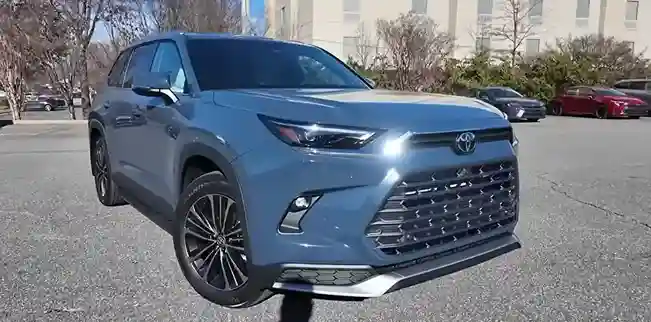
So you’re looking at the Toyota Grand Highlander. Good choice. But I’m guessing you’ve got questions. Everyone does. This is one of those vehicles that looks great on paper but you want to know what it’s actually like to live with.
I’ve been digging into this thing for weeks now. Talking to owners. Reading forums. Looking at all the specs. And I’m going to tell you everything I’ve found. No fluff. Just the stuff that matters.
Why Does This Thing Even Exist?
You know the regular Highlander, right? Solid SUV. Been around forever. But here’s the problem that third row is tight. Like, kids-only tight. Put an adult back there and they’ll be texting you from the way back asking when you’re gonna stop so they can stretch.
Toyota looked at that and said “yeah, we can do better.” So they stretched the whole thing. Made it longer. Gave it actual third row space that grown humans can use without feeling like they’re on a budget airline.
That’s the whole point of the Grand Highlander. It’s for families who actually use all three rows. Not just for carpool once a week, but for road trips. For grandma visiting. For hauling teenagers who refuse to sit anywhere but as far from you as possible.
Pricing of Highlander
Nobody likes talking about price, but we gotta.
The 2026 Grand Highlander starts right around $41,000 for the base LE model. That’s with front-wheel drive. Add all-wheel drive and you’re looking at about another $1,600.
Now here’s where it gets interesting. You can spend way more if you want. The loaded up Platinum Hybrid Max models can push past $60,000 pretty easily. I saw one sticker at $65,000 the other day.
But here’s my take most families don’t need that.
The sweet spot is probably the XLE trim. It’s around $44,000 to start. You get heated seats, nicer upholstery (that fake leather stuff that’s actually easier to clean than real leather), a power liftgate, and the big screen. It’s worth the upgrade from the base model.
Quick note about prices though and this is important. What I’m telling you is what we’re seeing right now in March 2026. Car prices move around. Dealers still pull markups on popular stuff. The Hybrid Max versions can be hard to find sitting on lots. I talked to one guy who had to order his and wait four months. So shop around. Get quotes from a few dealers. Don’t pay over MSRP if you can help it.
The Engines: Three Choices, Three Different Personalities
Here’s where the Grand Highlander is actually pretty cool. You get three completely different engines. And they’re not just minor variations they’re for totally different kinds of buyers.
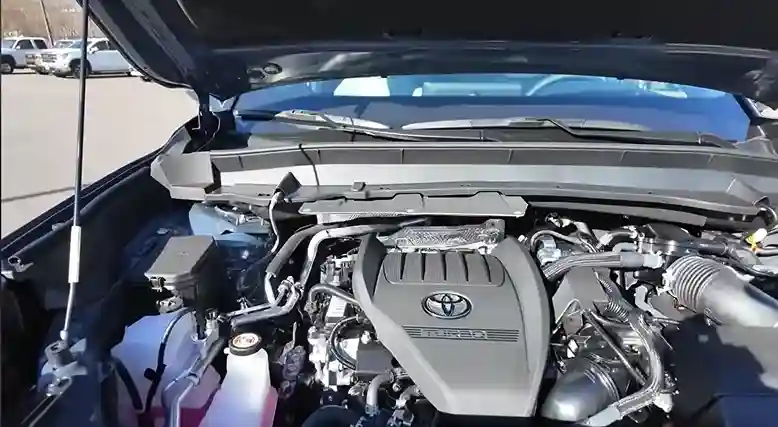
The Regular One: 2.4L Turbo
This is your basic gas engine. 265 horsepower. It’s paired with an 8-speed automatic. Front-wheel drive standard, all-wheel drive optional.
Fuel economy? About 21 city, 28 highway. Tows 5,000 pounds.
How does it drive? Fine. It’s fine. The turbo gives it enough grunt that it doesn’t feel slow. You can merge onto highways. Pass when you need to. But it’s not exciting. Zero to sixty takes about 7.5 seconds.
Who should buy this? People who want the simplest mechanical setup. No hybrid batteries to worry about 10 years from now. Just a straightforward gas engine that’ll probably run forever with basic maintenance.
The Fuel Sipper: Regular Hybrid
This one uses a 2.5L engine with electric motors. Makes 245 horsepower. Uses a CVT transmission (that’s the rubber band feeling one, but it’s fine).
Here’s the headline: 36 MPG combined. City driving, highway, doesn’t matter you’ll get great mileage. That’s insane for a vehicle this size.
Downside? It’s slower. Tows less too only 3,500 pounds.
Who wants this? Commuters. If you drive a lot every day, this is the smart money play. You’ll save enough on gas over a few years to make up for the hybrid premium.
The Fun One: Hybrid Max
Now we’re talking. 362 horsepower. 400 pound-feet of torque. Six-speed automatic (not a CVT). Standard all-wheel drive.
Zero to sixty? About 5.6 seconds. That’s legitimately quick. The electric motors give you instant power when you hit the gas. It feels punchy and responsive in a way the other engines don’t.
Fuel economy still decent about 27 combined. Tows 5,000 pounds like the gas engine.
Who needs this? Look, nobody needs this. But if you like driving, if you don’t want to feel like you’re piloting an appliance every time you take the family somewhere, this is the one. It makes the Grand Highlander actually fun.
I drove one recently and kept finding excuses to go run errands. That’s not something I usually say about a three-row SUV.
The Main Event: Space
Okay, this is why you’re here. Let me give you the numbers that actually matter.
Third row legroom: 33.5 inches.
That’s the stat. Regular Highlander gives you about 28. That extra 5.5 inches is the difference between “my knees are in the seat in front of me” and “this is actually comfortable.”
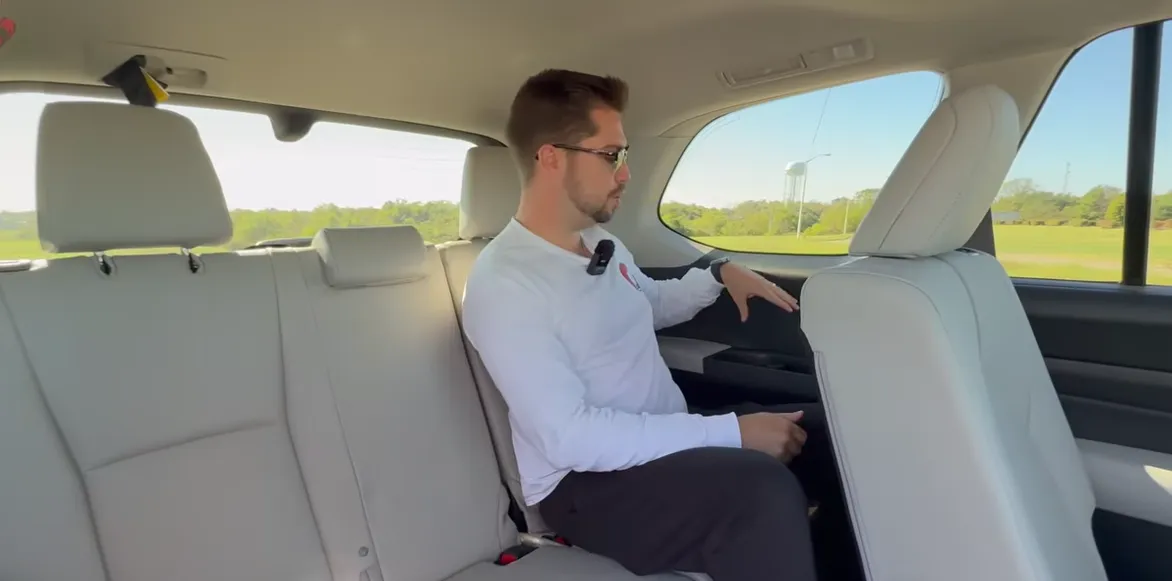
I’m 5’11”. I climbed in the third row of one of these. With the second row set for a six-foot driver, I still fit. Not limo room, but I could ride back there for an hour without complaining. The seat cushion is a little low, so if you’re really tall your legs might feel like you’re sitting on a stool. But for normal-size adults and definitely for kids, it’s completely usable.
One mom told me her teenagers actually fight over who gets the third row now. Says it feels like their own private space back there. That’s the kind of real-world feedback that tells you Toyota got this right.
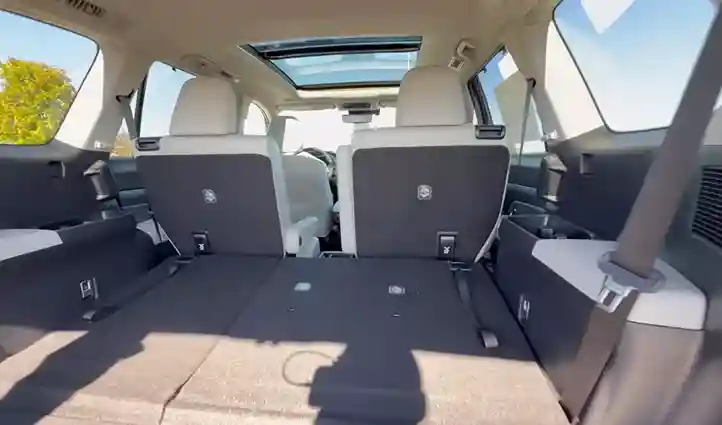
Cargo space is solid too. With the third row up, you’ve got about 20 cubic feet. That’s grocery runs, sports gear, suitcases for a weekend trip. Fold the third row and you’re at 58 cubic feet. Fold everything flat and you’ve got 98 cubic feet. That’s move-a-sofa territory.
About Car Seats
If you’re shopping this, you probably have kids. So let’s talk about the stuff that matters.
Rear-facing infant seat – fits fine in the second row. You don’t have to push the front seat so far forward that your knees hit the dash. That’s a win.
Forward-facing convertible – no issues. Plenty of room.
Booster – easy. Kids can buckle themselves without wrestling.
The LATCH anchors are easy to find. Some three-rows bury them deep in the seat, but not this one. IIHS gives it top marks for LATCH ease of use.
Here’s a trick parents will appreciate the second row slides forward even with some car seats installed. That means you can still get to the third row without uninstalling the seat. Not all SUVs do that.
The second-row window shades are standard on XLE and above. They’re built into the door. No more sticking those cheap mesh screens on the windows. Kids love them. You’ll love not having to buy the cheap mesh screens.
What’s It Like to Drive Every Day?
Honestly? Comfortable. Really comfortable.
The suspension soaks up bumps. You don’t feel every crack in the pavement. It’s quiet inside too you can have conversations at highway speed without raising your voice.
Road trips in this thing would be easy. You’d arrive not feeling beat up.
The seats are good. The front seats have real lumbar support. The SofTex material (that’s Toyota’s fake leather) breathes better than real leather and wipes clean when someone spills. And someone will spill.
One thing I noticed the driver’s seat sits pretty high even at its lowest setting. Good for visibility. But if you’re over 6’2″, you might want to spend some time adjusting it to see if you like the position.
The second-row captain’s chairs are almost as comfy as the fronts. They recline. On higher trims they’re even heated and ventilated. Your kids will get used to this and then complain about every other car forever. You’ve been warned.
The Tech Stuff
Every Grand Highlander comes with a 12.3-inch touchscreen. That’s standard, even on the cheap one. Toyota’s system is pretty straightforward not flashy, but it works. Wireless Apple CarPlay and Android Auto are standard and connect fast.
Higher trims add a digital gauge cluster. Nice but not necessary.
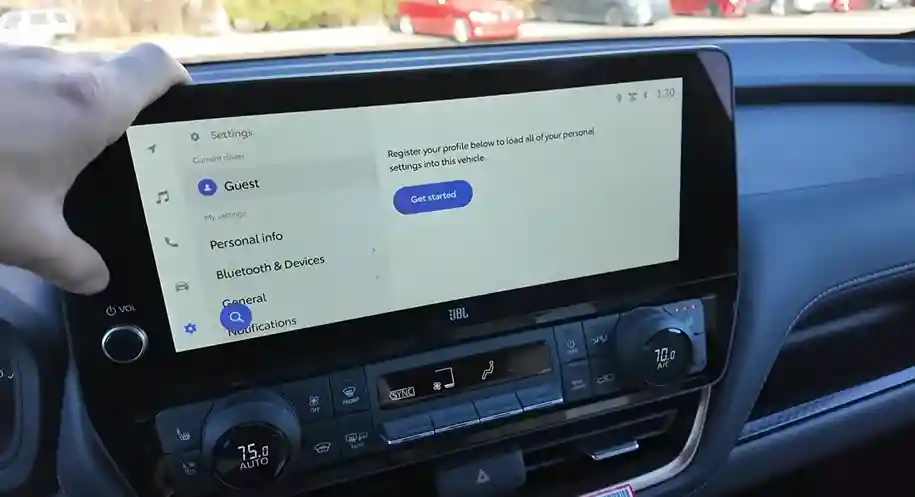
The JBL sound system on Limited and Platinum models sounds good. Not concert hall good, but good enough that your music sounds right.
Here’s a feature I actually love the digital rearview mirror. Flip a switch and suddenly your mirror shows a camera feed from the back. When the third row is full of people or cargo blocking your view, this is a lifesaver. Crystal clear, wide angle, better than actually looking through glass. You don’t know you need it until you have it.
Charging ports everywhere. Seven USB-C ports. Front, second row, third row everyone gets one. No more fighting over who gets to charge. Upper trims also get a household outlet that can run small appliances. Road trip laptop charging, no problem.
The Safety Stuff (Because Yeah, Kids)
Standard safety gear is extensive. Automatic braking. Lane keeping. Adaptive cruise. Blind spot monitoring. All the stuff you’d expect.
NHTSA gives it five stars overall. Side crash protection scored five stars. Frontal crash was four stars. Rollover resistance four stars.
IIHS ratings are mostly Good that’s their highest. Small overlap front was Acceptable (second highest). Headlights rated Acceptable. Everything else Good.
Higher trims add traffic jam assist handles stop-and-go driving for you under 25 mph. Actually works pretty well for commuting.
One minor gripe some of the driver assist features can feel a little hesitant. The lane keeping sometimes nudges you in ways you don’t expect. Some owners just turn it off. Your call.
What Owners Actually Say
I spent time on forums talking to people who own these things. Here’s the pattern I found.
What they love:
- The space. Over and over, people mention the third row actually works.
- The Hybrid Max power. Multiple people said they didn’t expect it to be so quick.
- Quiet highway ride.
- Fuel economy from the regular hybrid people are seeing numbers close o what’s advertised.

What they complain about:
- Key fob range. Several people said the fob doesn’t work from as far away as they’d like.
- The Toyota app. It works but the interface could be better.
- Some safety features require a subscription after the trial period. That annoys people.
- Finding one to buy. The popular trims, especially Hybrid Max, can be hard to locate.
One guy said his dealer told him to expect a 3-4 month wait for a Hybrid Max. So factor that in if you want the fast one.
The Honest Pros and Cons
The Good:
- Third row that actually fits adults
- Three engine choices let you pick your priority
- Hybrid models get amazing fuel economy
- Toyota reliability reputation
- Strong safety scores
- Tons of charging ports
- Quiet, comfortable ride
- Good resale value
The Not-So-Good:
- Top trims get expensive fast
- Steering is light not much feedback
- Big vehicle, parking can be tight
- Styling is fine but not exciting
- Base engine is just adequate
- Some features require subscriptions
- Hybrid Max drinks more gas than regular hybrid (obviously, but still)
How It Stacks Up Against the Others
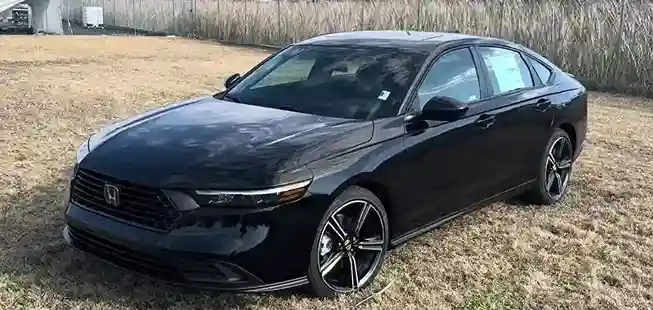
Vs. Honda Pilot – Pilot drives a little better. Grand Highlander has better fuel economy options and more third row space.
Vs. Kia Telluride – Telluride looks cooler inside and out. Grand Highlander will hold its value better and probably last longer.
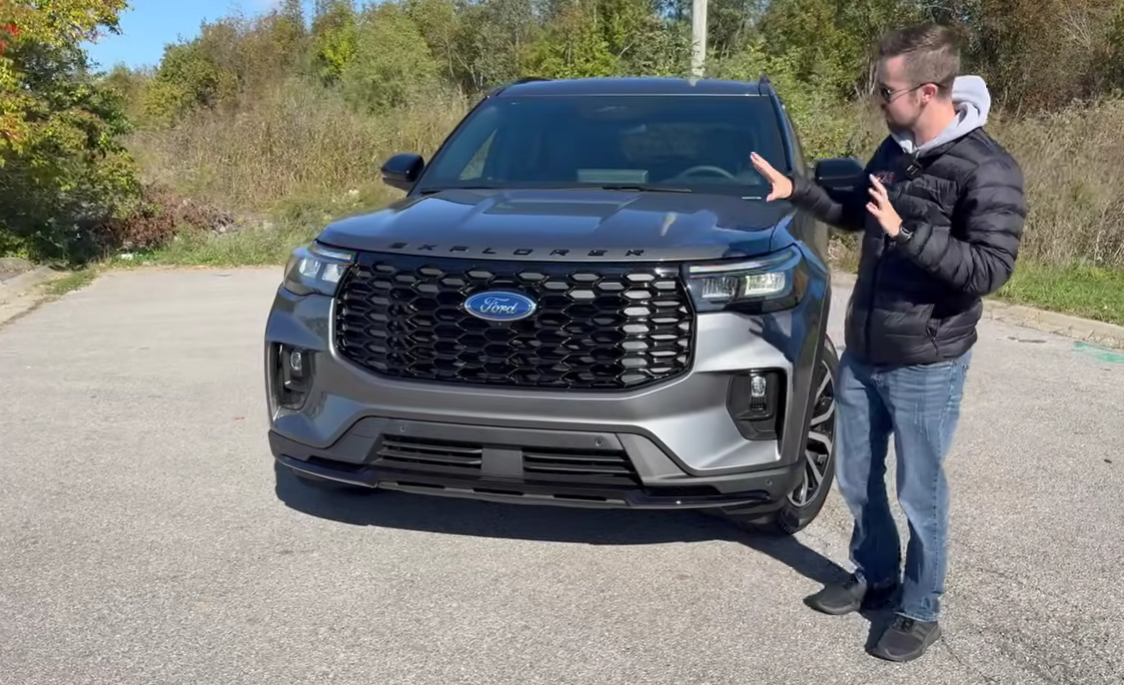
Vs. Ford Explorer – Explorer offers more power in some trims. Grand Highlander is quieter and more refined.
Vs. Regular Highlander – Regular is cheaper and easier to park. Grand has way more third row space. If you actually need the third row, get the Grand.
My Verdict
Here’s where I land on the 2026 Toyota Grand Highlander.
If you need a three-row SUV and you actually plan to use that third row for people not just cargo this is one of the smartest buys out there. It solves the problem that’s bugged this class for years. Adults can sit in the way back. That’s a bigger deal than it sounds.
The engine variety means you can choose your priority. Fuel economy? Get the regular hybrid. Power? Get the Hybrid Max. Simplicity? Get the gas engine. Most competitors don’t give you that choice.
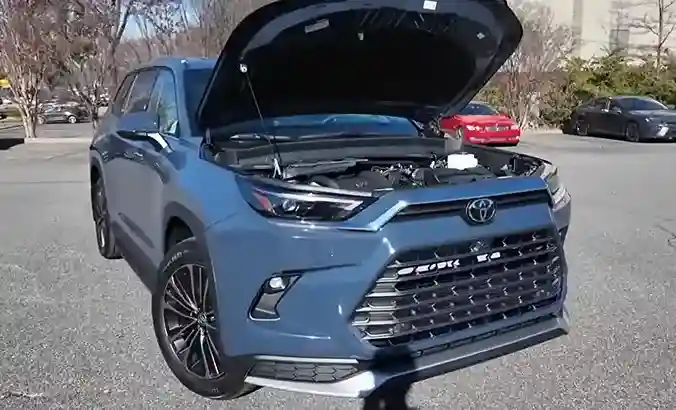
The downsides are real but manageable. The expensive trims are very expensive. The steering is numb. It doesn’t look special. But if you’re buying this for what it does, not how it looks, those things fade.
If I were buying for my own family? I’d get the XLE with the regular hybrid. Best combination of price, features, and gas savings. Over five years, you’ll save enough on fuel to make the upgrade pay for itself. And you still get all that space.
Who should buy this: Families who actually use all three rows. Commuters who want SUV space without SUV gas bills. Practical people who value function over flash.
Who should look elsewhere: People who want their SUV to look cool. Driving enthusiasts who need steering feel. Budget buyers who don’t need the extra space.
FAQ for 2026 Toyota Grand Highlander
Is it worth the money?
Yes, especially in XLE trim or with the hybrid powertrains. You’re paying for real third-row space and Toyota reliability.
What’s a fair price?
MSRP or slightly below. XLE should be around $44,000-$46,000. Don’t pay big markups.
Does it hold its value?
Yes. Expect around 64% after five years. Better than most.
Is it reliable?
Too new for long-term data, but Toyota’s track record suggests yes.
Any common problems?
Key fob range complaints. App interface complaints. No major mechanical issues reported.
How long will it last?
200,000 miles with proper maintenance is realistic.
Real-world MPG?
Gas: 22-24 combined. Regular hybrid: 34-36. Hybrid Max: 24-27.
Can it tow?
Gas and Hybrid Max: 5,000 pounds. Regular hybrid: 3,500.
How fast is the Hybrid Max?
0-60 in about 5.6 seconds. Quick for a family hauler.
Is the base engine enough?
For daily driving, yes. For mountains or always fully loaded, maybe not.
How many people fit?
Seven with captain’s chairs, eight with bench. Adults in all rows.
Will it fit in my garage?
Measure. 201 inches long, 78 inches wide. Standard garage works for most.
Can I fit three car seats across?
With bench seat, yes if seats are narrow. Captain’s chairs only hold two.
Cargo space with all seats up?
About 20 cubic feet. Enough for groceries and suitcases.
Best trim for most people?
XLE. Best value for features.
Must-have options?
360 camera for parking. Digital rearview mirror. Heated second row if you live somewhere cold.
Tech easy to use?
Yes. Physical climate controls. Wireless phone connection works well.
Vs. regular Highlander?
Grand is 10 inches longer with way more third row space. Get Grand if you need that third row.
Wait for next year?
No need. 2026 is mostly unchanged. Buy when you need it.
Maintenance costs?
Average for class. Hybrids may have slightly higher long-term costs but fuel savings offset.